

Platforms took the Croisette in Cannes, and the ad business is reordering around them
Advertising Initiative Blog | 06 July 2026

Reports are Cannes was hot this year, in the literal and figurative sense.
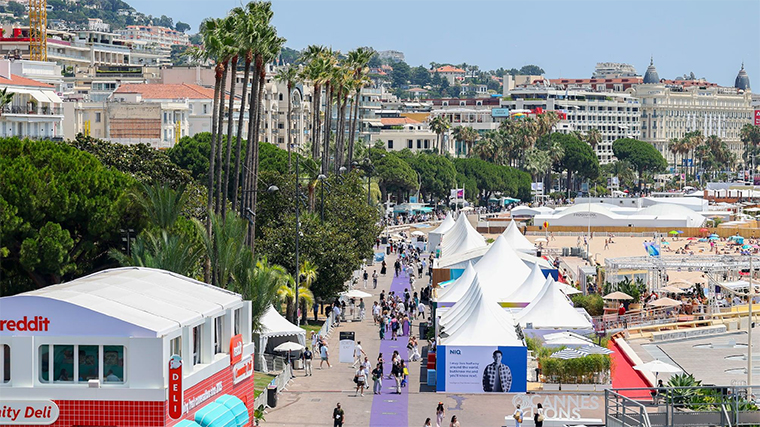
Even though award entries fell 25% this year, attendees mentioned how much busier it felt. This is a testament to how much the focus of the festival has moved away from being a creative award showcase to a kind of combination trade show plus experiential circus plus real-estate auction: roped-off, registration-only activations everywhere, AI firms taking over cafes that used to be quiet, branded yachts and branded “houses” and branded “beaches,” along with a record European heat wave.
The story is really about who owns the Croisette now. The prime beachfront that used to belong to agencies and publishers now belongs to the platforms and the AI companies. As Seedtag’s Adrien Boyer told The Media Leader, that shift tells you where marketing budgets will flow over the next three to five years.
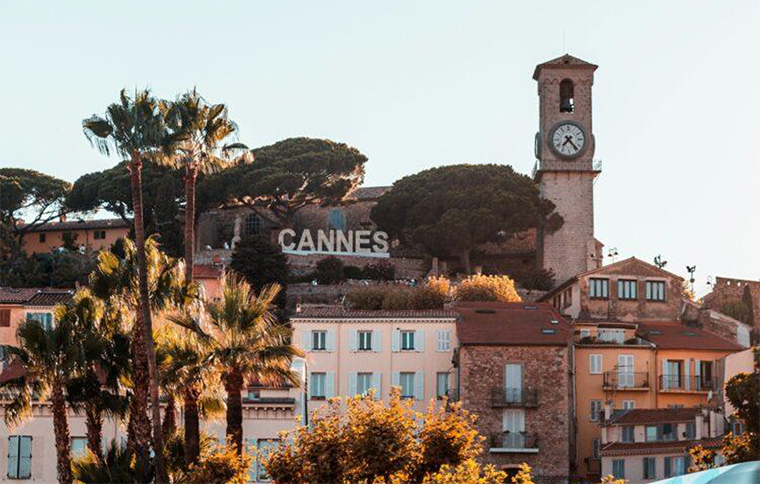
That remains platforms, of course, even as the dynamics and the key players are evolving. Brian Morrissey of The Rebooting, in his must-read, called it “a tangible reminder of the reordering of the media landscape that has largely swallowed media.”
The clearest sign of that was OpenAI.
At the company’s first-ever Cannes, Chief Revenue Officer Denise Dresser told a room of brands and agencies that OpenAI is clearly in the advertising business now and pitched a move from the “attention economy” to what she called the “intelligence economy.”
I have written about OpenAI’s ad evolution enough (including in my last issue), so I will not cover them again. All you need to know is that at Cannes a company whose CEO called ads “a last resort” two years ago was very visible on the Croisette competing for big spends with Google, Meta, Amazon, and others.
As the walled gardens tighten their grip on global ad spend, the AI platforms want in, too.
The other big signal was the agency model continuing to erode and transform. The holding companies arrived after a year of consolidation (Omnicom’s US$13.25 billion purchase of IPG closed in November, and Publicis is buying LiveRamp), and the buy-side conversation seems to be moving around them a bit.
Digiday’s read was blunt: creativity is moving beyond the agency model. Bose’s CMO has not used a creative agency in years; P&G’s Marc Pritchard described a modular, mix-and-match model and has added more than 80 agency suppliers in six months while building in-house.
Brands are using the same agentic tools to pull media in-house that agencies are using to defend themselves. And the creators showed up not for the parties but for the briefs, arriving as businesses that want owned, long-term partnerships rather than one-off posts.
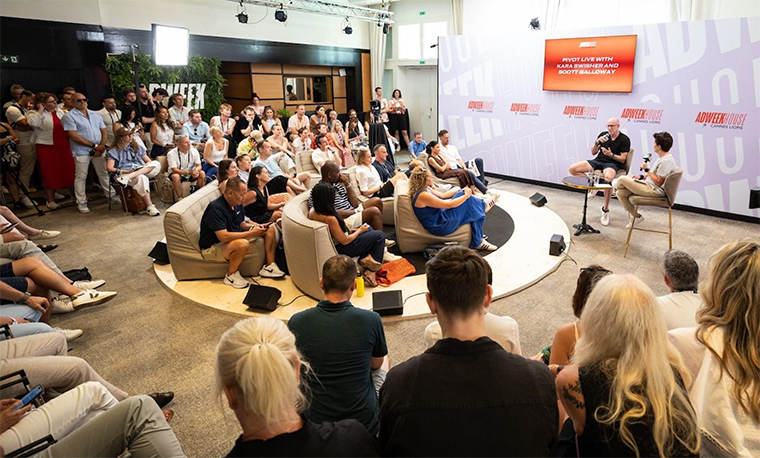
Scott Galloway’s line on stage was that the industry has not yet recognised it is no longer the protagonist, the creators are.
Agentic was everywhere, of course, especially in ad tech. The biggest announcement was WPP Media’s buyer agent for video, launched alongside an agentic-standards initiative to govern how buyer and seller agents talk to each other in premium video — with Disney, Netflix, NBCUniversal, Paramount, Comcast Advertising, the IAB Tech Lab, and Prebid all signed on.
Magnite launched Orchestration to broker buyer-agent-to-seller-agent trades. Horizon Media built Horizon OS Blu so its buying agents can talk to agents from Innovid, Magnite, and Smartly and from media companies like Fox, Disney, and NBCUniversal.
Yahoo’s DSP announced an “agent network.” Smartly launched an orchestration layer called Synapse, and PubMatic opened a Creator Marketplace to pull creator inventory into programmatic.
As one industry WhatsApp group reportedly put it, everyone all of a sudden has an end-to-end agentic solution.
Amazon launched Alexa+ agentic ads, a format that takes a shopper from seeing an ad to completing a purchase inside a single conversation, with no click and no landing page, which means no open-Web placement for a publisher to sell.
Omnicom Media used Cannes to announce a first-time Netflix deal that pairs Acxiom data, the asset it picked up in the IPG merger, with Netflix’s ad and AI-creative tools, plus a run of similar deals with Disney, Paramount, and NBCUniversal for dynamic and sequential streaming ads. Disney is readying a beta for AI-generated TV ads in July.
The pattern is consistent: The premium video players have the data, the demand, and the closed-loop measurement to make agentic buying and AI creative real first.
Retail and commerce media had a big presence, too. A whole stretch of the Croisette was Chase Media Solutions, PayPal Ads, and Uber Advertising. Walmart bought the connected-TV ad platform Vibe for a reported US$1 billion-plus to chase streaming and small-business dollars. The Trade Desk built a travel-and-hospitality commerce network with Uber, Booking.com, Marriott Media, and United Airlines’ Kinective Media. Even supermarket chains are media companies now.
We also saw more evidence for the shift from buying impressions to buying outcomes. Mutinex, with Hershey and The Trade Desk, used Cannes to show Biddable Outcomes, which feeds incremental-sales signals straight into programmatic buying. Most media plans today are bought against CPMs, Mutinex’s Henry Innis said, and that is a race to the bottom. IAB Tech Lab CEO Anthony Katsur framed the same idea more broadly: The future is buying outcomes, not audiences.
For all the agentic focus, Digiday reported that over rosé and dinner the talk was about cost: token bills that did not behave the way the projections promised and an ROI no one could yet prove. Adweek’s Mark Stenberg heard the same, a fear of being obsolete on stage and quiet talk of “costs and dubious ROI” in the back rooms, while The Rebooting’s Morrissey reported that, privately, most people call agentic advertising fake-it-till-you-make-it.
Cannes has always been more about the dealmaking that takes place offstage in the private dinners and meetings. But put it together and the through-line to what was announced in public is hard to miss: Every major player — the AI platforms, the holding companies, the streamers, and the retailers — used Cannes to stake a claim on the agentic, AI-driven ad economy, even as no one is really sure if or how any of that is going to work.
If you’d like to subscribe to my bi-weekly newsletter, INMA members can do so here.
Banner photo: Adobe stock image by Kasto.
Related Articles
-

In moving from an attention to an intention economy, who gets p...
16 September 2026 -

What’s really defensible in the age of AI?
30 August 2026 -

Time is now selling ads to AI bots
17 August 2026 -

Latin American publishers must rewrite ad strategies around out...
20 July 2026 -

Publishers rewrite the advertising playbook as traffic declines...
14 May 2026 -

Newsday shares its advertising transformation journey
29 April 2026 -

Lessons from case studies in revenue diversification at news co...
30 March 2026 -

Schibsted’s Partnerstudio embraces AI transformation
4 March 2026
Upcoming Events
-

Subscriber Acquisition Master Class
10-17 November 2026
-

Media Advertising Summit
New York, United States
07-10 December 2026
-

AI-Native News Product Master Class
18-25 February 2027
-

Media Subscriptions Summit
Oslo, Norway
08-12 March 2027
-

World Congress of News Media
New York, United States
25-30 April 2027
-

Branded Content & Partnerships Master Class
20-27 May 2027
-

Subscriber Retention Master Class
17-24 June 2027
-

Conferencia Latinoamericana
15-16 July 2027
-

South Asia News Media Festival
New Delhi, India
19-22 July 2027
-

Asia/Pacific News Media Summit
19-20 August 2027
-

CEO Roundtable at Kilkenny
Kilkenny, Ireland
24-26 August 2027
-

Media Innovation Week
Amsterdam, The Netherlands
27 September - 01 October 2027








