

DRIVE, Local_Vocal reinvent local newspapers for the AI age
Ideas Blog | 09 August 2026

On May 5, 2026, Ippen.Media and DRIVE presented the first Local Journalism Day. Supported by more than 100 German-language newspaper titles, it showed how local newspapers still have the power to reach people of all ages.
But to keep that power, newspapers must evolve. They must become more approachable, listen more deeply, and give people a voice across every channel — not just print. And in a world unsettled by misinformation, deepfakes, and AI-driven uncertainty, local newspapers that embrace their community mission have a real opportunity to become trusted anchors once again.
Yet in many newsrooms, editorial teams and publishers still revolve around producing and distributing the daily printed edition. Quantitative output targets for filling pages often rank ahead of quality, relevance, and personal encounter.
Meanwhile, younger audiences — raised on TikTok, YouTube, and interactive digital experiences — often see text-heavy pages or e-paper replicas as relics from another era.
If local journalism wants to win their hearts, it must compete with the digital formats they already love.
The good news is AI and modern digital tools offer endless possibilities to create valuable offerings that also meet the usage expectations of the next generation.
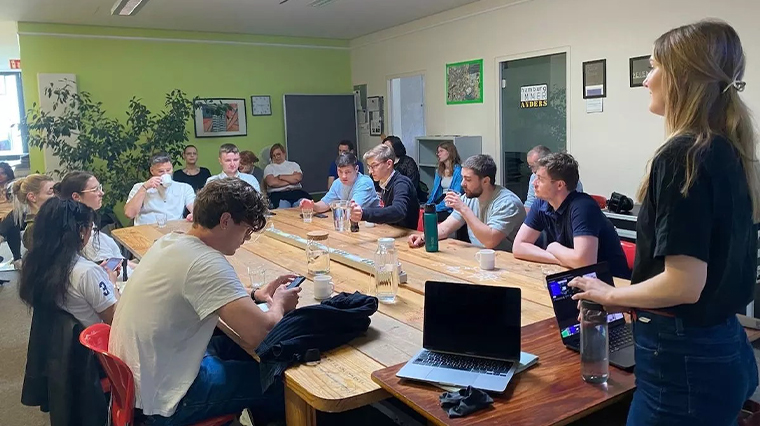
The Local_Vocal project
This is where the Local_Vocal project comes in. AI is advancing at unprecedented speed, reshaping industries and institutions in real time. For local newspapers, two truths have become impossible to ignore:
- AI development requires cooperation. No single publisher can shoulder the risks, costs, and learning curve alone. Shared experimentation allows mistakes to be made once, successes to spread quickly, and innovation to scale efficiently across the industry.
- The global race in AI is relentless. New models and algorithms reach users in ever-shorter cycles. To keep pace, local media need direct access to research, development, and scientific expertise.
Local_Vocal serves as an AI accelerator and a cooperative platform connecting regional publishers with the German Research Center for Artificial Intelligence (DFKI) in Kaiserslautern. The project is operated by DRIVE local e.V., an association founded in 2026 to support the digital transformation of regional daily newspapers.
The association’s founding members include 13 German publishers, dpa, and Highberg/Schickler — the same partners who launched the original DRIVE initiative in 2020. DRIVE has already proven the power of cross-publisher collaboration, and Local_Vocal is the next logical step.
Andreas Müller, CEO of Aachener Zeitung and chairman of DRIVE local e.V., explained it perfectly: “The departure from print and the dynamic development of Artificial Intelligence demand answers of what a local newspaper can and should be in the future. It’s about valuable new offerings with which we can also win the next generation for local journalism.”
To fund research-heavy projects like Local_Vocal, DRIVE local e.V. is pursuing public support. The association argues that newspaper publishers — like other mid-sized industries undergoing digital transformation — should have access to the same funding opportunities when they collaborate with scientific partners.
The governments of North Rhine-Westphalia and Rhineland-Palatinate have become the first public supporters.
“Local journalism is the foundation for democratic discourse at the local level and promotes social cohesion,” explained North Rhine-Westphalia’s Media Minister Nathanael Liminski (CDU). “To preserve it, we need offerings that also convince younger people and can form the basis for new and sustainable business models.”
The initiative is creating new and sustainable business models, securing media diversity, and strengthening democracy, so supporting it is “a good investment” for the state.
Heike Raab (SPD), the outgoing state secretary for media in Rhineland-Palatinate, agreed: “Such initiatives are indispensable for local and regional information delivery, especially at a time when journalistic, editorially produced content is the currency of democracy.”
With this support, Local_Vocal and DFKI can begin developing and testing pilot projects with participating publishers, including Lensing Medien, Aschendorff Medien, Neue Westfälische, VRM, and Rheinpfalz.
The association remains open to any German publisher producing a regional subscription newspaper; discussions with additional partners are underway.
The Trusted Local Agent
The starting point for Local_Vocal is the idea that a local newspaper could move from being a user of AI to becoming an AI agent itself.
This Trusted Local Agent (TLA) would be a highly personalised digital guide for everyday life in the local area — but with one crucial advantage over platform-based AI tools: trust.
Because it is rooted in a local newspaper brand, its use of personal data and its algorithmic goals must be transparent, ethical, and aligned with the newsroom’s public mission.
This digital companion would learn users’ interests, keep them informed, research questions, make recommendations, and potentially even book services or handle tasks if the user chooses. But its first introduction to the community may be something simple: a compact, low-threshold daily update that feels like a friendly morning call from the newsroom.
Each person decides for themselves whether “How is my city doing today?” comes as a casual audio or video offering with selectable voices, or perhaps rather in a sober newsletter or messenger format. What matters is that, in real time and including weather and traffic, the service should describe the morning mood of the local news situation with which the community starts its day.
This is important because when a local newspaper becomes a niche product, it loses its foundation as a caretaker of the entire community. “How is my city doing today?” would be free, multilingual, and designed to become genuine “talk of the town.”
From needed product to beloved brand
In the print era, the daily newspaper was a “need” product: unavoidable, essential, and part of everyday life. In the digital world, it must become a “want” product. That shift requires emotional connection, loyalty, and a relationship built on more than utility.
Local_Vocal is exploring how newspapers can evolve into Local Love Brands, using AI-powered touchpoint management to build relationships from the very first interaction.
Traditional CRM systems focus on existing subscribers; future strategies must nurture potential readers long before they subscribe. Here, too, AI offers enormous potential, from personalised onboarding to dynamic
content recommendations to community-building experiences.
A culture of cooperation and innovation
Local_Vocal benefits from DRIVE’s established culture of collaboration. Projects are developed in agile sprints, tested through A/B experiments, and evaluated with comprehensive data. Publishers gain honest benchmarking insights and shared learning that accelerates progress.
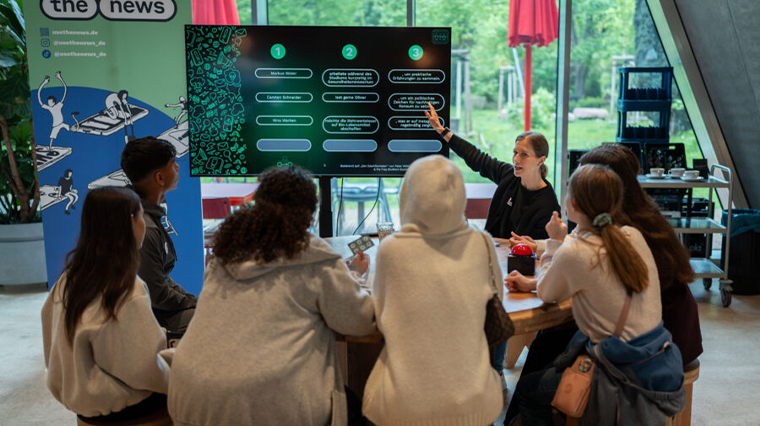
An important element is intensive collaboration with young focus groups. This is where the Competence Center Young Audience (CCYA) in Hamburg — run by the news literacy initiative #UseTheNews — comes into play.
Among other things, it already supports the Hamburger Abendblatt in exchanges with teenagers and young adults.
Local_Vocal represents a new chapter for local newspapers: one defined by cooperation, innovation, and a commitment to serving communities in ways that match modern expectations.
By embracing AI responsibly and creatively, local media can reclaim their role as trusted guides, build deeper relationships with readers, and create offerings that feel indispensable again.
Related Articles
-

Marketers should outsource tasks, not thinking
25 October 2026 -

AI’s effect on super user math
15 September 2026 -

At Mediacorp’s CNA, loyalty means giving audiences a reason to ...
20 August 2026 -

Tribun Network turns print “dots” into AI-powered insight
20 August 2026 -

Nation Media Group focuses editorial strategy on stories that m...
4 August 2026 -

Briefly News empowers journalists with AI tool suite Nova
4 August 2026 -

Economist launches subscription tier targeting younger audience...
20 July 2026 -

Grupo RBS builds social-first video operation to expand audienc...
20 July 2026
Upcoming Events
-

Subscriber Acquisition Master Class
10-17 November 2026
-

Media Advertising Summit
New York, United States
07-10 December 2026
-

AI-Native News Product Master Class
18-25 February 2027
-

Media Subscriptions Summit
Oslo, Norway
08-12 March 2027
-

World Congress of News Media
New York, United States
25-30 April 2027
-

Branded Content & Partnerships Master Class
20-27 May 2027
-

Subscriber Retention Master Class
17-24 June 2027
-

Conferencia Latinoamericana
15-16 July 2027
-

South Asia News Media Festival
New Delhi, India
19-22 July 2027
-

Asia/Pacific News Media Summit
19-20 August 2027
-

CEO Roundtable at Kilkenny
Kilkenny, Ireland
24-26 August 2027
-

Media Innovation Week
Amsterdam, The Netherlands
27 September - 01 October 2027








