

O Globo sets records and makes history with its massive centennial edition
Ideas Blog | 21 May 2026

In August 2022, we held our first planning meeting to celebrate O Globo’s 100th anniversary. The meeting brought together directors and executives from across the company, including the CEO.
In an hour and a half, we discussed a wide range of ideas. Some were later abandoned, others significantly reshaped, and much of what was ultimately executed was only conceived in the months that followed. But from the very beginning, we were absolutely certain that the centennial print edition had to be something special.
And yet, the final result, which even included a Guinness World Records title, far exceeded expectations.
How we got here
O Globo was founded on July 29, 1925, by journalist Irineu Marinho, a newspaper publisher already well known in Rio de Janeiro, then Brazil’s federal capital. The new newspaper began as an evening edition, and its first edition hit the streets at 6 p.m. on a Wednesday, selling 33,435 copies.
Marinho’s vision was to bring together professional journalists to create a modern publication, independent from political and economic groups, and focused on the real concerns of its readers.
Over the course of a century, O Globo changed format, embraced new technologies, lived through different phases of Brazilian history, and reached audiences Marinho could never have imagined.
If it was born for 33,000 readers, today it reaches around 30 million people online. Yet its core ambition remains the same: to explain the world, follow the real lives of Brazilians, and experiment with new ways of doing journalism.
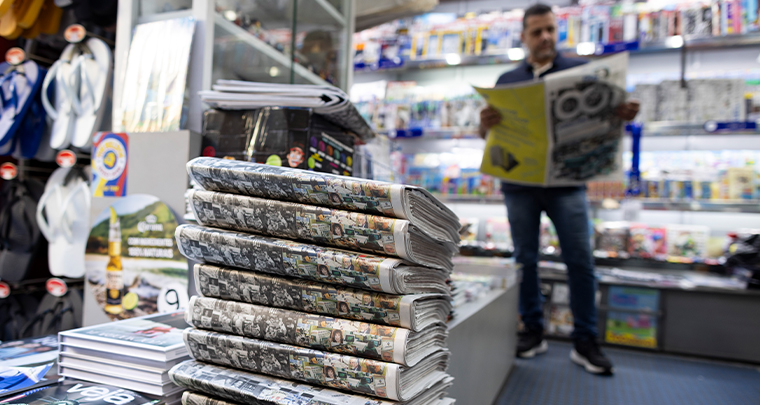
The commemorative edition needed to honour that legacy. Published on the Sunday before the centennial of July 29, 2025, it ran 526 pages. It weighed nearly two kilograms and was delivered to subscribers and newsstands in a transparent plastic bag. Every copy sold out that same morning.
Making history
Bringing it to readers involved around 360 professionals from the earliest stages of its conception. In addition to the traditional Sunday edition, that issue of O Globo included 14 special sections, all produced by the newsroom to celebrate the anniversary.
These thematic sections combined reporting and interviews on the future of society with articles recalling how the newspaper had covered major historical moments.
In agreement with the commercial division, the project maintained a clear balance between journalism and advertising. For example, no section carried an ad before page five. Far from hurting performance, this decision enhanced the edition’s quality.
More than 200 advertisers from leading sectors of society were featured, and advertising revenue exceeded the original target by 2x. In total, the commemorative issue generated nearly 30 times the average revenue of a typical Sunday edition of O Globo.
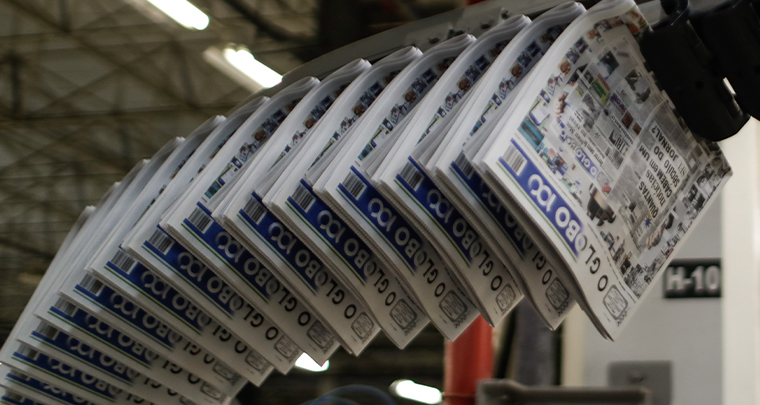
Printing at O Globo’s production facility was carried out in three phases, from Thursday to Saturday, with staggered schedules. The distribution team created a dedicated transportation structure for home-delivery depots and retail outlets, while the newsroom and marketing team supported a broadcast TV campaign promoting the edition the night before publication.
Public reaction
Once the newspaper reached subscribers’ homes and went on sale at newsstands, the reaction began. Online, the traditional medium of a printed newspaper became the main topic on social media.
Journalists, public figures, and influencers commented organically on the edition. Hundreds of former O Globo staff members shared stories and photos throughout the week.
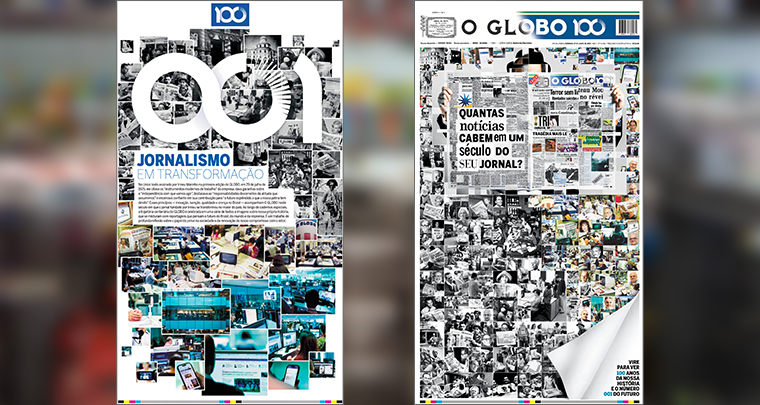
The print edition became the defining milestone of a year-long centennial celebration that mobilised O Globo across multiple platforms.
Some of the highlights of the celebration included the release of two books, the airing of a four-episode documentary series on broadcast television, a free concert with an orchestra and popular artists, an exhibition mounted at a cultural centre in Rio de Janeiro, and another opened at the National Congress in Brasília.
All of these initiatives had a tremendous impact on our brand, attracted thousands of new subscribers, and helped reinforce the value of our journalism. But the 100th-anniversary print edition had one more achievement in store.
In March 2026, we received the final confirmation of the project’s scale: the commemorative Globo 100 edition was recognised by Guinness World Records for the “most pages in a single commercially available newspaper issue (complete bundle).”
It was international recognition that, in celebrating a century of history, O Globo had achieved something worthy of its own legacy.
Related Articles
-

Collective Newsroom is rethinking its approach to young audienc...
28 October 2026 -

The side door is the destination for young audiences
13 October 2026 -

5 lessons from the INMA Young Audiences Summit
28 September 2026 -

The 3 editorial pillars of Chile’s first streaming news channel
23 September 2026 -

Prothom Alo’s World Cup content flywheel engages millions
31 August 2026 -

Economist launches subscription tier targeting younger audience...
20 July 2026 -

Grupo RBS builds social-first video operation to expand audienc...
20 July 2026 -

With Düsseldorf geht aus, Rheinische Post brings local gastrono...
14 July 2026
Upcoming Events
-

Subscriber Acquisition Master Class
10-17 November 2026
-

Media Advertising Summit
New York, United States
07-10 December 2026
-

AI-Native News Product Master Class
18-25 February 2027
-

Media Subscriptions Summit
Oslo, Norway
08-12 March 2027
-

World Congress of News Media
New York, United States
25-30 April 2027
-

Branded Content & Partnerships Master Class
20-27 May 2027
-

Subscriber Retention Master Class
17-24 June 2027
-

Conferencia Latinoamericana
15-16 July 2027
-

South Asia News Media Festival
New Delhi, India
19-22 July 2027
-

Asia/Pacific News Media Summit
19-20 August 2027
-

CEO Roundtable at Kilkenny
Kilkenny, Ireland
24-26 August 2027
-

Media Innovation Week
Amsterdam, The Netherlands
27 September - 01 October 2027








