

Rheinische Post programme turns print loyalty into digital confidence for older readers
Ideas Blog | 11 June 2026

Digital transformation in media often prioritises new products. But one question decides long-term success: How do we bring our most loyal print subscribers into digital — without losing them?
At Rheinische Post Mediengruppe, we treated this not as a tech challenge but as a confidence challenge. The result is the DigitalFit Academy: a service-driven support model that helps readers aged 60+ navigate digital life — while strengthening retention and digital growth.
The challenge: high loyalty, low confidence
Our 60+ audience is highly loyal yet faces specific barriers:
- Widely varying digital literacy levels.
- Fear of mistakes and low trust in technology.
- Physical limitations (vision, motor skills).
- Complex devices, interfaces, and jargon.
Product onboarding alone wasn’t enough. What was missing was ongoing human support.
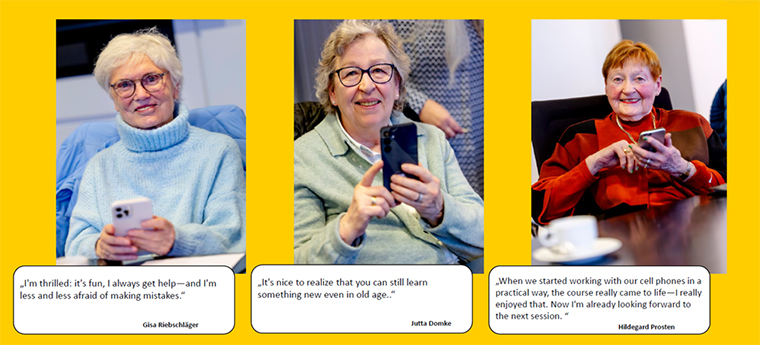
Continuous support, not one-off training
DigitalFit Academy combines training and service in one package:
- Hands-on, jargon-free courses tailored to 60+ needs.
- A 24/7 support hotline for immediate help.
- Remote assistance directly on users’ devices.
- On-site consultations for individual guidance.
This creates a reliable system — from first steps to long-term usage.
Why it works (and scales)
Several elements make it successful:
- Holistic: training + service + personal guidance.
- Scalable: standardised programme with centralised support.
- Retention-driven: deepens relationships with existing subscribers.
- Socially relevant: enables digital participation for an underserved group.
To meet offline audiences where they live, we built trust through offline channels:
- Print coverage and in-paper promotions.
- Flyers in familiar environments (e.g., doctors’ offices).
- Personal outreach and local partnerships (e.g., banks, transport providers).
Launched in Q4 2025, the programme has received very positive feedback and has already reached 50 participants.
Key learnings for publishers
- Start with emotions, not technology.
- Fear is the biggest barrier to adoption.
- Service is the new marketing.
- Offline touchpoints can be the fastest route to digital usage.
- Retention and transformation belong together.
This approach showed us that digital transformation can include — not exclude — older audiences.
Related Articles
-

WSJ executive councils show how publishers build communities th...
19 October 2026 -

Bundling is a pricing decision, rebundling is an organisational...
18 October 2026 -

AI’s effect on super user math
15 September 2026 -

At Mediacorp’s CNA, loyalty means giving audiences a reason to ...
20 August 2026 -

Tribun Network turns print “dots” into AI-powered insight
20 August 2026 -

Indian Express builds a video-first future around trusted journ...
20 July 2026 -

Economist launches subscription tier targeting younger audience...
20 July 2026 -

Grupo RBS builds social-first video operation to expand audienc...
20 July 2026
Upcoming Events
-

Subscriber Acquisition Master Class
10-17 November 2026
-

Media Advertising Summit
New York, United States
07-10 December 2026
-

AI-Native News Product Master Class
18-25 February 2027
-

Media Subscriptions Summit
Oslo, Norway
08-12 March 2027
-

World Congress of News Media
New York, United States
25-30 April 2027
-

Branded Content & Partnerships Master Class
20-27 May 2027
-

Subscriber Retention Master Class
17-24 June 2027
-

Conferencia Latinoamericana
15-16 July 2027
-

South Asia News Media Festival
New Delhi, India
19-22 July 2027
-

Asia/Pacific News Media Summit
19-20 August 2027
-

CEO Roundtable at Kilkenny
Kilkenny, Ireland
24-26 August 2027
-

Media Innovation Week
Amsterdam, The Netherlands
27 September - 01 October 2027








