

Indian Express builds a video-first future around trusted journalism
Conference Blog | 20 July 2026

As audiences increasingly discover news through social media, video platforms, and AI-powered search, Indian Express is rethinking how a legacy news organisation reaches consumers — not by chasing clicks but by making trusted journalism more accessible through new video products and formats.
During a study tour stop at the publisher’s headquarters in Noida, Sayoni Aiyar, business head of videos/English at Indian Express, and Saurabh Dwivedi, editor of Indian Express Hindi, outlined how they are building a video-first strategy while adapting journalism for changing audience behaviour.
The study tour marks one of seven during the first two days of the INMA South Asia News Media Festival before delegates gather in New Delhi for two days of conference presentations.
Credibility as a competitive advantage
Aiyar described a rapidly changing distribution landscape in which audiences increasingly consume news through social media, messaging apps, and AI-powered search rather than visiting publishers’ homepages directly.
While online news consumption continues to grow, she said, the benefits are no longer flowing automatically to publishers’ own Web sites. Instead, news organisations must compete with independent creators who often excel at making news accessible, entertaining, and timely.
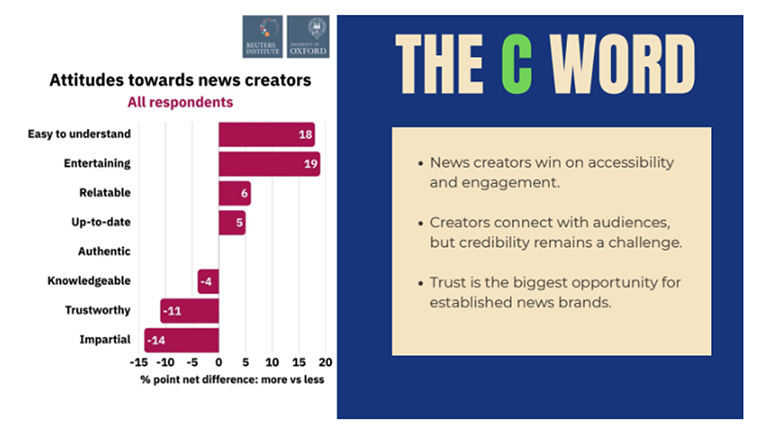
Rather than trying to imitate creators, Indian Express has chosen to build on what it believes is its greatest strength.
“We have to think about whether it’s time to stop chasing views and clicks and to build on what we actually have,” Aiyar said. “Our biggest opportunity, our biggest advantage, is our brand credibility.”
That philosophy has shaped the publisher’s transformation over the past two years, with the newsroom adopting a video-first mindset while maintaining the reporting standards associated with the Indian Express brand.
Building video from the ground up
Because Indian Express was not a television broadcaster, Aiyar said the company was able to develop a digital-native video operation without inheriting production habits designed for linear television.
Instead of measuring success through raw view counts, the team prioritises audience engagement and continually experiments with new formats, platforms, and products.
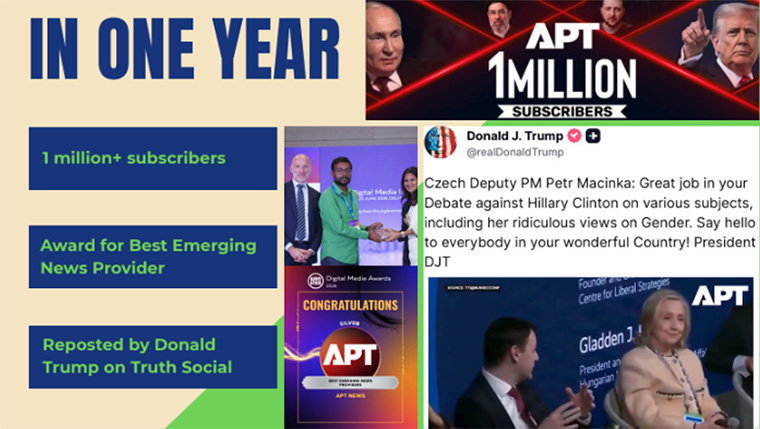
One of those experiments was APT, a standalone video brand built around raw, minimally edited footage presented through its “Silent Witness” format. By allowing audiences to interpret events without added commentary, the product has attracted more than one million subscribers within a year, demonstrating demand for impartial visual journalism.
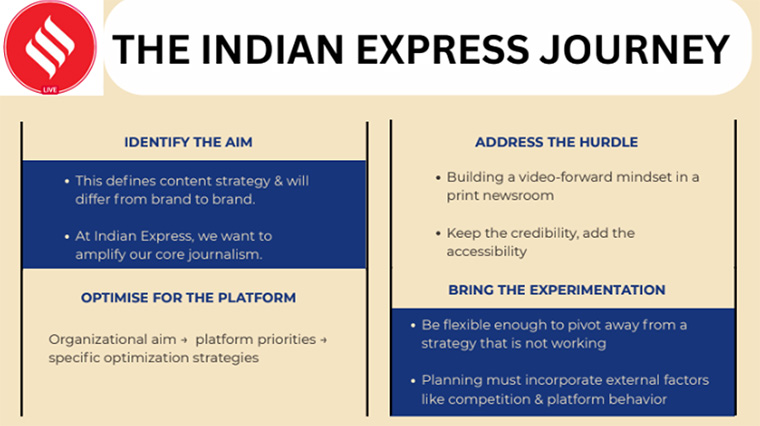
Every news organisation’s strategy should begin by defining its primary objective, whether that is growing younger audiences, increasing revenue, or amplifying its journalism, Aiyar said. From there, publishers can choose the platforms, formats, and experiments that best support those goals.
Native video, not recycled print
For Dwivedi, the challenge is not simply producing more video but changing how journalists think about storytelling.
Print reporters are trained to write copy, he said, but video demands a different approach. Indian Express is investing in training while encouraging reporters to see video as an opportunity to extend the reach and impact of their journalism rather than replace it.
Ground reporting remains central to that strategy.
“We chose to be journalists,” Dwivedi told study tour attendees, explaining the organisation’s focus is on building “knowledge and impartial ground reporting” rather than pursuing activism or sensationalism.
News publishers should resist treating video as simply another distribution channel, he said: “The question every media house should answer is: ‘Will my viewer remember that they watched my video?’ They will remember you only if there is continuity in your content and character.”
That requires investing in original reporting and distinctive programming rather than relying on viral clips or AI-generated content audiences can find anywhere.
Loyalty over virality
Both presenters argued sustainable digital growth depends less on attracting one-time viewers than on building lasting relationships with audiences.
For Indian Express, that means experimenting constantly while measuring success through audience engagement and long-term loyalty rather than simply maximising views.
As publishers navigate an increasingly fragmented digital landscape, the presenters argued that legacy news brands still possess a meaningful competitive advantage — provided they adapt their journalism to new formats without abandoning the credibility that built their reputations in the first place.
Related Articles
-

WSJ executive councils show how publishers build communities th...
19 October 2026 -

5 lessons from the INMA Young Audiences Summit
28 September 2026 -

The 3 editorial pillars of Chile’s first streaming news channel
23 September 2026 -

AI’s effect on super user math
15 September 2026 -

What I told 40 CEOs (and won’t gatekeep from you)
30 August 2026 -

At Mediacorp’s CNA, loyalty means giving audiences a reason to ...
20 August 2026 -

Economist launches subscription tier targeting younger audience...
20 July 2026 -

Grupo RBS builds social-first video operation to expand audienc...
20 July 2026
Upcoming Events
-

Subscriber Acquisition Master Class
10-17 November 2026
-

Media Advertising Summit
New York, United States
07-10 December 2026
-

AI-Native News Product Master Class
18-25 February 2027
-

Media Subscriptions Summit
Oslo, Norway
08-12 March 2027
-

World Congress of News Media
New York, United States
25-30 April 2027
-

Branded Content & Partnerships Master Class
20-27 May 2027
-

Subscriber Retention Master Class
17-24 June 2027
-

Conferencia Latinoamericana
15-16 July 2027
-

South Asia News Media Festival
New Delhi, India
19-22 July 2027
-

Asia/Pacific News Media Summit
19-20 August 2027
-

CEO Roundtable at Kilkenny
Kilkenny, Ireland
24-26 August 2027
-

Media Innovation Week
Amsterdam, The Netherlands
27 September - 01 October 2027








