

Journalism’s democratic role comes into focus at INMA World Congress
World Congress Blog | 13 May 2026

Discussions about democracy, public trust, political extremism, and journalism’s civic role surfaced repeatedly throughout the INMA World Congress of News Media last week in Berlin.
Across five days of study tours, conference sessions, and seminars, speakers explored how news organisations are navigating rising disinformation, political polarisation, declining institutional trust, and growing pressure on local journalism — all while adapting to AI and platform disruption.
The conversations began Wednesday morning with a forceful warning from INMA President and Mediahuis CEO Gert Ysebaert, who framed the challenges facing journalism not simply as business disruption but as a threat to democratic culture itself.
“Independent journalism is not just another business model,” Ysebaert said. “It is a foundation of pluralism. It is essential to long-term accountability in a democratic society.”
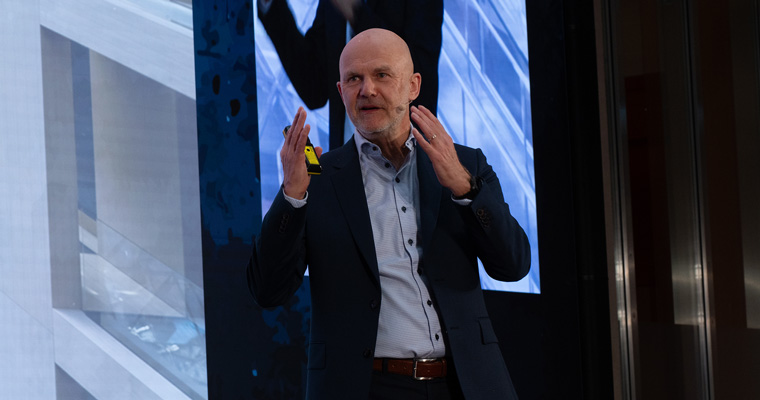
Those themes became especially tangible during presentations from German regional publisher Funke Media Group and historian and Atlantic staff writer Anne Applebaum, who separately described how democratic erosion is increasingly shaping the environments in which journalism operates.
Speaking at the opening of the conference sessions, Ysebaert described growing political pressure on journalism, the erosion of trust in institutions, platform-driven misinformation, and the rise of AI-generated manipulation.
“We often call journalism the fourth pillar of democracy,” he said. “That is not a metaphor. It is a mandate.”
The World Congress brought together more than 750 delegates from 38 countries for two days of study tours across 17 German media companies, followed by two conference days and a seminar programme focused on specialised industry topics.
For many attendees, the German setting added context to the discussions.
Berlin’s history — and the country’s current political debates — gave conversations about democratic resilience, extremism, and public trust particular relevance as publishers examined how journalism organisations maintain authority and civic connection in fragmented information environments.
Anne Applebaum on democratic erosion and journalism
Applebaum addressed those tensions directly during her discussing with World Congress Co-Moderator Robert Whitehead on authoritarianism, media manipulation, and democratic decline.
Speaking about global political trends, Applebaum said journalism organisations are operating during a period of both technological upheaval and democratic instability.
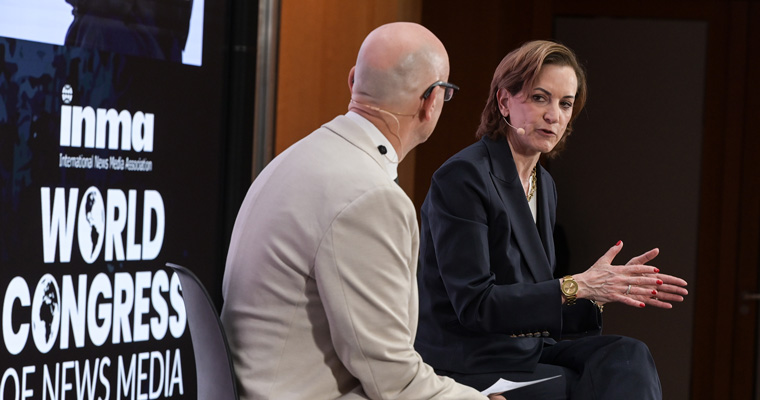
“There’s as of last year more people now live in autocracies than in democracies,” she said. “Seventy five percent of the world’s population now lives in autocracies.”
Applebaum described how populist political movements increasingly use polarisation and media ecosystems to reshape public debate and weaken democratic norms. She also said journalism organisations need to think more intentionally about community and trust.
Using The Atlantic as an example, Applebaum described efforts to build a publication that spans ideological divisions while remaining anchored around democratic values.
“One of the things The Atlantic tried to do was to be a magazine that goes from the center left to the center right,” she said. “The ideas aren’t left and right. They’re ideas about American democracy.”
She also described the current environment facing journalism as “an absolutely seismic time for change.”
Funke Media confronts extremism locally
If Anne Applebaum described the broader geopolitical context, Funke Media Group showed how those pressures are playing out inside local newsrooms.
Julia Becker, chair of the supervisory board at Funke, framed those pressures as part of a broader democratic challenge facing journalism.
“Independent journalism is not just another business model,” she said. “It is a foundation of pluralism. It is essential to long-term accountability in a democratic society.”
Becker described growing political pressure on journalism, declining trust in institutions, and increasingly blurred lines between information and manipulation on digital platforms: “We often call journalism the fourth pillar of democracy. That is not a metaphor. It is a mandate.”
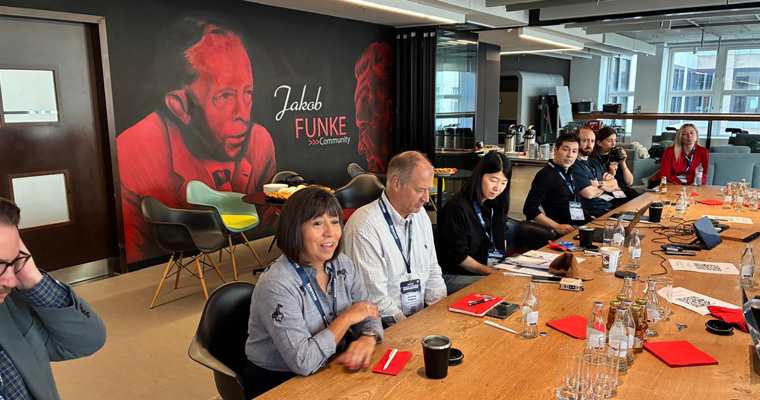
Those themes were also illustrated during one of the World Congress study tour stops, where executives and journalists from Funke’s Thüringer Allgemeine newsroom discussed covering politics in parts of eastern Germany where support for the far-right AfD party has grown significantly.
Reporter Fabian Klaus described investigative reporting aimed at explaining extremist rhetoric and anti-democratic messaging from AfD politicians to readers. Referring to comments from Björn Höcke about “overcoming the system,” Klaus said: “We mean abolish the democracy.”
Klaus also described being physically attacked while covering an AfD demonstration in Erfurt.
Funke executives said the political climate has forced operational changes inside local newsrooms, including unbranded company vehicles, tighter newsroom security, and journalists travelling in pairs while covering demonstrations. They also described how security concerns have made it harder to maintain the open relationships local newspapers traditionally had with readers, with some editorial offices no longer easily accessible to the public.
The Funke discussions illustrated how democratic tensions increasingly affect journalism operationally as well as editorially.
Local journalism’s democratic role
The idea that local journalism remains deeply connected to civic life and community trust appeared repeatedly during both the study tours and conference sessions.
A conference session on regional publishing described local journalism as “the beating heart of communities” and “essential” to democratic life and trust.
Several German publishers said proximity and community familiarity remain key advantages for local news organisations in an era of declining institutional trust.
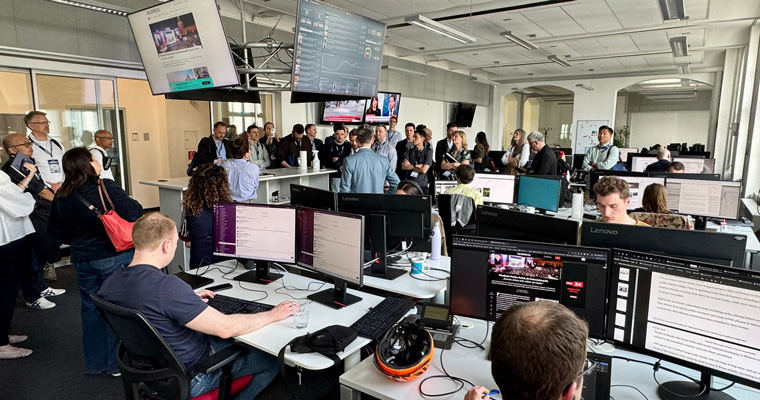
At Tagesspiegel, executives discussed how the Berlin-based publisher is attempting to expand nationally while preserving its local identity and civic credibility. The company positioned its roots in post-war Berlin as central to its editorial mission today.
Other publishers demonstrated how technology can support civic information at the local level.
One study tour presentation examined how publishers used AI-assisted systems and structured election data to generate thousands of articles covering local elections in small German communities that historically received little direct reporting attention.
“We think this so important to give this important information to our readers,” one presenter said. “This crucial in democracy because what is the most important thing in democracies, it’s elections.”
Executives described publishing approximately 5,000 election-information articles in one week.
The goal, speakers said, was to ensure that residents in even very small communities could access meaningful local election information — “and that’s a very democratic task,” one presenter said.
Rebuilding trust through participation
Several seminar sessions also focused on news literacy, transparency, and audience participation — particularly among younger audiences consuming news primarily through creators and platforms rather than traditional publishers.
Speakers from the DPA-backed “Use The News” initiative described growing confusion among younger audiences about the difference between journalism and influencer content, alongside declining trust in traditional media institutions.
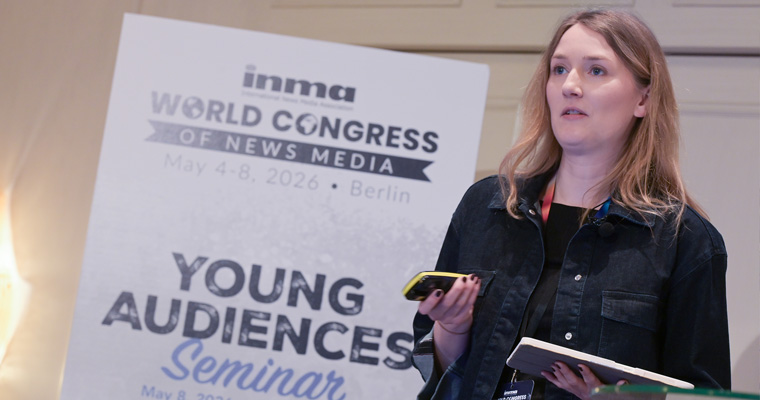
Vanessa Bitter, chief operating officer of #UseTheNews, said rising disinformation on social media is “not only a challenge for journalism” but “also a challenge for our democracy.”
The response, speakers argued, requires journalism organisations to become more transparent and participatory.
Young audiences increasingly want journalism to feel more transparent and participatory, with opportunities to engage directly in newsroom and media-literacy initiatives, Bitter said.
For news publishers navigating AI disruption and changing audience behaviour, presentations throughout the week showed questions about trust, democratic resilience, and local connection are becoming increasingly intertwined.
All photos by Robert Downs Photography.
Related Articles
-

Arena Holdings learns reaching millions isn’t the same as servi...
8 October 2026 -

The 3 editorial pillars of Chile’s first streaming news channel
23 September 2026 -

Indian Express builds a video-first future around trusted journ...
20 July 2026 -

Inside Denník N’s successful subscription strategy
15 July 2026 -

Why are audiences going to AI answer engines for news?
30 June 2026 -

La Nación explores historic corruption case with unprecedented ...
16 June 2026 -

SCMP shows the power of print with supplement after deadly high...
1 June 2026 -

Audiences are reading less fact-based content yet newsrooms con...
25 May 2026
Upcoming Events
-

Subscriber Acquisition Master Class
10-17 November 2026
-

Media Advertising Summit
New York, United States
07-10 December 2026
-

AI-Native News Product Master Class
18-25 February 2027
-

Media Subscriptions Summit
Oslo, Norway
08-12 March 2027
-

World Congress of News Media
New York, United States
25-30 April 2027
-

Branded Content & Partnerships Master Class
20-27 May 2027
-

Subscriber Retention Master Class
17-24 June 2027
-

Conferencia Latinoamericana
15-16 July 2027
-

South Asia News Media Festival
New Delhi, India
19-22 July 2027
-

Asia/Pacific News Media Summit
19-20 August 2027
-

CEO Roundtable at Kilkenny
Kilkenny, Ireland
24-26 August 2027
-

Media Innovation Week
Amsterdam, The Netherlands
27 September - 01 October 2027








