

Build for audience habitats, not newsroom habits
Conference Blog | 17 September 2026

The INMA Young Audiences Summit concluded Thursday with a consistent message from its speakers: The creator economy is no longer an experiment at the edge of the newsroom but an existential challenge to the newsroom itself.
The three-day virtual summit, curated by INMA Young Audiences Initiative Lead Kerstin Hasse and free to members through the support of Knight Foundation, drew 379 participants from 185 companies in 44 countries. Its central question: What does journalism look like when the audience lives on TikTok, YouTube, and Instagram and has no intention of returning to publishers’ home pages?
The answer that emerged: Build for audience habitats, not newsroom habits.
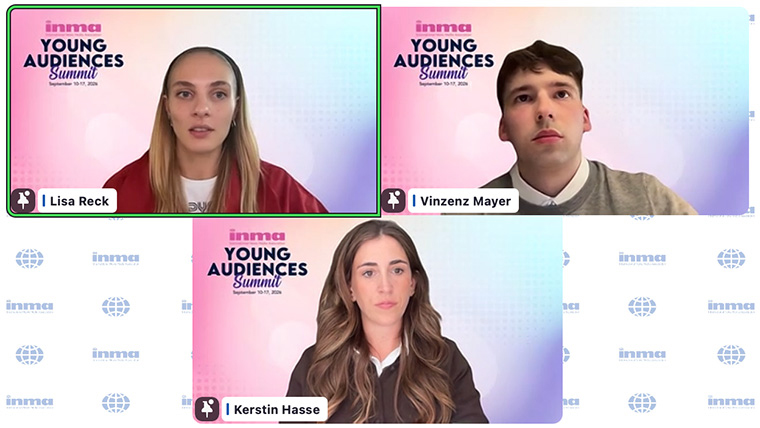
The final module, “How to Build Creator Talent,” focused on turning journalists into creators. Johanna Rüdiger of Deutsche Welle started a personal TikTok in 2020 as an experiment. Six years on, DW runs more than 30 TikTok accounts and applies creator formats across 100-plus social channels. Her one-day workshop takes first-time creator-journalists from pitch to a script of one minute or less to a finished film.
Rüdiger rejected the notion that creator journalism is “dumbing down.” It is harder, she said: The creator-journalist reads the dense source material, extracts the single aspect that matters to the viewer, translates policy into daily life, and delivers it in the tone of a FaceTime call with a friend. Teams should accept imperfect visuals, she said, but never compromise on accuracy.
Print journalists adapt faster than television veterans, who must unlearn the anchor voice, Rüdiger said. She also warned against the reflex of hiring “young TikTokers”: The research and story craft of experienced journalists are the asset, and in an age of AI abundance, trust and relationship are what differentiate.
English-language international news is saturated, Rüdiger said, and she advised publishers to niche down or move to less-crowded languages. DW’s Hausa creator content has drawn half a million views.
Sarah Gu of The Washington Post Creator Network said the unit sits deliberately outside news and opinion so it can move fast. Six months in, it has two products. “Verified” is a weekly creator-economy newsletter with roughly 30,000 organic subscribers, with a podcast and a Washington live event on the way. “Featured Voices” is a sponsored short-form series of four to eight videos with vetted knowledge creators in nutrition, finance, travel, and digital mental health.
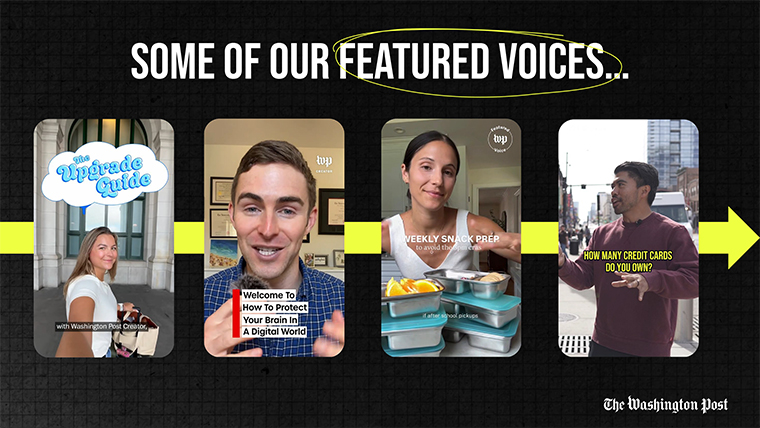
Under the model, creators own their IP. Content publishes on their channels first; the Post co-posts and reposts. The Post edits, fact-checks, and legally reviews all content. Bespoke ethics agreements cover conduct, conflicts, and disclosure. AI-generated video is not permitted. Concept to publication takes two to three months, Gu said, and the first six months exceeded sponsor expectations. Six new shows are planned through year-end.
The network’s target was an audience at least half under 45, a goal Gu said it has surpassed.
Gu described the approach as the publisher as editorial co-publisher: The publisher pays creators like freelancers, finds the sponsor, and co-publishes the work. She urged publishers to stop judging social video by subscriptions it was never going to produce and instead to measure engagement, retention, community growth, and brand lift — then connect those to sponsorship revenue.
At Bild, journalists watched independent creators repackage their reporting, monetise it, and build audiences while the in-depth originals sat behind a paywall. Axel Springer once forbade TikTok. That policy has changed, a launch is planned within weeks, and the Bild home page now carries a “Creators Club” of some 30 creators.
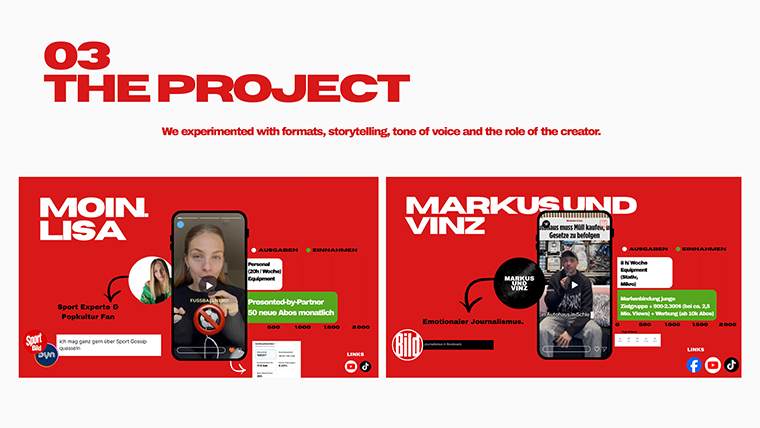
A young journalist in the session said time matters more than technology. She films 90% of her 60-second explainers with a phone and a microphone. What she needs, she said, is one to two protected hours a day, because a reel that arrives hours after the news has lost its value.
Day one of the summit declared “the newsroom as we know it is dead.” Day two presented multiple models for nurturing in-house creator talent. Day three addressed the scepticism of journalists asked to become creators: The platform is a channel; the standards do not change.
Polled at the close, attendees said a creator journalism experiment should launch within six months. The premise running through all three days: Gen Z and Gen Alpha are not coming back to the home page, and creators already fill the information gap — and already hold the trust.
Recordings of all three modules are available on demand for INMA members.
Related Articles
-

Collective Newsroom is rethinking its approach to young audienc...
28 October 2026 -

3 newsrooms, 3 ways to build creator journalism
15 September 2026 -

Radical collaboration could provide the solution news publisher...
2 September 2026 -

A Gazeta combines deep local roots with new technology for jour...
2 September 2026 -

Newsroom AI disclosure necessary, but context matters
12 August 2026 -

Briefly News empowers journalists with AI tool suite Nova
4 August 2026 -

Washington Post launches platform to partner with content creat...
20 April 2026 -

Structured data, creator economy reshape news publishing
2 April 2026
Upcoming Events
-

Subscriber Acquisition Master Class
10-17 November 2026
-

Media Advertising Summit
New York, United States
07-10 December 2026
-

AI-Native News Product Master Class
18-25 February 2027
-

Media Subscriptions Summit
Oslo, Norway
08-12 March 2027
-

World Congress of News Media
New York, United States
25-30 April 2027
-

Branded Content & Partnerships Master Class
20-27 May 2027
-

Subscriber Retention Master Class
17-24 June 2027
-

Conferencia Latinoamericana
15-16 July 2027
-

South Asia News Media Festival
New Delhi, India
19-22 July 2027
-

Asia/Pacific News Media Summit
19-20 August 2027
-

CEO Roundtable at Kilkenny
Kilkenny, Ireland
24-26 August 2027
-

Media Innovation Week
Amsterdam, The Netherlands
27 September - 01 October 2027








