

3 newsrooms, 3 ways to build creator journalism
Conference Blog | 15 September 2026

If day one of the INMA Young Audiences Summit rolled out the carpet on the creator economy, day two walked straight down it and into the newsroom.
Tuesday’s module, “Who Is Doing the Job?” — the second of three in the summit curated by INMA Young Audiences Initiative Lead Kerstin Hasse, made possible by Knight Foundation — drew nearly 380 participants from 180 companies.
The offered something rare: the same challenge examined from three organisational vantage points:
- A youth brand built by a legacy company but outside it.
- A startup built with no legacy at all.
- And a creator operation built deep inside one of Britain’s oldest publishers.
The lesson threading through all three: Creators are not a threat to journalism. They are a delivery method — and increasingly, an organisational design.
Build the room before the brand
Birgit Coenen, chief growth officer at SPILNEWS, described how Mediahuis — whose oldest title dates to 1656 — launched a Gen Z news brand from scratch. The venture reports directly to the board, deliberately outside any existing newsroom.
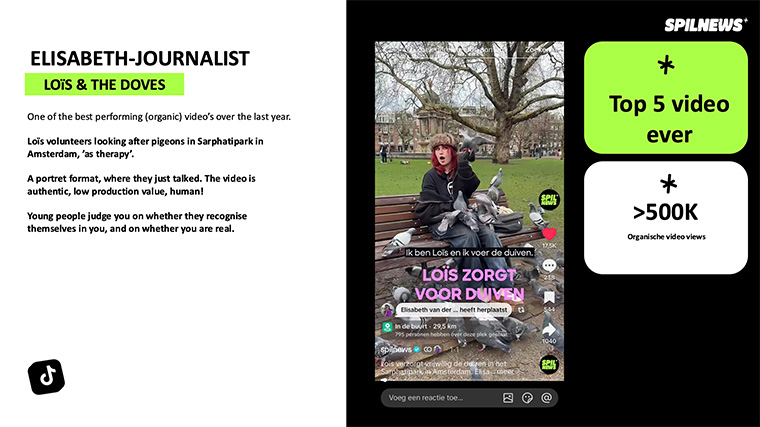
“We did not build a brand first,” she said. “We built room to reinvent.”
Every existing frame had to be breakable, matched by radical transparency with the board — including what failed.
Thirteen months after launch, SPILNEWS runs the youngest newsroom in the Netherlands (Coenen, at 44, is the oldest person on the 16-strong team), producing 60 assets a week for TikTok, Instagram, and YouTube, with 37 million views this year and a 4.6% engagement rate on TikTok.
The business model follows the audience research: 71% of Dutch youth won’t pay for news, but 90% of SPILNEWS followers are open to branded content — if it is transparent. Brand partnerships now run between €20,000 and €50,000 per campaign, with a pipeline of roughly 10 clients, alongside a youth research panel built with an independent research partner.
The firewall is absolute: SPILNEWS journalists never front branded content. External creators do. And rather than fearing talent walking out the door, Coenen reframed the entire relationship: “We need to be facilitators of journalists.”
SPILNEWS is now building a creator agency to represent independent journalist-creators — accepting departures as a feature, not a bug.
Her sharpest line on why the startup structure matters: “How we make decisions every three weeks is maybe a year for a legacy title.”
“The traditional newsroom is dead”
Rebecca Hutson, editor-in-chief of The News Movement, delivered the day’s most quotable provocation — and backed it with reach. The social-first startup touches two in three 18- to 34-year-olds in the United Kingdom every month, half of that demographic in the United States, and skews 55%–61% female, unusual in news.
Her argument: the 200-year-old newsroom architecture — desks, layers of editors, the omnipotent editor whose instinct drives everything — is “increasingly unworkable.”
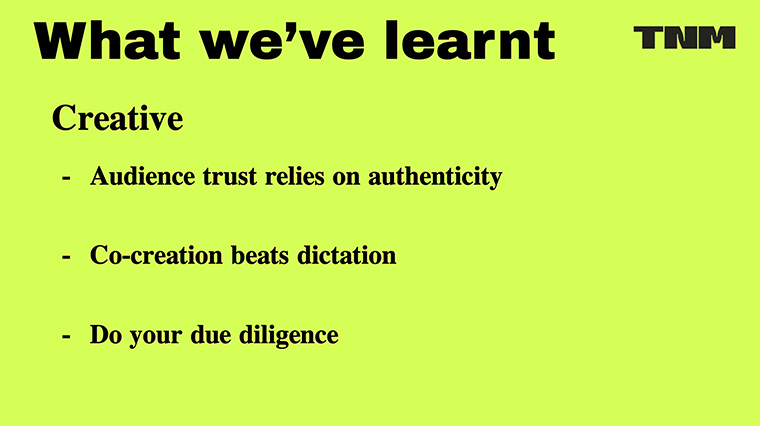
The News Movement runs a lean team of generalists who take stories from pitch to publish, commissions from the bottom up through audience listening, and works with creators wherever proximity beats parachuting: a drag king fronting its best-performing queer history format, a football creator outside Stamford Bridge, a Black trans creator covering Black trans pride.
Journalism’s trust deficit, she argued, is partly self-inflicted: “We stopped showing them the receipts.” Authenticity, fallibility, and lo-fi storytelling — “like you’re on a FaceTime to a friend” — now matter as much as credibility.
On commercial work, Hutson was equally direct: “We don’t believe that audiences hate ads. They just don’t like being lied to about them.” And creators must be paid properly — exposure “doesn’t really cut it anymore.” Long-term retainers and revenue shares beat transactional one-offs.
Legacy at scale — with faces at the front
The closing case study came from inside dmg media, where Ellie Beetham, head of social creative at the company’s year-old social publishing venture, has grown a team of 20 into more than 100 — including 25 dedicated creators across roughly 10 brands, with over 150 million followers across its social accounts.
The philosophy: the masthead built around products and channels is being rebuilt around audiences and experiences, with creators at the front. Repeatable formats carry it — “Only in Britain,” Metro’s “Rush Hour Crush,” a fashion format that gets creators recognised in the street — and the same formats serve editorial and commercial work without changing editorially.
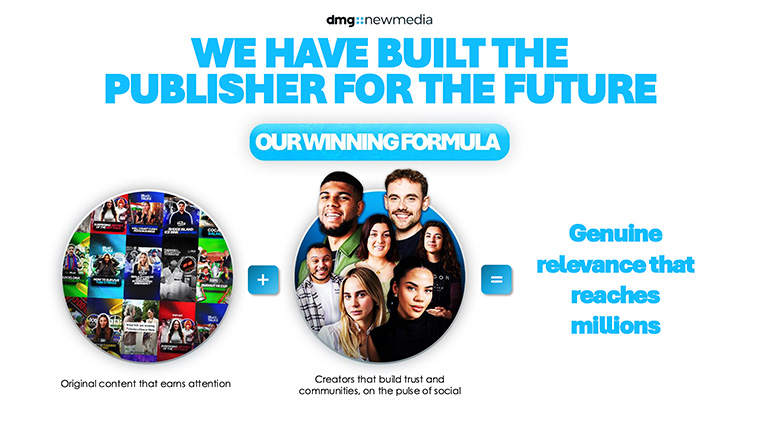
Beetham’s co-presenter, journalist-turned-creator Mikey Olympitis, embodied the talent pipeline: hired after a coffee, a screen test two days later, his first shoot a week after that. His Netflix Peaky Blinders premiere video — smuggling superfans onto the red carpet — showed how brand work can stay genuinely entertaining. His advice to young journalists: “Just start posting. Get past that perfectionism.”
Notably, dmg media supports its young creators with dedicated safety structures for handling online abuse — a duty of care point every publisher building faces should note.
The takeaways
Hasse closed with three lessons:
- Creators are not a threat.
- There are many ways in — niche creators to reach new audiences, external creators to protect journalists from commercial work, or home-grown creators built for your brands.
- And newsrooms must learn to pivot, learn, and unlearn.
Underneath all of it sits the theme she has hammered since day one: Build your news around audiences. Authenticity and real connection are the currency.
The summit concludes Thursday, September 17, with Module 3 on building creator strategies, featuring Deutsche Welle, Washington Post creators, and the Axel Springer Academy of Journalism & Technology. Recordings of all modules are available on-demand to INMA members.
Related Articles
-

The 3 editorial pillars of Chile’s first streaming news channel
23 September 2026 -

Radical collaboration could provide the solution news publisher...
2 September 2026 -

A Gazeta combines deep local roots with new technology for jour...
2 September 2026 -

Briefly News empowers journalists with AI tool suite Nova
4 August 2026 -

Indian Express builds a video-first future around trusted journ...
20 July 2026 -

Inside Denník N’s successful subscription strategy
15 July 2026 -

Why are audiences going to AI answer engines for news?
30 June 2026 -

La Nación explores historic corruption case with unprecedented ...
16 June 2026
Upcoming Events
-

Subscriber Acquisition Master Class
10-17 November 2026
-

Media Advertising Summit
New York, United States
07-10 December 2026
-

AI-Native News Product Master Class
18-25 February 2027
-

Media Subscriptions Summit
Oslo, Norway
08-12 March 2027
-

World Congress of News Media
New York, United States
25-30 April 2027
-

Branded Content & Partnerships Master Class
20-27 May 2027
-

Subscriber Retention Master Class
17-24 June 2027
-

Conferencia Latinoamericana
15-16 July 2027
-

South Asia News Media Festival
New Delhi, India
19-22 July 2027
-

Asia/Pacific News Media Summit
19-20 August 2027
-

CEO Roundtable at Kilkenny
Kilkenny, Ireland
24-26 August 2027
-

Media Innovation Week
Amsterdam, The Netherlands
27 September - 01 October 2027








