

Spain’s publishers show there’s more than one road to digital transformation
Conference Blog | 24 September 2026

Spain is one of Europe’s largest media markets, but it has not always been one of its most valuable. Reader revenue arrived late, trust in media is divided along political lines, and fewer Spaniards go directly to news sites than people in most other markets.
Over two days in Madrid ahead of INMA’s Media Innovation Week, 25 study tour participants visited legacy groups Prisa Media, Vocento, and Unidad Editorial; fact-checker Maldita.es; digital natives El Confidencial and elDiario.es; regional leader La Voz de Galicia; and Prisa Radio.
The executives they met are working in the same market under the same pressures, yet they have built very different businesses.
Six themes ran through the visits.
1. There is no single right answer on the paywall
Opening the tour, INMA Researcher-in-Residence Greg Piechota, who heads the INMA Readers First Initiative said Spain’s big national brands launched digital subscriptions only around the start of the decade, yet have already built a meaningful reader revenue market. How they decide what to lock varies widely.
At El País, the decision is still largely human. Angélica Domínguez Martín, director of subscriptions, at El País, said exclusives, interviews, and reported features go behind the paywall, while breaking news and service information stay open.
The digital and subscriptions teams talk every day about whether to close more or open up, depending on traffic and conversion. Different rules apply in Spain, Mexico, and the United States.
Unidad Editorial has gone the other way. Jose Antonio Navas, director of subscriptions, said El Mundo and Expansión moved to a fully dynamic paywall in which no person decides which articles are locked. Instead, it weighs a reader’s propensity to subscribe, how a piece of content performs, and revenue.
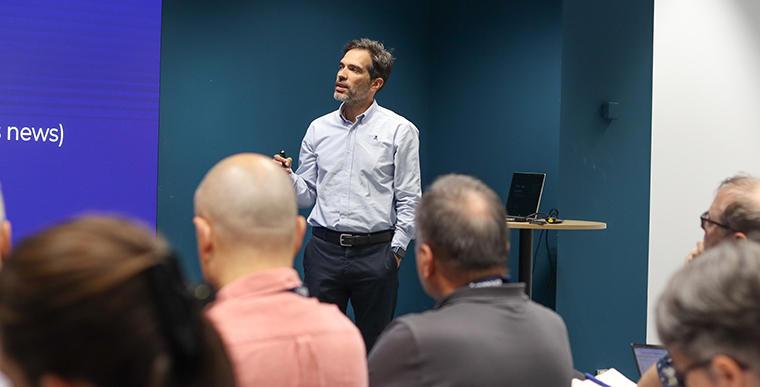
The model regularly surprises the team, finding that content they assumed was too light to convert does very well, he said. The newsroom has largely stopped asking for exceptions.
Vocento, which launched its regional subscription model years before the national brands, has added a dynamic paywall, a dynamic registration wall, and a tiered offer running from an entry product to a premium bundle, Chief Digital Officer Noemí Ramírez García said.
El Confidencial still has its newsroom choose article by article and locks only a small share of what it publishes. Meanwhile, the sports giants AS and Marca have no paywall at all.
At the day-one debrief, Piechota said this is one of the lessons of algorithmic paywalls: people choosing what to lock tend to rely on public-interest or craft values, while the data often finds conversions in stories editors would never pick.
2. Traffic is falling, so loyalty is the business
Nearly every host described traffic losses from changes to Google Discover and AI-generated search results. Their answer was to put the returning reader first.
Alejandro Laso, chief operating officer of El Confidencial, said the company is not in the traffic business but in the returning reader business. A small, loyal core of its audience generates most of its revenue.
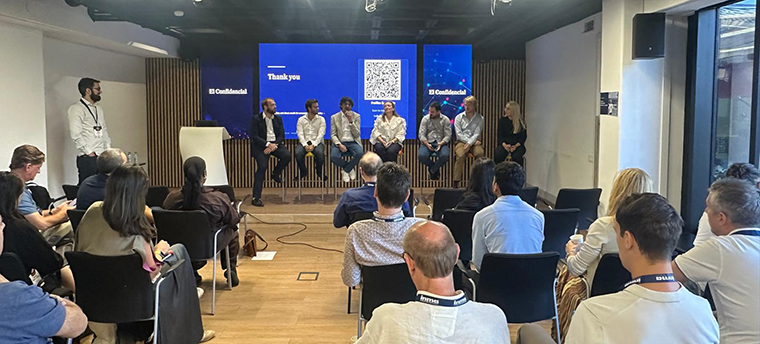
Laura Velasco, head of subscriptions, said the subscriber base has matured, so the focus has moved from acquisition to retention. That means moving monthly subscribers to annual plans, preparing for the first renewal, and converting the large group of heavy readers who behave like subscribers but do not yet pay.
El País created a marketing editorial team this year that sits within subscriptions but works alongside the newsroom. It repackages existing journalism into curated selections for subscribers and uses the same content in acquisition campaigns, which one executive said works better than relying on discounts alone.
The brand also marked its 50th anniversary with a large public festival and a calendar of subscriber-only events, and data showed readers who attend churn less.
At elDiario.es, Rosalía Lloret, strategic adviser to the president and board member, said direct traffic is rising even as search and Discover fall. She credited years of community work: author newsletters with a personal voice, a daily podcast, local editions in every region, and an annual festival.
3. Independence is a business model
The digital natives and Maldita.es all treat independence as a design choice rather than a slogan.
Laso said El Confidencial’s founders were mostly reporters who wanted a newspaper that owed nothing to anyone. Profit is treated as the condition for survival rather than the purpose. It is shared among staff, shareholders, and the company, and the reserves are there to protect the newsroom from pressure, including the loss of institutional advertising after critical reporting.
At elDiario.es, most shares are held by people who work there, and a founding charter caps how much of the company’s revenue any single advertiser or funder can represent.
Esther Alonso, general director of marketing, product, and technology, said most content remains free. Members pay to support journalism others can read, and receive an ad-free experience, early access, and events in return. When a member cancels for editorial reasons, the editor-in-chief is alerted and often responds personally.
Maldita.es, a foundation with a for-profit technology company it wholly owns, takes no advertising. CEO Clara Jiménez Cruz said every contract it signs includes a clause allowing Maldita to publish it.
4. Go where the audience is: abroad, on social, and in audio
Spanish is a global language, and Prisa’s brands are using that.
Tomás de Cos, editor-in-chief and digital strategy officer at AS, said a large international audience did not pay off until AS opened local newsrooms in Latin America and the United States because local advertisers want local content produced by local journalists.
El País runs editions across the Americas from a newsroom that hands the Web site across time zones around the clock.
Social and video were the other frontier. AS brought in the team behind a football social brand it owns to lead its social strategy, and used AI to create daily audio bulletins for national teams during the World Cup, with personalised club bulletins to follow.
At Marca, Chief Business Officer François Guerin said athletes and clubs now talk to fans directly, so the brand must think about distribution and video first. A small team of young creators has launched a music-news vertical on social platforms that is already attracting sponsors.
El Confidencial replaced a strategy based on viral videos with one led by its own creators and formats, so the brand voice holds up rather than depending on any single personality.
Some participants urged caution at the debrief. The platforms want users to stay on-platform and could take a larger share of branded deals. INMA Advertising Initiative Lead Gabe Dorosz said branded and sponsored content is harder for platforms to capture than ad inventory.
5. Diversification goes well beyond traditional advertising and subscriptions
Ramírez García said Vocento organises diversification around several pillars: subscriptions, content licensing, events, e-commerce and classifieds, marketing agencies, and gastronomy, including the Madrid Fusión congress.
Unidad Editorial runs events, races, a publishing house, an academy, specialist B2B titles, and television licences. CEO Laura Múgica said it is open to negotiating with technology platforms but keeps its content closed to those without an agreement.
Syndication bundles came up repeatedly. Vocento translates articles from The Economist, El Mundo does the same with The Wall Street Journal, and elDiario.es carries The Guardian in Spanish.
Events were everywhere, which prompted Dorosz to note that publishers gave very different answers on how they account for them in financial tracking. Alonso said elDiario.es separates community events for members from professional events built for sponsors, each run on its own schedule.
6. AI as a reporting and operating tool
Participants were struck by how much the hosts use AI for journalism itself rather than simply reformatting content.
Fernando Belzunce, editorial managing director at Vocento, said a committee of editors wrote a short set of AI principles: Use it to raise quality, keep it rigorous and supervised by journalists, and never let it cost credibility.
With most journalists trained on shared tools, investigative teams can now analyse large collections of court and police documents in hours rather than days. Ramírez García said Vocento also monitors how often AI answers produce zero-click searches and blocks bots that ignore its rules.
Maldita.es showed how it built translation and monitoring tools during a recent border crisis to track Facebook groups and WhatsApp voice notes in Moroccan Arabic, sending alerts to its team so it could publish debunks and investigations quickly.
El Confidencial is rebuilding how the company works rather than buying tools. Its product team runs initiatives through a shared, AI-assisted workflow with human decision points between each phase. Chief Data Officer Ramón Pintado Martínez described a company brain: curated, documented knowledge that people and AI agents can query.
In a market where the old business models no longer apply, INMA’s Piechota said, it is normal for leading publishers to look nothing alike. Madrid showed that the approaches can differ widely and still work.
Related Articles
-

Marketers should outsource tasks, not thinking
25 October 2026 -

Bundling is a pricing decision, rebundling is an organisational...
18 October 2026 -

AI’s effect on super user math
15 September 2026 -

At Mediacorp’s CNA, loyalty means giving audiences a reason to ...
20 August 2026 -

Tribun Network turns print “dots” into AI-powered insight
20 August 2026 -

Nation Media Group focuses editorial strategy on stories that m...
4 August 2026 -

Briefly News empowers journalists with AI tool suite Nova
4 August 2026 -

Economist launches subscription tier targeting younger audience...
20 July 2026
Upcoming Events
-

Subscriber Acquisition Master Class
10-17 November 2026
-

Media Advertising Summit
New York, United States
07-10 December 2026
-

AI-Native News Product Master Class
18-25 February 2027
-

Media Subscriptions Summit
Oslo, Norway
08-12 March 2027
-

World Congress of News Media
New York, United States
25-30 April 2027
-

Branded Content & Partnerships Master Class
20-27 May 2027
-

Subscriber Retention Master Class
17-24 June 2027
-

Conferencia Latinoamericana
15-16 July 2027
-

South Asia News Media Festival
New Delhi, India
19-22 July 2027
-

Asia/Pacific News Media Summit
19-20 August 2027
-

CEO Roundtable at Kilkenny
Kilkenny, Ireland
24-26 August 2027
-

Media Innovation Week
Amsterdam, The Netherlands
27 September - 01 October 2027








