

To build reader habits, Delhi’s newsrooms broke their own
Conference Blog | 28 July 2026

Anubha Bhonsle opened her panel at the INMA South Asia News Media Festival with an observation about vocabulary.
For years, she said, the panels she moderated optimised for reach. In the past year or so, the words have changed: return, loyalty, habit-building. Not just the first 1,000 loyal users, but something wider.
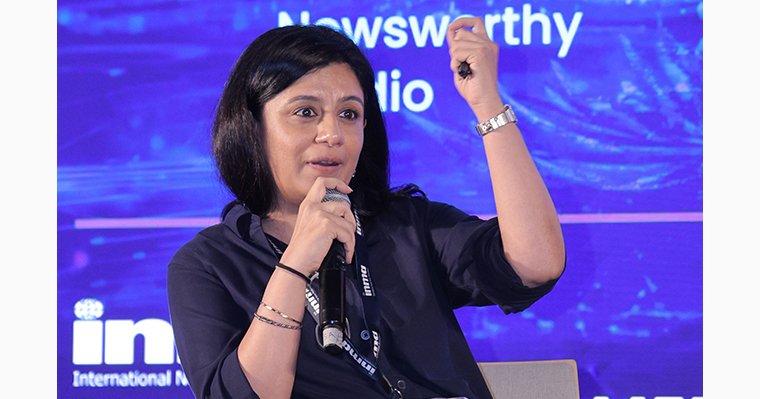
The founder of Newsworthy Studio then set her three panellists a deliberately awkward task. Define habit operationally. Tell us what it actually means inside your newsroom — in an ecosystem where, as she put it, news is widely treated as a bad habit rather than a good one.
The answers, across that session and several others in Delhi, added up to something more uncomfortable than a growth strategy. Habit-building is not a layer publishers can add on top of what they already do. In most of the newsrooms represented, it started with subtraction.
The bar was set embarrassingly low
Nandagopal Rajan, CEO of Indian Express Digital, pointed out where digital publishing quietly drew its line. In standard digital metrics, a user is counted as brand-level or loyal if they appear on-site 15 times in a month — “which is technically every other day, not every day.”
“So we accepted somewhere that we are not going to get them daily,” he said.
Sanjoy Majumder, managing editor and deputy director of journalism at Collective Newsroom, was more blunt about it: “A loyal user is someone who visited you 15 days a month, half a month?”
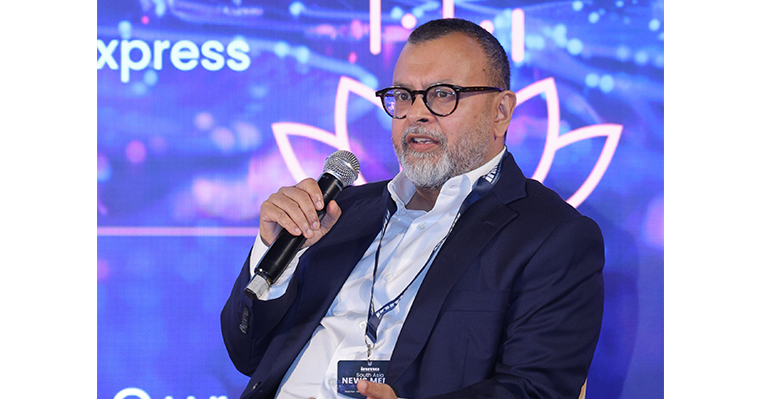
His diagnosis was structural rather than editorial. Most digital operations inside legacy media companies were built as packaging shops sitting one step away from the actual newsroom, he said. They inherited neither the appointment logic of television nor the ritual of the printed page — so they never took habit as seriously as older platforms had to.
Rajan made the same point from the other direction. Newspaper reading is one of the very few habits handed down between generations, and Indian Express began its digital journey with readers who had already made the format transition. Growth never came from that group. Those habitual readers still exist, he said, but at the scale Express operates at now, they are a minority.
And the single most reliably daily thing in a newspaper, he noted drily, was never the journalism. It was the horoscope.
Habit is plural
Nalin Mehta, managing editor of Moneycontrol and chief AI officer at Network18, resisted the idea of a single habitual user. Readers who come for markets, data, and Moneycontrol Pro have built a different habit from those who come for news, who behave differently again from subscribers to specialised stock products.
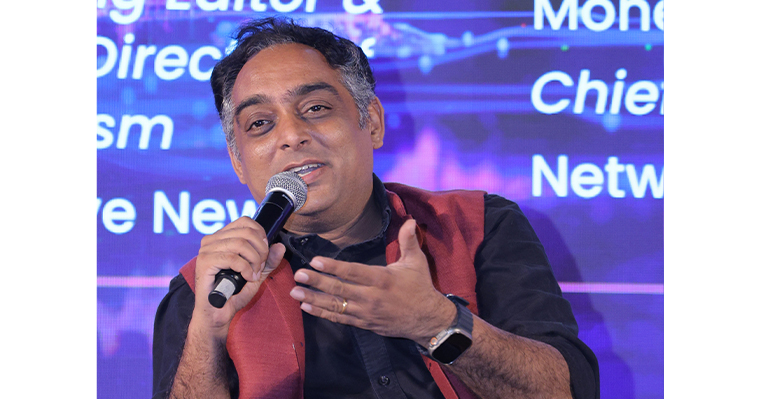
The same person may do all three at different times of day, and usage patterns diverge sharply across them. Measured crudely — time spent, return frequency, consistency of return — the patterns are visible and can be built around.
Mehta’s more interesting claim was about what that measurement misses. Moneycontrol runs a daily editor’s newsletter he writes himself, and some of the most habit-forming stories in it registered almost nothing in digital data: hard-hitting reporting with little traffic but high daily engagement once it reached the inbox.
Data captures big trends, he said. It does not capture the argument you are building with a reader for why they should come back.
The proof arrived by accident. When an Internet outage stopped a Moneycontrol markets newsletter going out one morning, around 20 readers wrote in to complain. “Why have someone taken the time to say that, ‘Hey, you know, you didn’t send this today?’” Mehta said. “That is never going to be captured in data.”
To build reader habits, break newsroom habits
Asked what they had stopped doing, both Mehta and Rajan had lists.
Indian Express stopped publishing astrology on its Web site — the one item Rajan had just identified as genuinely daily. It stopped what he used to sugarcoat as “acquisition content.” And it stopped automatically porting print stories with no plausible digital audience: strong local reporting from Chandigarh or Pune the digital product cannot currently serve.
Once a resource constraint that is now a deliberate decision. The newsroom is also questioning whether text is the right container at all — opinion, Rajan suggested, may be better as audio.
Mehta’s version was about unlearning the search era. After successive Google core updates, “the old formulas are dead,” he said. Breadth and volume no longer correlate with traffic. The instruction to his teams was literal: Drop the bad habits.
The route to a reader habit, in other words, ran through the newsroom giving up several of its own.
What sports already knows
The sharpest habit framework of the festival came from outside news. Siddharth Sharma, head of content and production for JioStar Sports, described a recruit-delight-return model built on a simple premise: a live event gets you in the door, and nothing more.
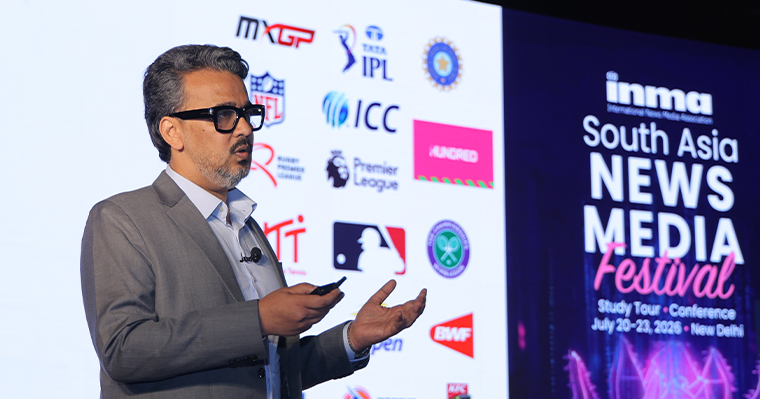
The tactics travel. Notifications are used sparingly and contextually, to avoid fatigue. A 24/7 lean-back channel of archive content gives the platform a default use outside the live window. Language products were built as distinct propositions rather than spillover. Bhojpuri and Haryanvi are both officially classified as varieties of Hindi, which is exactly why broadcasters had long assumed a Hindi feed served those audiences well enough.
Sharma’s team built the opposite: commentary designed as the antithesis of the Hindi feed, with its own lexicon drawn from local film and pop culture, on the reasoning that a Bhojpuri “B-team of the Hindi” would have no credibility.
Launched in 2023, both grew threefold and now sit inside the top five of the network’s regional language slate, with Bhojpuri at No. 3 and past Kannada.
Recruitment happened inside the biggest attention pool available: Actor Ravi Kishan would announce on the Hindi feed that he was moving to the Bhojpuri studio, and curious viewers followed.
Sharma’s closing line is the one worth pinning up: “Habit is the business. Live is just a spark.”
News has the same predictable calendar he described — elections, budgets, results. His argument is predictability is only an asset if you build around the window rather than only inside it.
Small cohorts, real locks
Habit does not have to be built at scale to be worth building.
At Times Internet, the games portfolio — a crossword generated from the day’s news, simple pattern puzzles, and a location guesser that overtook everything else in popularity — accounts for roughly 2% of app usage. But that cohort is highly loyal, protects its streaks, and gives the company a reason for readers to log in. The value is identity, not volume.
Vikatan reached a similar conclusion by a different route. Managing director B. Srinivasan is candid that Reels do not pay — the group tripled video output since COVID while revenues dipped — and does it anyway.
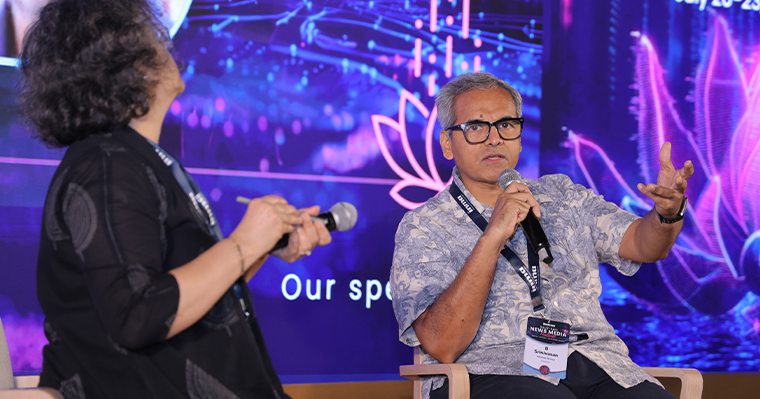
“If you are not there, your brand is going to become invisible,” he said, particularly when other creators are already repackaging Vikatan exclusives without attribution.
Meanwhile roughly 75% of the group’s print revenue now comes from readers rather than advertisers. His metaphor for the magazines: “You can’t eat the soil, but without the soil, nothing else is going to happen.”
Changing what counts
The metrics conversation on day two pointed the same way. Puneet Jain, CEO of HT Digital, argued for treating traffic as a launchpad rather than a destination: “Reach without relationship is a depreciating asset.”
Times Internet COO Puneet Gupt described a change in internal language with real consequences. His organisation is not rebuilding traffic, he said — it is “building users, and building data, and building customers.” One small change in terminology, he argued, changes the perspective of the whole business.
So what does habit-building actually change in a newsroom, to return to Bhonsle’s question? On the evidence from Delhi, three things:
What you refuse to publish.
What you are willing to call a loyal reader.
And how long you are prepared to wait before either of those decisions shows up in the numbers.
Related Articles
-

Arena Holdings learns reaching millions isn’t the same as servi...
8 October 2026 -

The Inquirer, Maeil ask: Is our content useful?
23 September 2026 -

Prothom Alo’s World Cup content flywheel engages millions
31 August 2026 -

BusinessDay moves from business content to business intelligenc...
6 August 2026 -

Content creators just get user needs (and newsrooms don’t)
2 August 2026 -

South Asia’s publishers no longer expect young readers to come ...
27 July 2026 -

The reality check of user needs: “Update me” drives most demand...
13 July 2026 -

Why are audiences going to AI answer engines for news?
30 June 2026
Upcoming Events
-

Subscriber Acquisition Master Class
10-17 November 2026
-

Media Advertising Summit
New York, United States
07-10 December 2026
-

AI-Native News Product Master Class
18-25 February 2027
-

Media Subscriptions Summit
Oslo, Norway
08-12 March 2027
-

World Congress of News Media
New York, United States
25-30 April 2027
-

Branded Content & Partnerships Master Class
20-27 May 2027
-

Subscriber Retention Master Class
17-24 June 2027
-

Conferencia Latinoamericana
15-16 July 2027
-

South Asia News Media Festival
New Delhi, India
19-22 July 2027
-

Asia/Pacific News Media Summit
19-20 August 2027
-

CEO Roundtable at Kilkenny
Kilkenny, Ireland
24-26 August 2027
-

Media Innovation Week
Amsterdam, The Netherlands
27 September - 01 October 2027








