

South Asia’s publishers no longer expect young readers to come to them
Conference Blog | 27 July 2026

The striking thing about the argument over young audiences at INMA’s South Asia News Media Festival in Delhi was how little of it was about persuasion.
Janhavi Pawar, director of Sakal Media, described the test she believes a younger reader now applies to everything a publisher puts in front of them: “I could tell you that apple prices have gone up by ₹20. What does that actually mean?”
That generation does not want the fact on its own, she said. It wants the context around it — what the narrative is, what the impact is, and how the thing reaches your own wallet.

The premise underneath that is not decline. “People are not consuming news any less,” Pawar said, pointing to the politics of the moment across the region: the claim that the young have stopped following the news is, she argued, simply untrue.
They are consuming information to reach their own conclusions and in many cases to change the picture they have been handed.
Across two days of study tour visits and two days of conference sessions, that reframing held: The audience has not gone anywhere, the surface has.
Where publishers disagreed — sharply, and productively — was on what follows from it.
The case against chasing
Mohit Jain, COO of Bennett Coleman & Co., pushed back on the premise itself, arguing Gen Z is not a coherent target. Young readers are platform agnostic, he said; they are looking for great content wherever it sits, much as a generation that supposedly abandoned cinemas still turns out for a film worth the trip.
“Gen Z itself is an aggregation of so many thoughts, different individuals,” he said.
His prescription was not audience segmentation but ambition: an incremental improvement wins nothing, while something 10 times better finds its own audience.
An audience member sharpened the risk. If publishers accept that younger readers want lighter fare on lighter platforms, do they end up skewing supply — quietly reducing the share of serious journalism they produce in pursuit of a demographic they have misread?
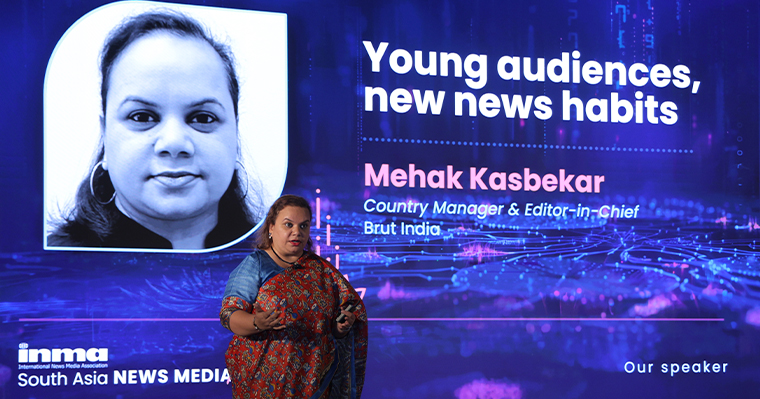
Mehak Kasbekar, country manager and editor-in-chief of Brut India, gave the fullest answer to that anywhere in the week, and it was an inversion. News people mistake their own register for depth, she argued: A major policy change arrives and the instinct is two hours of explication in the jargon of news. That is depth.
But the younger generation is asking publishers to work harder to speak to them in their language — and the public figures those readers follow have already done it, running Reels and building marketable moments on their own accounts without anyone calling it frivolous.
“The onus is really on us,” she said.
What building for them actually looked like
Brut is the closest thing the region has to a controlled experiment because it never had a page to lose. It was built eight years ago for people who were not consuming news at all — not on television, not in print — and who were already on social platforms.
Eighty-nine percent of its audience is under 34, split almost evenly between men and women. Kasbekar hired her first Snapchat producer three years ago, to some scepticism about whether news could be done there at all; Snapchat became the best-performing platform in the roster on programmatic revenue, with an even younger audience than the rest.
The operating principles are worth separating from the platform choices because they are portable. Video-first rather than text-first. Shareability, not views, as the distribution strategy. A newsroom question — “so what?” — asked after every story pitch, which in practice means asking what engagement a story is meant to produce and whether a constructive alternative exists alongside the reporting.
And mobile journalism as a product decision rather than a budget one: From the beginning, Brut shot cabinet ministers on a phone and a single tripod, on the principle that a product should be shot the way it is consumed.
The constraint that makes it work is unglamorous. Brut does not break news and is not fast. What it sells is that if a story is on Brut, it is true — a claim underwritten by a correction rate of 0.001%, tracked on a spreadsheet since inception, with prompt public corrections for a wrong date or a wrong designation.
Younger audiences, Kasbekar said, will not listen to a publisher that is not transparent about who reported something and where it came from.
Legacy brands running the same play
The most radical version came from a company built on its masthead. Indian Express launched APT, a video brand carrying no Indian Express identity at all — a deliberate departure for a newsroom where brand identity had always been explicit.
Its “Silent Witness” format puts out raw video and lets the audience supply the perspective. In a year, it passed a million subscribers and won recognition as best emerging news provider.
Sayoni Aiyar, who leads the video business, framed the wider approach as four steps: identify the aim, build a video mindset inside a print newsroom, optimise for the platform the aim requires — Instagram for a younger demographic, YouTube or CTV for revenue — and build experimentation into the plan so that failures are survivable.
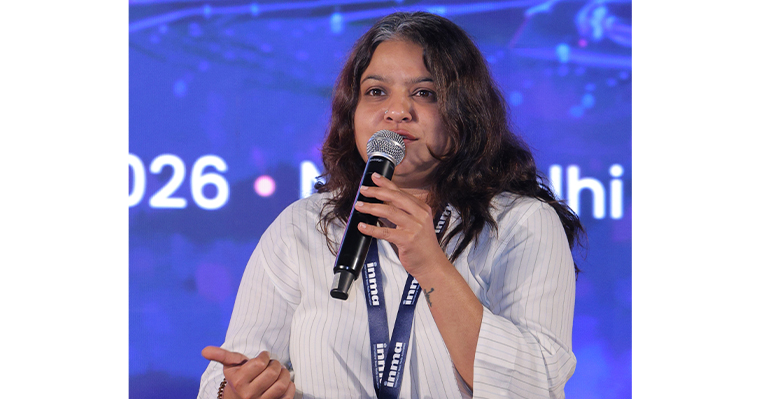
Mayura M S, director of digital business at Mathrubhumi, drew the line between what changes and what does not.
The fundamentals of journalism are not up for negotiation, she said; the way a story is presented is.
And the format question is more tractable than publishers assume, she said: Getting someone to consume a 2,000-word story is not the hard part, how you give them that story is. If a reader has 30 seconds, the task is to learn how to deliver it in 30 seconds rather than to mourn the attention span.
Not everyone conceded print though.
Sowbhagyalakshmi K T, director of Printers Mysore, described using the printed edition to open conversations younger readers were having elsewhere: a page on gender and sexuality, topics earlier generations found difficult to broach, and Metro Life pages tracking the small communities forming across Bengaluru — a skateboarding scene, a reading group.
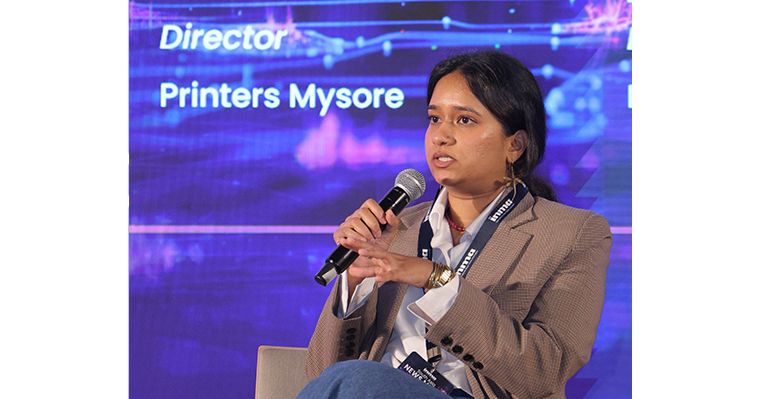
A digital explainer on how to skateboard drew significant viewership. The bet is not that young people will adopt the newspaper habit but that relevance is a subject-matter problem before it is a format problem.
On the study tour, the product answers ran along the same line. Times Internet has found that games — a crossword, a location guesser — account for around 2% of app usage but produce disproportionate loyalty and drive logins. Its Offside newsletter, produced daily through the World Cup, used match data to supply the context a reader who started watching in 2018 simply does not have.
The competition for that trust was on the stage, too. Satshya Anna Tharien, a content creator with around 400,000 Instagram followers, described a relationship publishers cannot easily replicate and a fragility they do not face.
A creator is a face rather than a masthead. An organisation can publish an apology and move to the next story, she said, but a creator who loses the audience’s trust loses the career. Her defence against being impersonated by AI is pointedly un-machine-like — a room left less than aesthetic, an occasional spelling error allowed to stand as signals a human made this.
It is the same instinct as Brut’s correction spreadsheet, arrived at from the opposite direction.
The thread back to credibility was drawn most clearly from Kathmandu. During Nepal’s Gen Z movement, Sambridhi Gyawali managing director of Nepal Republic Media, said audiences turned to independent voices — and then, when the questions became why and how, returned to the organisations that practice journalism.
Legacy in a 36-year-old democracy cannot mean longevity, she argued. It means credibility, compounded.
Which leaves the least technical instruction of the week, from Kasbekar: Put faith in the younger people already in the newsroom to deliver it.
Related Articles
-

WSJ executive councils show how publishers build communities th...
19 October 2026 -

AI’s effect on super user math
15 September 2026 -

At Mediacorp’s CNA, loyalty means giving audiences a reason to ...
20 August 2026 -

Nation Media Group focuses editorial strategy on stories that m...
4 August 2026 -

Indian Express builds a video-first future around trusted journ...
20 July 2026 -

Economist launches subscription tier targeting younger audience...
20 July 2026 -

Grupo RBS builds social-first video operation to expand audienc...
20 July 2026 -

Inside Denník N’s successful subscription strategy
15 July 2026
Upcoming Events
-

Subscriber Acquisition Master Class
10-17 November 2026
-

Media Advertising Summit
New York, United States
07-10 December 2026
-

AI-Native News Product Master Class
18-25 February 2027
-

Media Subscriptions Summit
Oslo, Norway
08-12 March 2027
-

World Congress of News Media
New York, United States
25-30 April 2027
-

Branded Content & Partnerships Master Class
20-27 May 2027
-

Subscriber Retention Master Class
17-24 June 2027
-

Conferencia Latinoamericana
15-16 July 2027
-

South Asia News Media Festival
New Delhi, India
19-22 July 2027
-

Asia/Pacific News Media Summit
19-20 August 2027
-

CEO Roundtable at Kilkenny
Kilkenny, Ireland
24-26 August 2027
-

Media Innovation Week
Amsterdam, The Netherlands
27 September - 01 October 2027








