

Bergens Tidende puts journalism in the audiences’ hands with People’s Prejudices
Ideas Blog | 31 May 2026
In a time marked by declining trust, increasing polarisation, and intense competition for attention, how can political journalism reach younger audiences? With the video series People’s Prejudices, Bergens Tidende sought to answer exactly this question in the lead-up to the 2025 parliamentary election.
The core idea of the project was simple: Let the audience’s own prejudices and assumptions about politicians shape the questions the journalist asks. Let people get answers to what they actually wonder about — not just what journalists think they wonder about.
Getting the audience involved
We invited readers to submit their assumptions about politicians. More than 4,000 did. Politicians were asked to respond directly to how they are perceived, not just what they stand for.
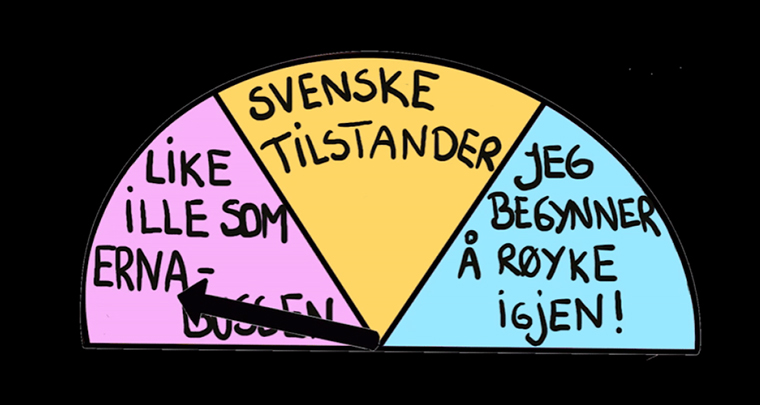
The questions could be sharp but were asked in an open and often humorous tone. Politicians were placed in an informal setting without pre-written answers, allowing for more spontaneous reactions. Afterwards, they were also asked on video how it felt to confront these prejudices.
This may have helped reduce the distance between voters and politicians, revealing a more vulnerable side than we usually see from professional politicians.
The format was developed for vertical platforms such as TikTok, Snapchat, and Instagram Reels, in addition to being published on our own Web site with great success. In this way, we reached both the typical BT reader and introduced our content to younger users on the platforms where they actually consume media.
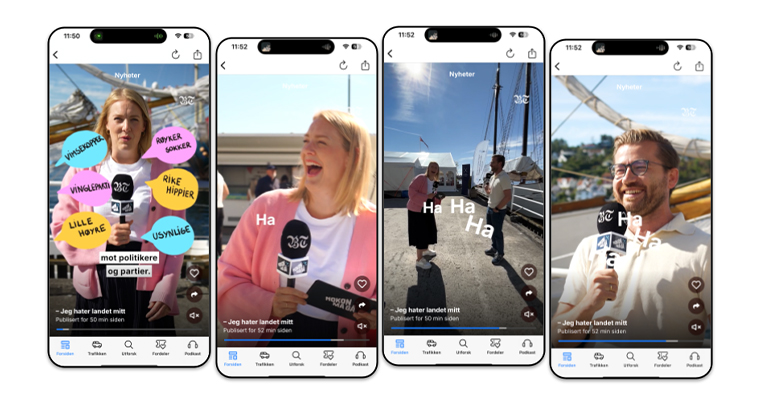
Visually and technically, the series was tailored to this environment. The videos were short, tightly edited, and designed to capture attention quickly. Close framing and direct eye contact created a sense of intimacy, while humour and pacing helped more viewers watch the videos to completion and engage with them.
The visual identity was clear and quick to recognise: strong colours, relatable elements, handwritten features, and recognisable digital props.
The format became easier to identify in the feed, likely meaning that those who had already engaged with the content were served more of it.
Innovation in real time
From idea to a fully developed project, we only spent a few weeks. This shows how quickly innovation can happen when different areas of expertise are brought together. We worked in a small team consisting of one person from audio, one from video, a political commentator, and me, working as project manager with expertise in audience engagement and visual storytelling.
The project achieved strong results on a topic that is often difficult to break through with. In total, the videos generated over 800,000 views, with consistently high performance per publication. Representatives from all the major political parties in Norway participated.
The format became so popular that we continued collecting prejudices and producing new videos even after the initial project period. The content was also used in podcasts, at events, and in broader election coverage. It was therefore not a one-off, but a method we continue to use at BT.
I believe we can reduce the distance between the media and our audience by taking their opinions and prejudices seriously. It makes us better journalists to use more perspectives — not just our own and those within our immediate environment. That became the key to this project’s success.
Related Articles
-

AI’s effect on super user math
15 September 2026 -

At Mediacorp’s CNA, loyalty means giving audiences a reason to ...
20 August 2026 -

Tribun Network turns print “dots” into AI-powered insight
20 August 2026 -

Indian Express builds a video-first future around trusted journ...
20 July 2026 -

Economist launches subscription tier targeting younger audience...
20 July 2026 -

Grupo RBS builds social-first video operation to expand audienc...
20 July 2026 -

Inside Denník N’s successful subscription strategy
15 July 2026 -

Rheinische Post programme turns print loyalty into digital conf...
11 June 2026
Upcoming Events
-

Subscriber Acquisition Master Class
10-17 November 2026
-

Media Advertising Summit
New York, United States
07-10 December 2026
-

AI-Native News Product Master Class
18-25 February 2027
-

Media Subscriptions Summit
Oslo, Norway
08-12 March 2027
-

World Congress of News Media
New York, United States
25-30 April 2027
-

Branded Content & Partnerships Master Class
20-27 May 2027
-

Subscriber Retention Master Class
17-24 June 2027
-

Conferencia Latinoamericana
15-16 July 2027
-

South Asia News Media Festival
New Delhi, India
19-22 July 2027
-

Asia/Pacific News Media Summit
19-20 August 2027
-

CEO Roundtable at Kilkenny
Kilkenny, Ireland
24-26 August 2027
-

Media Innovation Week
Amsterdam, The Netherlands
27 September - 01 October 2027








