

Dagblad van het Noorden’s crime podcast brings audience in on the case
Ideas Blog | 14 October 2026

It might be tempting to assume small regional newsrooms don’t have the budget, manpower, or time to create large, ambitious, narrative-driven podcasts. After all, everyone is busy. There’s no dedicated team. There’s money to hire outside expertise.
But at Dagblad van het Noorden, a regional newspaper in the north of the Netherlands, the ambition was there. And so they did just that.
With De Ware Jacob, they created a hit true crime podcast that gained 2 million downloads in four months. Even more incredible, it was produced entirely in-house with a core team of just four — and with the audience as a central pillar.
More than a podcast
De Ware Jacob follows Rob Jacob, the biggest, least-known scam artist in the Netherlands. Across three decades, he defrauded companies, governments, and individuals in more than a dozen countries. The story had all the ingredients for a compelling true crime series.
But the team at Dagblad van het Noorden made a deliberate choice not to produce a conventional podcast. Instead, they put the journalistic process itself at the centre of the story, including the tension between professional curiosity, personal fascination, and moral discomfort.
What starts as a reconstruction becomes an active search, with the audience as enthusiastic participants.
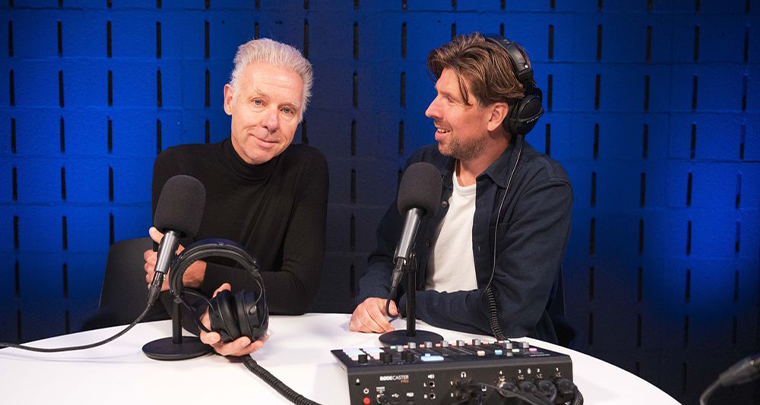
The audience joins the investigation
From the start, De Ware Jacob was designed as an open investigation. Listeners were not just invited to listen; they were invited to contribute. Through comments, email, voicemail, and direct contact, they submitted questions, tips, and leads throughout the series.
Hundreds of messages arrived over the course of the podcast. New information came in that directly influenced reporting. Additional episodes were produced in response to audience input, including a dedicated Q&A instalment built entirely around listener questions.
This participatory model worked because it was built on transparency. The team did not pretend to have all the answers. They showed their work, acknowledged uncertainty, and treated the audience as partners rather than consumers.
Results that exceeded expectations
The growth was both rapid and sustained. De Ware Jacob recorded an average week-on-week growth rate of 38.7% across its early release window, pointing to organic discovery and genuine word-of-mouth rather than a launch spike.
Some key metrics:
- 2 million downloads within four months.
- 38.7% average week-on-week growth rate in the first two months.
- 4.9 stars on Spotify, based on over 1,400 reviews.
- 4.7 stars on Apple Podcasts, from over 800 reviews.
- Hundreds of listener tips, questions, and leads submitted directly to the team.
- Multiple additional episodes were produced as a direct result of audience input.
- More than 250 voluntary donations, without a paywall or exclusive incentives.
A blueprint, not an exception
The production model behind De Ware Jacob was lean by design. No external partners, very little budget, a small dedicated team. Not all of them were experienced podcast makers, but all of them were enthusiastic and willing to work hard to tell an exceptional story.
The podcast also introduced a direct donation model, embedding a contribution link in episode show notes without placing any content behind a paywall or offering exclusive incentives. Audiences support open journalism voluntarily when they trust it. It is a meaningful signal for regional newsrooms thinking about sustainable revenue.
The broader lesson is straightforward. Audience trust is not a function of budget. It is a function of honesty, openness, and the quality of the story.
Regional newsrooms that worry they cannot compete in audio are asking the wrong question. The right question is whether they have a story worth telling and a team willing to tell it transparently.
De Ware Jacob is evidence that when both answers are yes, the audience will find you.
All you need is a great story. And the courage to tell it openly.
Related Articles
-

At Mediacorp’s CNA, loyalty means giving audiences a reason to ...
20 August 2026 -

Tribun Network turns print “dots” into AI-powered insight
20 August 2026 -

Indian Express builds a video-first future around trusted journ...
20 July 2026 -

Grupo RBS builds social-first video operation to expand audienc...
20 July 2026 -

Inside Denník N’s successful subscription strategy
15 July 2026 -

News Corp Australia’s Dear Rachelle podcast reignited hope whil...
13 July 2026 -

Why are audiences going to AI answer engines for news?
30 June 2026 -

Manorama Online’s podcasts reimagine news for the ear
21 June 2026
Upcoming Events
-

Subscriber Acquisition Master Class
10-17 November 2026
-

Media Advertising Summit
New York, United States
07-10 December 2026
-

AI-Native News Product Master Class
18-25 February 2027
-

Media Subscriptions Summit
Oslo, Norway
08-12 March 2027
-

World Congress of News Media
New York, United States
25-30 April 2027
-

Branded Content & Partnerships Master Class
20-27 May 2027
-

Subscriber Retention Master Class
17-24 June 2027
-

Conferencia Latinoamericana
15-16 July 2027
-

South Asia News Media Festival
New Delhi, India
19-22 July 2027
-

Asia/Pacific News Media Summit
19-20 August 2027
-

CEO Roundtable at Kilkenny
Kilkenny, Ireland
24-26 August 2027
-

Media Innovation Week
Amsterdam, The Netherlands
27 September - 01 October 2027








