

Grupo RBS approaches social media as an editorial product, not a channel
Ideas Blog | 25 June 2026

For years, social media has been treated by news organisations as a distribution channel. It has been a space to extend the reach of journalism created elsewhere rather than a place where journalism itself is conceived.
This logic was shaped by an earlier stage of digital transformation when publishing meant adapting existing formats to new platforms. However, as social platforms evolved and audience behaviour shifted, this model became increasingly insufficient.
As consumption moved toward short-form video and platform-native storytelling, the limitations of this approach became clear. The gap between how journalism was produced and how it was consumed continued to widen, affecting both relevance and performance.
Many organisations responded by increasing their social media output or adapting content to new formats. But in most cases, the structural model of the newsroom remained unchanged.
A new approach
In 2024, we approached the problem differently. Rather than focusing only on format or distribution, we redefined how social journalism is organised within the newsroom. Short-form video was not treated as an extension of existing desks or as a responsibility of the social media team. It was established as a dedicated editorial structure.
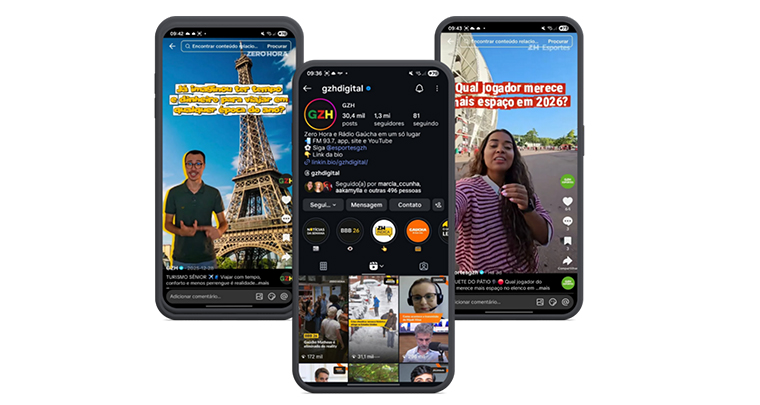
This meant creating a new kind of newsroom unit. A team composed of creator-journalists, editorial coordination, product, commercial, and operational roles, working as an integrated editorial operation. The distinction was deliberate. This was not a social media support function, nor was it a group of reporters adapting content for digital platforms. It was a structure designed specifically to produce journalism native to social environments.
This structural decision also changed how content is planned and produced. Instead of starting from existing newsroom output, ideas are developed with platform logic in mind from the outset. Within this model, content is conceived for platforms such as Instagram, TikTok, and YouTube. Editorial decisions consider not only the topic, but also format, pacing, visual language, and distribution context as part of the same process.
A clear workflow connects ideation, production, validation, publication, and monetisation. This integration allows editorial and commercial strategies to evolve together, without compromising journalistic standards, while also enabling scale and consistency in daily operations.
Over time, this structure moved from experimentation to routine. Short-form video became a continuous editorial operation, and creator-journalists developed recognisable voices within the news ecosystem, strengthening audience proximity and engagement.
Growing the audience — and value
By 2025, the impact of this approach was measurable. Short-form video generated 559 million views across platforms, surpassing initial projections by more than 90%. This scale reflects the growing relevance of short-form video, particularly content developed for social environments rather than redistribution.
At the same time, the operation proved commercially viable. Revenue grew by 80% over the period, supported by a lean and integrated structure, while over the two-year period, more than 200 brands partnered with our channels to develop content across our social platforms.
More significantly, the initiative redefined the role of social media within the newsroom.
What was once considered a distribution layer became an editorial unit with its own identity, processes, and business model. Social platforms were no longer an extension of journalism. They became one of its primary environments of creation.
This shift reflects a broader transformation. As formats evolve, journalism is not only adapting its language but also reorganising its structures.
In this context, treating social media as an editorial product is not simply about content. It is about recognising it as a space that requires its own editorial logic, its own professionals, and its own place within the newsroom.
Related Articles
-

AI’s effect on super user math
15 September 2026 -

At Mediacorp’s CNA, loyalty means giving audiences a reason to ...
20 August 2026 -

Tribun Network turns print “dots” into AI-powered insight
20 August 2026 -

Nation Media Group focuses editorial strategy on stories that m...
4 August 2026 -

Economist launches subscription tier targeting younger audience...
20 July 2026 -

Grupo RBS builds social-first video operation to expand audienc...
20 July 2026 -

Inside Denník N’s successful subscription strategy
15 July 2026 -

AI adoption in newsrooms should move from experiment to strateg...
12 July 2026
Upcoming Events
-

Subscriber Acquisition Master Class
10-17 November 2026
-

Media Advertising Summit
New York, United States
07-10 December 2026
-

AI-Native News Product Master Class
18-25 February 2027
-

Media Subscriptions Summit
Oslo, Norway
08-12 March 2027
-

World Congress of News Media
New York, United States
25-30 April 2027
-

Branded Content & Partnerships Master Class
20-27 May 2027
-

Subscriber Retention Master Class
17-24 June 2027
-

Conferencia Latinoamericana
15-16 July 2027
-

South Asia News Media Festival
New Delhi, India
19-22 July 2027
-

Asia/Pacific News Media Summit
19-20 August 2027
-

CEO Roundtable at Kilkenny
Kilkenny, Ireland
24-26 August 2027
-

Media Innovation Week
Amsterdam, The Netherlands
27 September - 01 October 2027








