

O Globo reconstructs a 25-year-old Brazilian mystery with Caso Zero podcast
Ideas Blog | 31 May 2026
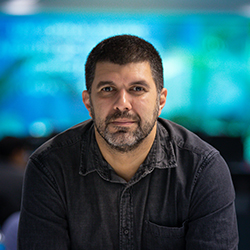
The Caso Zero podcast tells a story that begins with a tragedy, evolves into an investigation into organ transplants, passes through political and legal disputes, and remains shrouded in mystery 25 years later. All of this is narrated by one of Brazil’s most respected political columnists today, who has known the case since her adolescence.
Across five episodes, the O Globo series examines the accusation that doctors in the city of Poços de Caldas, in the state of Minas Gerais, were part of an alleged organ-trafficking network operating in Brazil.
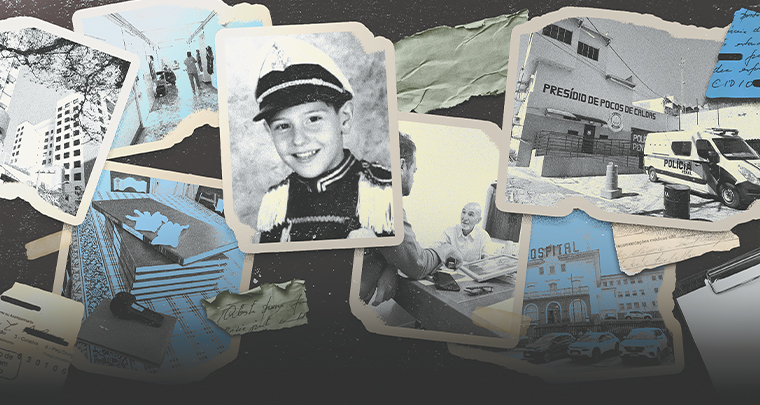
A tragic beginning
The story unfolds from the death of a 10-year-old boy in 2000: Paulo Veronesi Pavesi slipped from the ledge of a playground and fell from a height of about 10 metres. He was taken to a private hospital, where he underwent brain surgery, but he did not survive. He was declared brain dead, and with his parents’ authorisation, his organs were donated.
In the aftermath of the tragedy, however, the hospital issued what was considered an improper bill for the procedures performed on the boy, and his father, Paulo Airton Pavesi, complained to the press and authorities.
That was when the story took on new dimensions.
Soon, Brazil’s Federal Public Prosecutor’s Office began investigating the case and pointed to the existence of an alleged criminal organisation that profited by bypassing the public organ transplant waiting list.
To make matters even more explosive, the then-Health Minister, José Serra, was running as a pre-candidate for president, and the case eventually became the subject of a congressional inquiry. To this day, the story remains marked by twists and turns, contradictory rulings, and legal battles spanning decades.
One of the doctors accused was arrested in 2023. Two others were arrested in 2024.
Digging deeper
Journalist Bela Megale, a columnist for O Globo, was born in Poços de Caldas. Her grandfather was one of the founders of Pedro Sanches Hospital, where Paulo Veronesi Pavesi was first taken, although the institution was no longer in the family’s possession at the time of the case.
Her father was a doctor in the city and had no connection to the investigation whatsoever. Still, she always carried with her everything she had heard about those doctors, those accusations, and the impact the case had on the city.
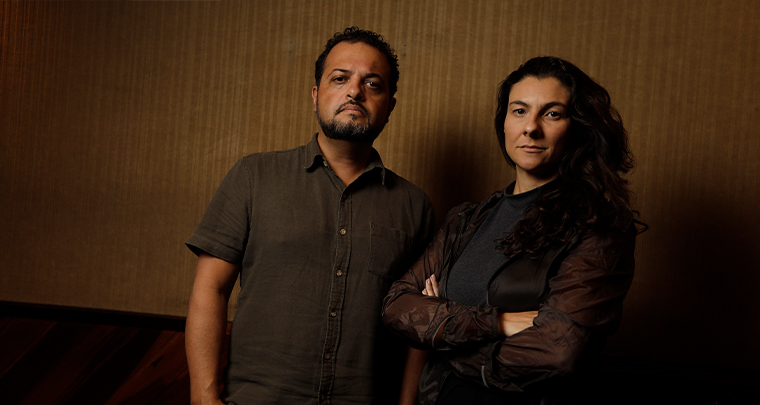
Together with fellow journalist André Borges, she spent more than two years poring over thousands of pages of documents and interviewing more than 30 people involved in the case, including five of the six accused doctors, who spoke to the press for the first time.
The pair uncovered gaps, contradictions, and aspects of the case that were largely unknown to the public — among them, the disappearance of evidence that could have exonerated the doctors. In that sense, the podcast not only retold a well-known story in Brazil but also shed new light on its grey areas.
Caso Zero was, above all, a deeply collaborative effort. Reporting, research, and narration were carried out by Bela Megale and André Borges, who also collaborated on the script written by Ives Rosenfeld. Elisa Soupin contributed to the research. Editing and sound design were by João Guilherme Lacerda, with original music by Gabriel Falcão and mixing by Vinicius Lis. Alexandre Maron, of Ampère Media, was responsible for development and production coordination. Executive production was led by Alan Gripp and me.
This was the third narrative podcast produced by O Globo. At the end of 2021, the newspaper launched Pistoleiros, a five-episode series hosted by special reporter Rafael Soares about hired killers in Rio de Janeiro.
The project won the podcast category at the GDA Journalism Awards, presented by Grupo de Diarios América. A year later, in 2022, we released Culture Wars: A Battle for the Soul of Brazil, an investigation into the moral conflicts that help fuel political polarisation. Hosted by professor and researcher Pablo Ortellado and journalist Elisa Martins, “Culture Wars” was a finalist at the WAN-IFRA Digital Media Awards Americas and “Caso Zero” was a finalist at both the Digital Media Awards and the INMA Global Media Awards in the category Best Use of Audio.
Related Articles
-

Dagblad van het Noorden’s crime podcast brings audience in on t...
14 October 2026 -

At Mediacorp’s CNA, loyalty means giving audiences a reason to ...
20 August 2026 -

Tribun Network turns print “dots” into AI-powered insight
20 August 2026 -

Indian Express builds a video-first future around trusted journ...
20 July 2026 -

Grupo RBS builds social-first video operation to expand audienc...
20 July 2026 -

Inside Denník N’s successful subscription strategy
15 July 2026 -

News Corp Australia’s Dear Rachelle podcast reignited hope whil...
13 July 2026 -

Why are audiences going to AI answer engines for news?
30 June 2026
Upcoming Events
-

Subscriber Acquisition Master Class
10-17 November 2026
-

Media Advertising Summit
New York, United States
07-10 December 2026
-

AI-Native News Product Master Class
18-25 February 2027
-

Media Subscriptions Summit
Oslo, Norway
08-12 March 2027
-

World Congress of News Media
New York, United States
25-30 April 2027
-

Branded Content & Partnerships Master Class
20-27 May 2027
-

Subscriber Retention Master Class
17-24 June 2027
-

Conferencia Latinoamericana
15-16 July 2027
-

South Asia News Media Festival
New Delhi, India
19-22 July 2027
-

Asia/Pacific News Media Summit
19-20 August 2027
-

CEO Roundtable at Kilkenny
Kilkenny, Ireland
24-26 August 2027
-

Media Innovation Week
Amsterdam, The Netherlands
27 September - 01 October 2027








