

At VG, radical newsroom innovation includes killing the article, CMS
Newsroom Innovation Initiative Blog | 16 June 2026

VG, Norway’s largest newspaper and one of the country’s most-visited Web sites, is known for its innovation. The publication quickly built a custom speech-to-text app, Jojo, in 2023. It has also built an editing tool that automatically converts all its content to video. Its team were finalists in four categories at the INMA Global Media Awards this year.
In other words, this is a news brand that has earned a lot of recognition and respect when it comes to creating value by doing things differently and boldly. So it was particularly fascinating to hear VG Editor-in-chief and CEO Gard Steiro speak at the Nordic AI in Media Summit last month.
Here are some of the key insights he shared:
Speed boats vs. tankers
To overcome slow legacy structures, “our philosophy is to launch a few speed boats that operate ahead of the mother ship,” Steiro said. “They can move faster, be more agile, make sharp turns, and experiment freely without risking the loss of the entire cargo.”
Kill the article
One of these speed boats is VG X. Instead of traditional, static articles, VG X offers short, concise, and dynamic summaries that compile multiple updates about the same story into a single, cohesive narrative, giving young users a quick and easily understandable overview of the news.
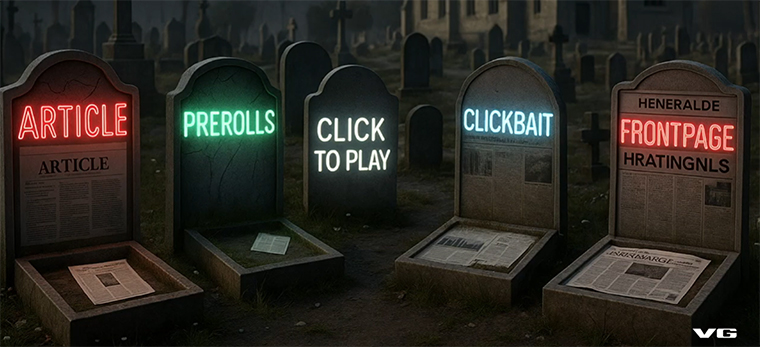
“In VG X, we’re getting rid of many of those things that everyone takes for granted in today’s media world but that actually no longer make much sense. The article, for example. Who decided that something invented for the 19th century for newspapers should remain the mother of all formats?” Steiro said.
VG X groups together articles, which have been vectorised and clustered by similarity. Agents then write a consolidated story: One will write an engaging headline, another will add in the latest developments, and another will decide whether it is important enough to be placed front and centre in the product.
“The idea is a person should not have to read a lot of articles to understand what is happening,” Steiro said.
The app is 100% AI, updated around the clock without humans, he said. But there is a journalist integrated with the tech team involved in prompt engineering to prevent errors.
Kill the CMS
VG X does not use a CMS. Instead, editors and reporters can use a chatbot inside the product to make changes to the content. “This might be the future of journalism,” Steiro said.
Double down on what AI can’t do
“Our biggest challenge is not building AI tools. Everybody can do that. Our biggest task is to find what kind of journalism can stand the test of time. What can we offer audiences when chatbots take over generic news and breaking news becomes a commodity? Because that will happen, I am sure of that,” he said.

VG has developed a definition of irreplaceable content.
“We have set the target of how large a share of our journalism should be that would make it impossible to copy,” Steiro said, pointing out this is at least as important as traffic and conversion metrics.
Do a workflow audit
Understand which processes you are spending time on. Schibsted has mapped every process in its newsrooms. “Why have we done this? Because now we know where we can free up capacity to make that unique content.”
A culture of learning matters more than individual AI experts
“The single most important thing we can do to unlock the value of AI is to ensure that as many people as possible understand the value of learning new technology,” he said.
“My most important conclusion to the AI revolution in VG is not designing new products but making sure we have a culture of learning, one that as many people as possible understand new technology and see how they can apply it within their own domains.”
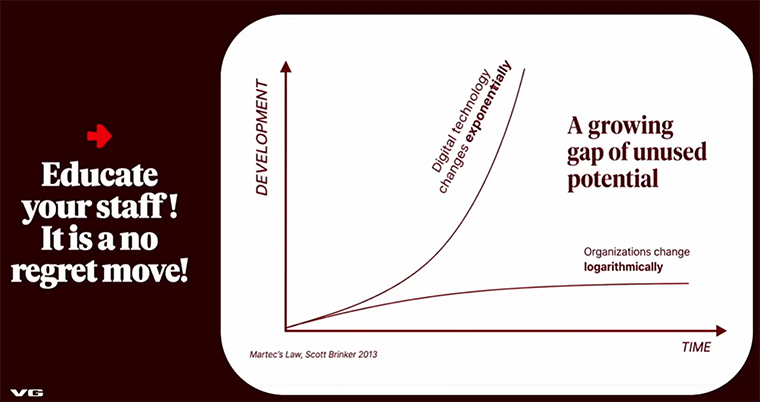
Organisations change far more slowly than technology does, he said. “If we don’t make a concerted effort to continue educating ourselves, the untapped potential will be so great that any startup can outcompete us.”
It takes time but the results are now apparent
Two years down the road, journalists are now building their own tools that give them insights into their beats or let them comb through massive amounts of data with great speed, Steiro said.
“Journalists who would normally need help from engineers to design and enrich their stories can now vibe code and build features that actually make a difference.”
If you’d like to subscribe to my bi-weekly newsletter, INMA members can do so here.
Related Articles
-

Marketers should outsource tasks, not thinking
25 October 2026 -

AI’s effect on super user math
15 September 2026 -

At Mediacorp’s CNA, loyalty means giving audiences a reason to ...
20 August 2026 -

Tribun Network turns print “dots” into AI-powered insight
20 August 2026 -

Nation Media Group focuses editorial strategy on stories that m...
4 August 2026 -

Briefly News empowers journalists with AI tool suite Nova
4 August 2026 -

Economist launches subscription tier targeting younger audience...
20 July 2026 -

Grupo RBS builds social-first video operation to expand audienc...
20 July 2026
Upcoming Events
-

Subscriber Acquisition Master Class
10-17 November 2026
-

Media Advertising Summit
New York, United States
07-10 December 2026
-

AI-Native News Product Master Class
18-25 February 2027
-

Media Subscriptions Summit
Oslo, Norway
08-12 March 2027
-

World Congress of News Media
New York, United States
25-30 April 2027
-

Branded Content & Partnerships Master Class
20-27 May 2027
-

Subscriber Retention Master Class
17-24 June 2027
-

Conferencia Latinoamericana
15-16 July 2027
-

South Asia News Media Festival
New Delhi, India
19-22 July 2027
-

Asia/Pacific News Media Summit
19-20 August 2027
-

CEO Roundtable at Kilkenny
Kilkenny, Ireland
24-26 August 2027
-

Media Innovation Week
Amsterdam, The Netherlands
27 September - 01 October 2027








