

In an AI‑driven future, just 2 viable media models exist
Product & Tech Initiative Blog | 27 May 2026

Generative AI is accelerating the “unbundling” of traditional news products, forcing publishers to make sharper strategic choices about their business models.
During this week’s INMA Webinar, Justin Kosslyn, former Google product director and now head of GZERO Media, told INMA members that only two models are remain viable in 2026: actionable insights and community/connection.
Kosslyn brought a dual perspective to the conversation. At Google, he oversaw products including Google Trends, Search Console, and Pinpoint for investigative journalism. He also worked with news organisations on reader revenue and AI‑driven tools.
Today, at GZERO Media, he is managing journalists for the first time. But most of all, he’s “a huge fan of the media industry. I think that what media does for society is essential,” he said.
“When you look at the replacement of traditional media by social media in the phones of many people, you see the negative effects of losing much of the weight of traditional media. I would love to get to a world where traditional media plays a stronger role once again in our hands, in our pockets, in our lives, because I think that is a better world.”

Death of the bundle
Kosslyn structured the Webinar as an interactive discussion and encouraged attendees to contribute examples and observations throughout. He opened by noting AI is “destroying the bundle” that once defined newspapers and magazines:
“As AI is ramping up, everything goes into the wood chopper of these AIs and gets remixed,” Kosslyn noted. “So you are unbundled in a deeper way than ever before. And this is a reality that is only likely to get more severe.”
That means news publishers must choose a clear lane and build their organisations around it.
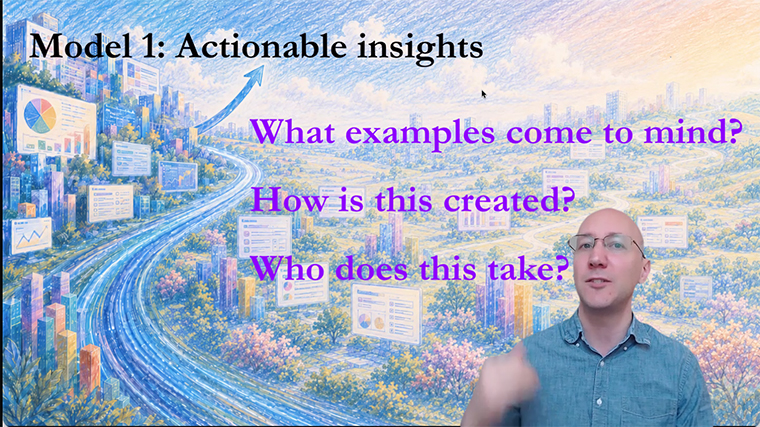
Kosslyn’s first viable model, actionable insights, focuses on delivering specific, decision‑relevant information that readers cannot easily find elsewhere. He described it as “news you can use,” whether for business professionals, policy specialists, or local residents.
INMA members cited examples such as Politico Pro, The Information, and specialised B2B publications. Kosslyn also pointed to Village Media in Canada and City News in Italy, which provide short, highly practical updates for local audiences without paywalls.
These outlets succeed, he said, because they offer information that is genuinely additive rather than derivative of what already exists online.
Actionable insights can be delivered at different price points, he said. High‑end intelligence products such as Politico Pro or The Washington Post’s research offerings command premium subscription fees, while local outlets like Village Media rely on advertising but still focus on delivering useful, timely information.
In both cases, the value lies in helping readers understand what is happening and what it means for them.
“The content is cheaper to produce, and it’s actionable,” he said. “It tells you why is the highway overpass still closed? What’s the new schedule for the farmer’s market? What’s going on with the new budget? What does that mean for local services?”
Sustaining this model requires significant editorial investment. Kosslyn emphasised that actionable insights depend on “fairly laborious traditional journalism,” including original reporting, sourcing, and verification.
Publishers must hire and retain experienced journalists capable of uncovering information that AI systems cannot generate on their own.
“You need professional journalist experts,” he said, adding this model requires a long‑term commitment to reporting and a newsroom culture that prioritises accuracy and depth.
Even lower‑cost versions of the model require intentional design. For example, Village Media’s automated syndicated obituary feeds from local funeral homes account for 15% of its traffic. The company copies and pastes obituary information directly from funeral home Web sites with no human review.
While unconventional, the approach meets a clear audience need and demonstrates how actionable insights can be delivered efficiently. Such practices may not be culturally acceptable in all newsrooms, he said, but they illustrate the kinds of trade‑offs publishers must consider.
The power of community
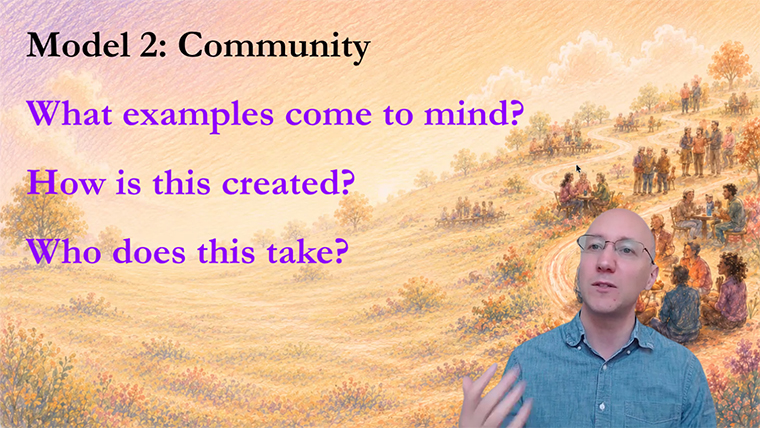
Kosslyn’s second viable model is built around community and connection.
“This is going to look very different,” he said, explaining audiences come not primarily for information but for a sense of shared identity, mission, or affinity. “They want to be part of something,” he said. “They want to wear the hat. They want to meet other people who share their values, other fans of the brand.”
This model is driven by personality‑forward content, events, and direct relationships with the people behind the brand. Kosslyn noted that much of the Substack ecosystem operates this way, as do many news creators on short‑form video platforms whose content feels like a personal conversation. Event‑heavy media brands and politically aligned communities, such as The Dispatch, also fit this pattern.
“Also, I think a lot of news creators on social video, short-form video, and vertical video play in this lane. It’s almost like they’re FaceTiming me on my phone and I feel a personal connection to them,” he said, adding media brands that do a lot of physical events also play in this lane.
At GZERO Media, Kosslyn is applying this model through a white‑label social network hosted on Mighty Networks, where members can interact, discuss content, and participate in live sessions. The platform allows GZERO to cultivate a “superfan” community, generate content within the network, and cross‑pollinate between newsletters, social media, and member discussions.
Kosslyn said the company can film “Ask Me Anything” videos inside the community and then release clips on social platforms, creating a loop between community engagement and broader audience reach.
This model requires a different kind of talent than traditional newsrooms typically cultivate. Kosslyn said publishers need charismatic faces of the brand, staff who can design and run events, and a culture comfortable with personality‑driven media.
“It’s almost like party planning,” he said.
Publishers can also benefit from the rise of “clipper” communities — groups of superfans who clip, remix, and share content from creators they follow. These communities can amplify reach, generate viral moments, and deepen engagement, particularly for brands pursuing the community model.
By making content easy to clip and share, publishers can harness this grassroots energy to expand their audience without significant marketing spend.
“Your brand represents a project in the world that has a set of values and beliefs that it is trying to evangelise,” he explained. “Your clippers are your civic entrepreneurs, your social entrepreneurs who are trying to step up and play a role in your social movement.
“Clipping is an activity that permits them to express that social role.”
Kosslyn contrasted the two viable models with a third model that tries to “split the difference” between those two.
“This model is the one where the robots get you, unfortunately, and you fall in the gap between model one and model two,” he said.
By not “picking a lane” and taking a strong stance on moving forward either with actionable insights or with community, news media organisations risk being overtaken by AI‑generated content that can replicate their generalist output at far lower cost.
Where to start
Asked where publishers should begin, Kosslyn advised starting with a deep understanding of audience behaviour, including analytics, surveys, and qualitative feedback.
From there, “I would talk to the team. I would try to get a sense of, do we have the human capital to run one playbook better or the other playbook better? And then I would start to understand what kind of trade-offs are culturally acceptable.”
Some news organisations may be comfortable with automated content in certain areas; others may be ready to elevate individual voices over institutional identity. The key, he said, is to choose intentionally and ensure every product knows which lane it occupies.
The Webinar concluded with a discussion between Kosslyn and INMA’s Robert Whitehead, head of the Digital Platform Initiative, who moderated the event. They explored the historical forces that shaped today’s media landscape, with Whitehead noting that many publishers became generalists during the mid‑20th‑century era of limited competition, when economic incentives pushed outlets toward the political and editorial centre to “be all things to all people.”
Kosslyn agreed, adding that the industry is now reverting to a more fragmented, lane‑driven ecosystem similar to the early 20th century that was “much more freewheeling, that was much more playing in these kinds of lanes of providing specific value to different communities or providing a community anchor.
“So I think that this is maybe less inventing this or belatedly inventing this and more rediscovering this.”
Related Articles
-

Marketers should outsource tasks, not thinking
25 October 2026 -

AI is now media’s operating environment
28 September 2026 -

AI’s effect on super user math
15 September 2026 -

At Mediacorp’s CNA, loyalty means giving audiences a reason to ...
20 August 2026 -

Tribun Network turns print “dots” into AI-powered insight
20 August 2026 -

Nation Media Group focuses editorial strategy on stories that m...
4 August 2026 -

Briefly News empowers journalists with AI tool suite Nova
4 August 2026 -

AI adoption in newsrooms should move from experiment to strateg...
12 July 2026
Upcoming Events
-

Subscriber Acquisition Master Class
10-17 November 2026
-

Media Advertising Summit
New York, United States
07-10 December 2026
-

AI-Native News Product Master Class
18-25 February 2027
-

Media Subscriptions Summit
Oslo, Norway
08-12 March 2027
-

World Congress of News Media
New York, United States
25-30 April 2027
-

Branded Content & Partnerships Master Class
20-27 May 2027
-

Subscriber Retention Master Class
17-24 June 2027
-

Conferencia Latinoamericana
15-16 July 2027
-

South Asia News Media Festival
New Delhi, India
19-22 July 2027
-

Asia/Pacific News Media Summit
19-20 August 2027
-

CEO Roundtable at Kilkenny
Kilkenny, Ireland
24-26 August 2027
-

Media Innovation Week
Amsterdam, The Netherlands
27 September - 01 October 2027








