

The machine just rewrote your price list
The Distillation Blog | 04 September 2026

Last week I said we had left the building without sending the invoice. This week the INMA conversation began drafting one — and found the machine had already struck three lines off it.
Being first. Being everywhere. Selling the space. Those were the lines news companies were paid on, and this week each was done faster, cheaper, or free by software.
The same storyline arrived from four directions inside INMA:
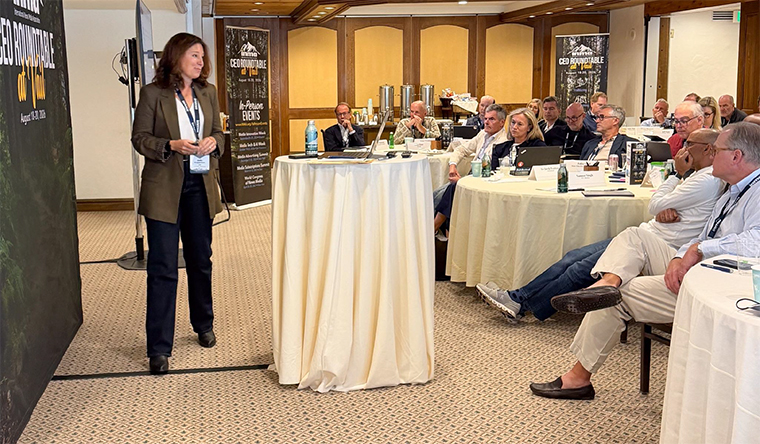
- INMA Advertising Initiative: Gabriel Dorosz catalogued 30-plus revenue streams in six families — a price list in which the article barely appears.
- INMA Product & Tech Initiative: Jodie Hopperton’s Vail hypothesis that the biggest AI risk is not moving too slowly. It is using AI to optimise a business model that no longer works.
- INMA Young Audiences Initiative: Kerstin Hasse told 40 CEOs to say goodbye to the funnel — the audience is not passing through the platforms; it is already home.
- INMA Research blog: Merja Myllylahti reported that an AI-native newsroom beat Wired to a scoop by more than three hours.
Underneath sits one question: If speed, reach, and the sale itself are now commodities, what is left on the invoice that a customer would still pay for?
The insight: Your price list was written for a world in which being first, being everywhere, and selling space were hard. None of them is hard any more. Every line that a machine can now do for free is a line your customers will soon decline to pay for.
3 lines the machine struck off
Line one: being first
Speed is journalism’s oldest bragging right. On the INMA Research blog, Auckland University of Technology’s Merja Myllylahti records the moment it stopped being ours:
An AI newsroom called RuntimeWire filed the story about OpenAI’s rogue AI agents more than three hours before Wired’s reporters — and, by the trade press’ account, the copy was accurate and well-sourced.
Reuters now publishes market alerts in six to eight seconds.
Being first is no longer a human advantage. It is a server cost.
Line two: being everywhere
On the same blog, Echobox’s Simran Cashyap documents a multi-market wave of Facebook de-monetisation — pages losing eligibility for “unoriginal content,” recycled templates, and volume swings. Templated reach is now worth nothing, and Meta is pricing it accordingly.
And on Monday, Google completed the global rollout of its AI-search opt-out, while Reuters reports EU regulators have asked publishers whether they will actually use it.
Line three: selling the space
Gabe flagged for members in the INMA Slack channel the story of Vox’s first agentic media buy: a seller agent built by Boostr received, negotiated, and closed the deal, brief to live in under two minutes. Deals that took four to 12 weeks now take minutes, and Raptive’s Ryan Maynard hopes the technology “will put an end to the RFP process.”
The same day, in suburban Washington, D.C., Judge Leonie Brinkema declined to make Google sell AdX, the exchange where publishers pay a 20% fee on every auction — the third time in a row U.S. enforcers have sought a Big Tech breakup and lost. She had already found Google’s conduct “substantially harmed Google’s publisher customers.” The remedy is behavioural. The toll booth stands.
Put the two stories together. The court will not rebuild the old sale for you; the market is routing around it. Adalytics puts middleman fees at 22%-45% on half of all impressions, and the point of an agentic direct deal is that most of that comes back to the seller.
And the biggest new seller of intent is not a publisher: ChatGPT’s ad business crossed a US$1 billion annualised run rate this week, a fifth of its billion weekly users showing what OpenAI calls commercial intent.
Speed, reach, and the sale. Three lines, three machines.
The insight: Don’t read the agentic buy as an efficiency story. Read it as a repricing. When an agent can negotiate a deal in two minutes off your rate card, your rate card is the product — and if your pricing, placements, and audience definitions are not clean enough for a machine to read, you are not in the auction.
30 lines on a new invoice
So what goes on the invoice instead?
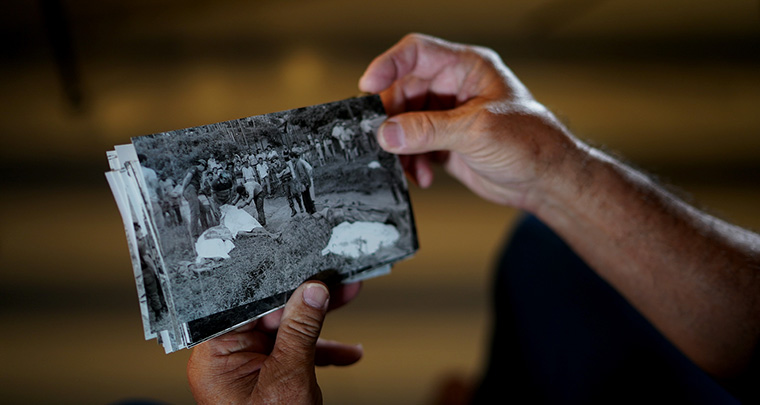
Gabe’s answer, compiled for the Vail CEO Roundtable, runs to more than 30 streams in six families: advertising evolved, marketing services and data, IP and licensing, events, commerce, and B2B. Some studies already put “other” revenue at 25% or more of publisher revenue, and Digiday+ found events passing subscriptions among top-cited sources this year.
Read the catalogue as a map of where the money has moved:
- Events: Semafor’s are more than half its revenue. Time’s are pacing to roughly half this year, from 28% in 2023, with no ticketing at all.
- Professional information: Dow Jones’ B2B business is 39% of revenue and about half of profit; advertising has fallen from 48% of its revenue in FY14 to 16% in FY25.
- Owned ad tech: Newsweek lost three-quarters of its traffic and grew revenue anyway.
- Utility inventory: Russmedia has stopped selling ad space and started selling ad function, priced per outcome. Said Georg Burtscher: “People will pay for emotion, not for CPM.”
The news stories being followed for members by INMA this week are the same map in different hands:
- The Onion, in what CEO Ben Collins calls a death spiral two years ago, is now an eight-figure business chasing 100,000 subscribers.
- The Information is targeting eight figures of video revenue by 2027.
- The Athletic launches a live show on September 8 with Google Gemini as presenting sponsor.
- The Saturday Evening Post is stopping its presses.
Gabe’s warning is the one to keep: The right response is not to launch 31 things. It is to run each candidate through a rubric, pick the few that compound with your audience and your strengths, and pilot with clear KPIs.
The insight: The article is leaving the invoice and the things around it are arriving — the room, the franchise, the data, the tool, the seal. Your 2027 budget should be able to say which two or three of Gabe’s six families you intend to be paid in. If it cannot, you are still pricing the building we left last week.
What only you can make people do
There is a fourth line the machine has not struck off, and this week’s INMA case studies all sell it. It is not content. It is participation.
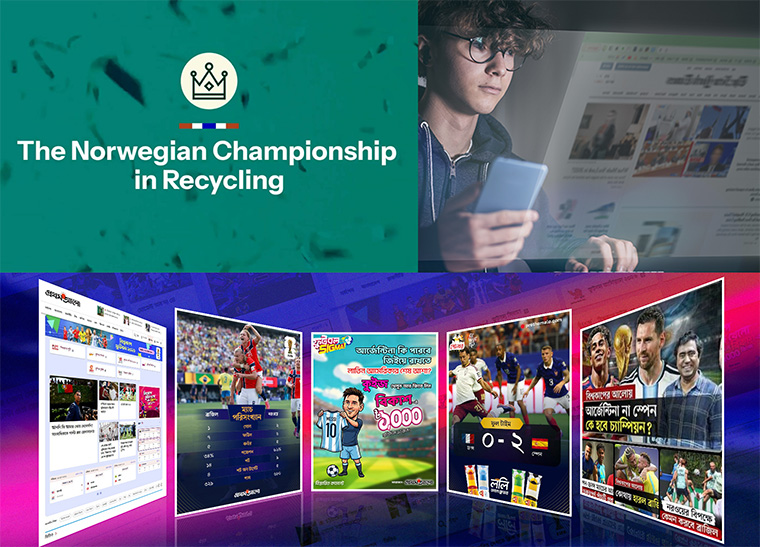
Prothom Alo, Bangladesh. The newspaper did not ask how to cover the FIFA World Cup. Social media manager Shiddhartha Das writes that it asked how audiences could experience the World Cup through Prothom Alo — quizzes, predictions, scorecards, statistics, one match generating a flywheel of content. The result: 101 million engagements and two billion post views. His key sentence: “The audience was no longer just reading the story. They became part of the story.”
Amedia, Norway. Martine Barkved Næss’s team set what it called a hairy goal of 3,000 participants for a recycling quiz that pitted counties against each other for Grønt Punkt Norge. More than 69,000 started it. Click-through ran at double the benchmark, reading time at 72 seconds against 30-40, and the campaign scored an action index of 129. The advertiser bought a change in behaviour, and the newspaper could prove it delivered one.
Nine Publishing, Australia. Monique Farmer and Matthew Burgess describe how five university partnerships turned complimentary access into habit: Campus Access users visit multiple times a day, one in 10 plays a puzzle daily, and students who spent a day inside the Herald newsroom called it a “dream experience.” One has since joined The Age as a trainee.
A Gazeta, Brazil. Editor-in-chief Geraldo Nascimento’s Web series on the 1985 Morro do Macaco landslide prompted a mayor to announce slope-containment works and, rarer still, to apologise. AI built the scrollytelling; the journalism moved a government.
The insight: A machine can write the match report. It cannot make 69,000 Norwegians compete for their county, or get a mayor to apologise, or put a student inside your morning news conference. Participation is the line no AI can commoditise, and this week four newsrooms on three continents proved it can be sold.
Habitat, not funnel
Where does participation happen? Increasingly, not on your property.
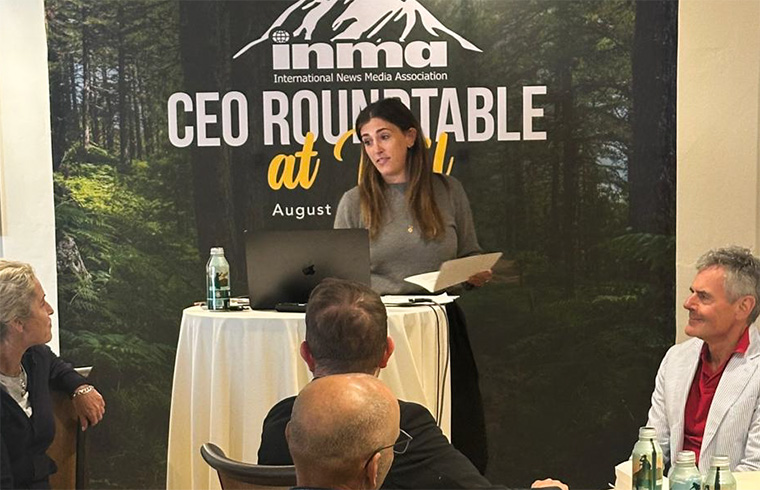
Kerstin gave the 40 CEOs in Vail three lessons, and she is not gatekeeping them:
- Meet them where they are. Say goodbye to the bridge. Funnel thinking assumes platforms exist to pull people back to a homepage where the real relationship happens. Habitat thinking starts from the opposite premise: Platforms are where this audience lives, and journalism has to exist there natively. “They are not passing through; they are already home.”
- Rethink “what does this get us?” It is the question that kills more good decisions than any bad strategy. A short-form video strategy will not convert next quarter. That makes it the wrong question, not the wrong strategy.
- Think braver about money. Brut’s brand partnerships. Mediahuis’ SPIL, built with the creators already reaching Gen Z. And Jodie’s proposal for an authentication layer that lets a subscription travel with the person — an FT subscriber getting premium FT reporting back inside ChatGPT.
The outside world agrees. Axios publisher Nicholas Johnston told Press Gazette that “SEO is not the answer anymore,” warning this moment will be like digital disruption but “much, much faster.” The Information says most of its video viewership comes from social clips, not the live broadcast.
The insight: Every platform KPI you judge by Friday is a funnel KPI in disguise. Judge platform presence the way you judge any long-term bet — by whether the logic holds — and price it the way Brut and Mediahuis do, in the habitat, not on the bridge back.
Fix the till, share the plumbing
Two findings tell you what to do with the lines the machine took.
The till
Greg Piechota reports that news publishers now outperform online retail at checkout. E-commerce cart abandonment has hovered around 70% for two decades; U.S. metro newspapers in the 2010s converted under 10% of desktop users who entered a subscription flow. In Q2 2026, across 149 brands reporting to INMA Subscription Benchmarks, median checkout-flow efficiency reached 38% — more than doubled in two years. The direct sale, the one line no platform can take, has become the best-performing checkout in consumer commerce. The gap between publishers, Greg adds, remains enormous.
The plumbing
In this week’s INMA Product & Tech Webinar on radical collaboration, Scott Klein of Open Journalism reported that newsroom open-source activity fell 80% from its 2016-2017 peak — and is reviving, with one in seven newsroom repositories now containing AI prompts and agent files, up from one in 17 a year earlier. Stanford’s Ryan Pitts runs Big Local News as “an infrastructure provider for the local news ecosystem.” Klein’s line is the week’s most practical: “Even if we compete on stories, I think there’s no reason for us to compete on writing Web scrapers.”
Hearst Newspapers shows the plumbing at work. Brittany Schell describes Assembly, the DevHub’s meeting tool, now tracking 460 public agencies and more than 10,000 meetings, with an agentic workflow that turns a request to add an agency from weeks into minutes.
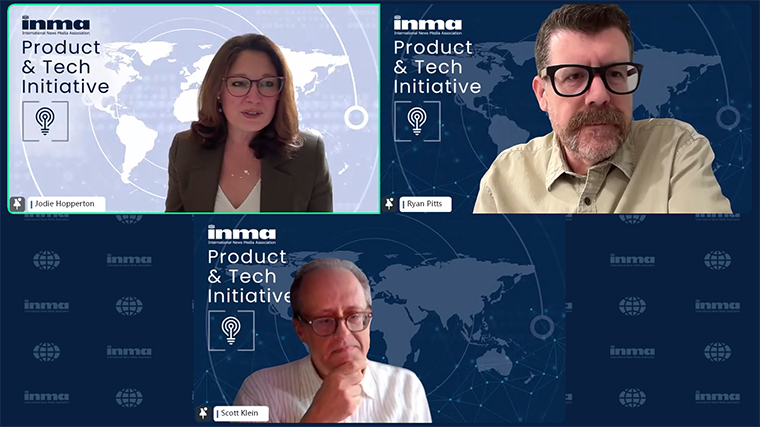
The insight: The lines the machine took — speed, reach, the RFP — are now shared infrastructure, and infrastructure is cheapest when built once and used by many. Spend your scarce engineering on the till and the participation, and borrow, fork, or pool the rest.
What it means for your company
Distil the week, and you get three sentences.
Speed, reach, and the sale are now machine work, priced at machine rates.
What remains on the invoice is what only you can make people do — participate, return, show up, act — and where they live rather than where you do.
The direct sale is the one line that has got better, and most companies still price it badly.
Three upcoming dates to put in the diary:
- September 9: Gabe’s INMA Webinar on BCN’s GEO Brand Impact — a first attempt at measurement for AI-visibility services, which today have none.
- September 10-17, INMA Young Audiences Summit: Mediahuis presents SPIL, the Gen Z product built with creators rather than against them.
- September 15: Cloudflare’s crawler default takes effect. With Google’s AI-search opt-out live worldwide, the EU asking publishers whether they will use it, and the courts leaving AdX intact, nobody upstream is going to fix your economics; your crawler policy needs a named owner this month.
A week ago I said we had left the building but had not sent the invoice. I would now sharpen it: The invoice is being written, and the machine is writing the first three lines for free. The courts have kept the old sale intact; only the new one pays you more. The only lines left are the ones a customer can feel.
Which leaves one question for your executive team: If an agent can buy your inventory in two minutes and a rival can be first for the price of a server — what, on your price list, is priced for a human?
The Distillation is INMA’s weekly read on where the news business is going based on our content. Available as a blog, a newsletter, and a podcast.
Upcoming Events
-

Subscriber Acquisition Master Class
10-17 November 2026
-

Media Advertising Summit
New York, United States
07-10 December 2026
-

AI-Native News Product Master Class
18-25 February 2027
-

Media Subscriptions Summit
Oslo, Norway
08-12 March 2027
-

World Congress of News Media
New York, United States
25-30 April 2027
-

Branded Content & Partnerships Master Class
20-27 May 2027
-

Subscriber Retention Master Class
17-24 June 2027
-

Conferencia Latinoamericana
15-16 July 2027
-

South Asia News Media Festival
New Delhi, India
19-22 July 2027
-

Asia/Pacific News Media Summit
19-20 August 2027
-

CEO Roundtable at Kilkenny
Kilkenny, Ireland
24-26 August 2027
-

Media Innovation Week
Amsterdam, The Netherlands
27 September - 01 October 2027








