

Publishers rethink journalism for the creator era as young audiences reshape news habits
World Congress Blog | 12 May 2026

News companies trying to reach younger audiences are increasingly being forced to rethink not only where journalism is distributed, but how it is created, packaged, and experienced.
Across the INMA World Congress of News Media in Berlin last week, executives, editors, startup founders, and young audiences specialists repeatedly returned to the same conclusion: Younger audiences are not disengaged from news — they are disengaged from formats, products, and institutional habits built for previous generations.
From TikTok-native storytelling and creator-style journalism to youth newsrooms and music festival partnerships, speakers said the future relationship between publishers and younger audiences will depend less on institutional authority and more on relevance, transparency, identity, and participation.
The weeklong World Congress included two days of study tours across 17 German media companies, two days of conference sessions, and a day of specialised seminars attended by more than 750 media executives from 38 countries.
Young audiences expose broader newsroom problems
Kerstin Hasse, INMA’s Young Audiences Initiative Lead, said publishers often misunderstand the challenge.
“Young audiences aren’t hard to reach,” Hasse said. “They’re hard to reach with journalism that wasn’t built for them.”
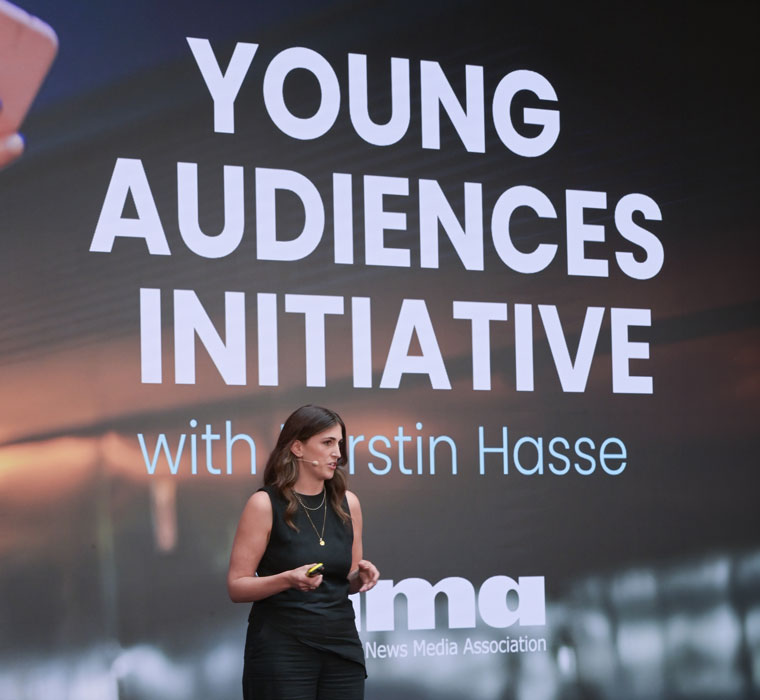
During a conference session on younger audiences, she urged publishers to stop viewing young consumers as a niche problem and instead recognise them as indicators of larger structural weaknesses in modern news products.
It’s not a question of age, Hasse said. It’s a behaviour change over generations.
Speakers throughout the week said younger audiences increasingly expect journalism to feel participatory, visual, personality-driven, conversational, and native to the platforms where they spend their time.
Correctiv turns audiences into participants
One of the clearest examples came during the World Congress study tours at Correctiv, the German nonprofit newsroom that has increasingly focused on participation, youth engagement, and community-led journalism.
Executives described a strategy that moves beyond traditional publishing into community activation, co-creation, and entertainment-led journalism formats.
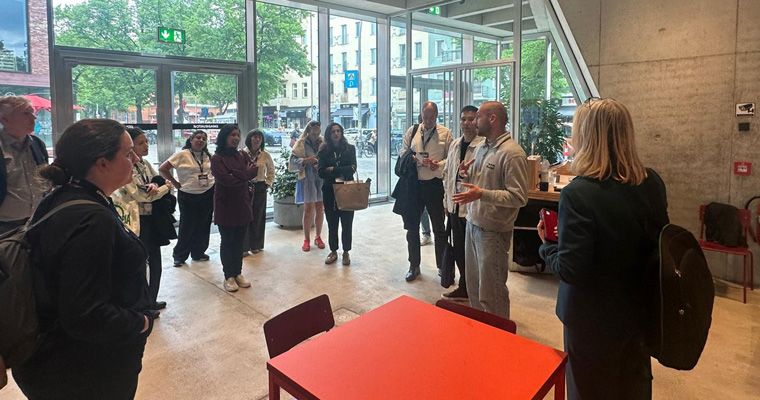
Correctiv’s “Fun Facts” project combined comedians and fact-checked journalism across YouTube and Instagram in a creator-style format designed for younger audiences. Executives said the initiative reached roughly 200,000 Instagram followers in about six weeks while nightly live shows attracted around 100 attendees.
The organisation also discussed its Salon5 youth newsroom initiative and “Nautilus” offices, where younger audiences help shape content and discussions rather than simply consuming them.
Correctiv executives said newsletters remain their strongest trust and donation conversion channel, while community participation tools and youth-focused formats help deepen engagement with younger consumers.
Publishers rethink journalism through the creator economy
Another major theme throughout the week was the growing influence of creator culture on journalism itself.
Sruthi Gottipati, founder of Spot On and former founder of Brut India, said publishers continue to underestimate how dramatically storytelling needs to evolve for social environments.
“Quality journalism does not automatically connect with audiences if it’s not built as social native storytelling,” Gottipati said.
She described younger audiences as overwhelmed with information but highly intentional about where they give attention and trust.
Gottipati said publishers spent too long treating TikTok and social platforms as secondary promotional channels rather than primary storytelling environments.
“We saw the potential early on in distribution on Instagram and TikTok at a time when most publishers still treated it as a bounce platform,” she said while discussing the growth of Brut India.
Journalism increasingly must function within the logic of the creator economy, where audiences connect with people and personalities before institutions, Gottipati said.
“People trust people, not institutions,” she said. “Journalism needs to become part of the social conversation.”
Clarín goes to music festivals to reach younger consumers
Some publishers are extending those ideas beyond digital platforms and into physical youth culture spaces.
Tomàs Vio, head of communications and institutional relations at Grupo Clarín in Argentina, described partnerships with universities and major music festivals including Lollapalooza, Ultra Music Festival, and Primavera Sound.
Instead of aggressively pushing digital subscriptions, Clarín changed to offering younger audiences access to a benefits club with discounts on concerts, restaurants, theatres, cinemas, and parks — meeting them where they are.
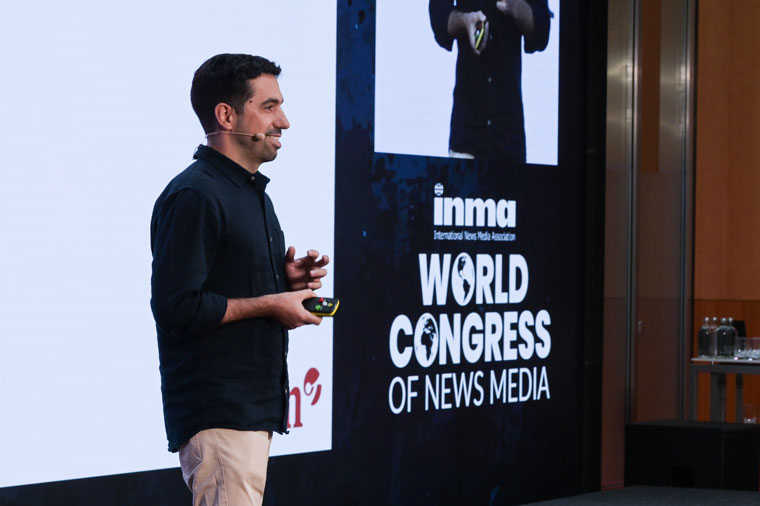
Vio said the strategy recognised that younger audiences often need to build familiarity and affinity with journalism brands before becoming paying subscribers.
“First of all, we have to get off our pedestals,” Vio said. “We have to go where they are. We have to speak their language.”
He said the partnerships were designed to show younger consumers that Clarín could become “a lifetime partner” rather than simply a news subscription.
Legacy publishers redesign workflows for social video
Large publishers also discussed how reaching younger audiences increasingly requires structural newsroom change rather than isolated social media teams.
At Sky News, executives described redesigning newsroom workflows around multi-platform publishing and video-first storytelling.
Andy Thomson, executive director of business operations at Sky News Group, said journalism now has to be designed simultaneously for television, YouTube, TikTok, streaming, and social platforms.
“What works on television doesn’t automatically work on social or streaming,” Thomson said. “Content has to be designed from the outset for digital platforms.”
Sky News executives said the organisation has surpassed 11 million TikTok followers while restructuring products around platform-native publishing strategies.
News Corp Australia’s Pippa Leary similarly described moving editorial teams toward vertical video and visual storytelling as both a revenue and audience strategy.
Participation becomes a trust strategy
Throughout the week, speakers repeatedly said younger audiences want journalism that allows participation, contribution, and dialogue.
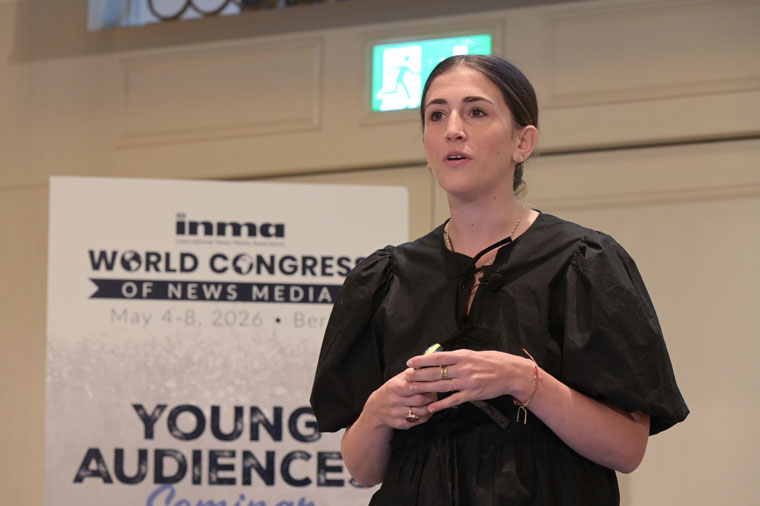
Hasse encouraged newsrooms to interact with their users in the comments sections and produce a clear value proposition with new formats, such as podcasts or vertical video content.
She described projects in Germany where students work directly with publishers to produce podcasts, TikTok projects, and newsroom collaborations later published by participating media organisations. Ask users what they like, encourage them to write the story together with you, the way new creators are doing it.
“Young people are not just the audience,” she said. “They actively shape the content.”
The broader message throughout the World Congress was that younger audiences are not demanding less journalism. They are demanding journalism that better reflects how they communicate, discover information, build trust, and participate in digital culture.
“You cannot expect young people to trust journalism if they never had the chance to understand it,” Hasse said.
All photos by Robert Downs Photography.
Related Articles
-

AI’s effect on super user math
15 September 2026 -

At Mediacorp’s CNA, loyalty means giving audiences a reason to ...
20 August 2026 -

Tribun Network turns print “dots” into AI-powered insight
20 August 2026 -

Economist launches subscription tier targeting younger audience...
20 July 2026 -

Grupo RBS builds social-first video operation to expand audienc...
20 July 2026 -

Inside Denník N’s successful subscription strategy
15 July 2026 -

Grupo RBS approaches social media as an editorial product, not ...
25 June 2026 -

Rheinische Post programme turns print loyalty into digital conf...
11 June 2026
Upcoming Events
-

Subscriber Acquisition Master Class
10-17 November 2026
-

Media Advertising Summit
New York, United States
07-10 December 2026
-

AI-Native News Product Master Class
18-25 February 2027
-

Media Subscriptions Summit
Oslo, Norway
08-12 March 2027
-

World Congress of News Media
New York, United States
25-30 April 2027
-

Branded Content & Partnerships Master Class
20-27 May 2027
-

Subscriber Retention Master Class
17-24 June 2027
-

Conferencia Latinoamericana
15-16 July 2027
-

South Asia News Media Festival
New Delhi, India
19-22 July 2027
-

Asia/Pacific News Media Summit
19-20 August 2027
-

CEO Roundtable at Kilkenny
Kilkenny, Ireland
24-26 August 2027
-

Media Innovation Week
Amsterdam, The Netherlands
27 September - 01 October 2027








