

Are events the hero product for publishers?
Advertising Initiative Blog | 27 September 2026

At the recent TRB Audience Summit in New York City, a one-day gathering of 200+ news and publishing executives, Kirk McDonald, chief executive officer of Sundial Media & Technology Group (Essence, Refinery29, BeautyCon, Afropunk), was the last guest on the main stage.
He described a reversal of the usual publisher model:
“Instead of using experience to add on to media, we’re using the experience to build media,” he said. “All of our stages become studios.” What gets shot at the Essence Festival of Culture becomes the media Sundial distributes afterwards. Asked whether that makes Sundial an events company: “Not at all. I think we’re a human connection company.
“Thirty days in, we generated 68 billion impressions just off of the content over the course of those three days,” combining owned distribution on YouTube and social with mentions, plus more than 300 million content views.
Sundial built studio facilities for local New Orleans creators, who shot what he estimated at US$4.5-US$5 million of content Sundial doesn’t own. A film festival drew 700 submissions. A job fair drew about 2,000 people and health screenings about 1,500. And Target ran an activation inside a convention centre moving 50,000-60,000 people a day.
“People who came inside and chose to stand in line just to go through the Target experience for three hours — that’s engagement,” he said.
McDonald ran GroupM North America before Sundial, so he has a buy-side perspective on the sell side.
“We commoditised everything in an effort to also find our profitability,” he said. “Let’s admit that we played a part in it. We commoditised the ad units. We made them all standard.”
Then came buying by audience segment: “Somewhere in the effort to buy audience segments, there was fear that context was really going to be a bad thing,” which is how spend drifted away from news.
Now that AI makes content cheap, he thinks the scarce thing is what machines can’t produce (trust, participation, cultural connection). “Context wins now,” he said, and he expects “news is going to be able to demonstrate that” through engagement and participation.
The brand conversation has changed with it: “It’s not simply buy media anymore. It’s actually double down on these types of moments in a way that we can then build media from.”
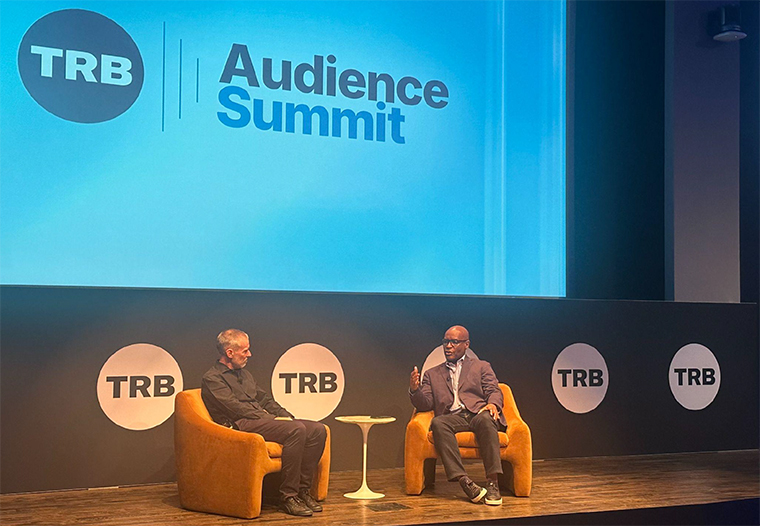
Will Lee, chief executive officer of Adweek, said the roundtable format behind Adweek House at Cannes now runs 14 to 18 sessions: six to nine executives in a circle for 45 minutes: “Almost all of them are sold to a sponsor,” he said. “They get an article about it, they get a video, and a lot of them use that in their own marketing.”
On the economics: “One thing I didn’t realise is that the event business can be a very high-margin business. It’s like a 60-70% margin business,” and the contribution margin grows every year. He contrasted it with the consumer festivals he ran at People (Food & Wine, Travel + Leisure): “It’s really expensive. You’re not really making money.”
Rafat Ali, chief executive officer and founder of Skift, finished the thought: “That’s a marketing expense.”
Ali said global expansion starts with events for him: Dubai, Bangkok, India. Skift Global Forum runs to 1,500 people over three days (this week), and “we’re relaunching as a decision intelligence company for the travel industry,” he said, a shift he summed up as “‘I read Skift’ to ‘I use Skift.’ Just one word change.”
His test for the viability of any business is quoting: “If you have a deck with lots of AI words in it, and you delete all AI words out of that deck, and you still have a business, you’re fine.”
Robert Dippell, chief executive officer of Morning Brew, offered this: “We would do invite-only private events where my team walks through how one grouping uses that platform, and we get 50 high-value people in the room for that company.” He added: “People also want to spend on private and invite-only events right now.”
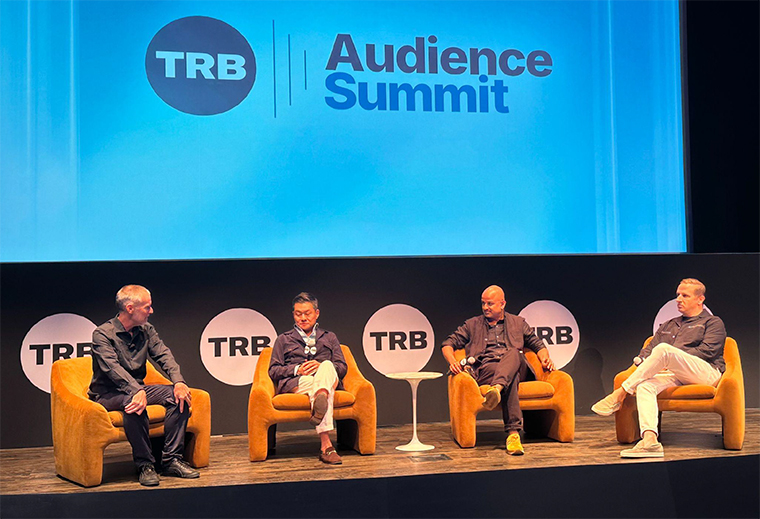
Danielle Varvaro, chief revenue officer of Newsweek, listed events and Webinars alongside rankings and an ad network as the way Newsweek monetises its healthcare audience.
Some of the salons explored the consumer side (and were conducted under Chatham House Rule). In the consumer revenue salon, a magazine publisher’s consumer growth lead described 50-person, members-only home tours in the home and design category that sell out within an hour of going on sale. They were profitable even before a single sponsorship was sold.
The same publisher has relaunched a large consumer fair that had sold 2,000 tickets a month out, mixing vendor fees, sponsorship, and licensed product, with members-only sessions inside the larger event. In the audience salon, a craft-enthusiast publisher runs competitions and live shows that feed its print and subscription funnel.
And back on the main stage, Nicholas Thompson, chief executive officer of The Atlantic, named live events, along with print, as where The Atlantic would double down if the Web keeps degrading as a distribution system.
Sponsorship revenue comes from three places, based on what I heard throughout the day:
Experiential budgets that already exist. Target’s Essence Fest activation is an experiential buy, and Sundial’s job is to make it produce content and distribution as well as foot traffic.
B2B marketing budgets that want access to buyers rather than impressions. Adweek’s sponsors are paying for nine executives in a room and the assets that come out of it. Morning Brew’s demo events are the same idea.
Reader revenue. The members-only events were built to serve subscribers first. Sponsorship came second, and only where it was additive.
As I wrote in April about the INMA Global Media Awards finalists, events increasingly look like the strongest pillar beyond print and display in publisher diversification this year. The open question remains scale: The consumer events that were discussed were either very small and premium or very large and expensive, and the clearer margin stories came from B2B.
I’m looking forward to hearing more about consumer events from Michelle Edelbaum, senior vice president of events at Food & Wine, who will present brand-led events as a revenue line at the Media Advertising Summit in December.
If you’d like to subscribe to my bi-weekly newsletter, INMA members can do so here.
Related Articles
-

Spain is moving from inventory to brand partnerships
11 October 2026 -

Research: 15% of sales directly tied to news brands’ cultural r...
11 October 2026 -

6 ways news publishers are turning trust into advertising reven...
30 September 2026 -

A look at 30+ revenue streams publishers are actually building
31 August 2026 -

The week the news business got graded on direction, not results
6 August 2026 -

South Asia’s publishers have the trust but not yet the revenue ...
26 July 2026 -

Editora Globo shifts from selling ads to selling media solution...
21 July 2026 -

The rise of quality and why that matters for advertising
16 July 2026
Upcoming Events
-

Subscriber Acquisition Master Class
10-17 November 2026
-

Media Advertising Summit
New York, United States
07-10 December 2026
-

AI-Native News Product Master Class
18-25 February 2027
-

Media Subscriptions Summit
Oslo, Norway
08-12 March 2027
-

World Congress of News Media
New York, United States
25-30 April 2027
-

Branded Content & Partnerships Master Class
20-27 May 2027
-

Subscriber Retention Master Class
17-24 June 2027
-

Conferencia Latinoamericana
15-16 July 2027
-

South Asia News Media Festival
New Delhi, India
19-22 July 2027
-

Asia/Pacific News Media Summit
19-20 August 2027
-

CEO Roundtable at Kilkenny
Kilkenny, Ireland
24-26 August 2027
-

Media Innovation Week
Amsterdam, The Netherlands
27 September - 01 October 2027








