

Research: 15% of sales directly tied to news brands’ cultural relevance
Print Innovations | 11 October 2026

The latest TikTok dance? Culture. Looksmaxxing influencers? Culture. Viral memes? Culture. (Jane Eyre? Still culture. I think.)
To give my admittedly granddad brain a kick up the backside, they’re right. Not only has social media democratised both access to and creation of culture, it’s also dispersed the routes into culture in a way not seen since the dawn of the wireless and moving pictures.
That’s naturally an opportunity and a conundrum for advertisers, as well as a question media owners can’t afford to ignore. So many places to find out about what’s getting the nation talking, and not enough ad money to be everything, everywhere, all at once.
What marketing strategies need to do well is be around culturally relevant content in culturally relevant media environments. Yet, for something that feels so intuitive, we realised there wasn’t even an accepted definition of what being culturally relevant even is. That meant there was work for us to do.
Our latest study, The cultural relevance effect, collated expert analysis and real consumer insight to define what constitutes cultural relevance. We found five key facets: authenticity, credibility, visibility, timeliness, and aspiration.
With those in mind, we then asked consumers to rank seven different media channels on each of these metrics. News brands were the only media to be consistently ranked in the top three for every single one of them alongside television.
We have reach, trust, and the sheer breadth of content. Most importantly, we have the effectiveness — as Newsworks’ prolific bank of studies demonstrates. Why do publishers need to think about their cultural relevance when talking to advertisers?
Our study found cultural relevance has a direct link to sales.
Yes, that sounds a bit obvious. If you’re not relevant — if you’re not known of or thought about by your target market — the chances of your brand making it into the public consciousness are … not great. The thing is, none of this was provable in terms of sales. Until now.
We took 80 brands from four major industries (retail, digital subscriptions, travel, and automotive), calculated cultural relevance scores for them by getting consumers to apply our frameworks, and fed them into one of the most ambitious models of its kind for this sort of analysis.
What came out was a remarkably stable figure across all four industries: 15%.
Fifteen percent of sales doesn’t sound like a huge proportion until you look at that figure’s share of the United Kingdom’s total consumer spending. Out of £978 billion, cultural relevance is responsible for a whopping £147 billion.
The story doesn’t stop there for news brands. With the highest ROI pound-for-pound of all media measured and high cultural relevance for readers, it tracks that they boost cultural relevance’s impact on sales.
Of the £3.97 ROI advertisers get back from every pound of news brand ad spend, 45p is cultural relevance’s contribution alone — double the boost from the 22p media average.
So, you’ve got the content, you’ve got proof for the effectiveness — now you just need case studies to inspire potential clients. For that, you need only look at this summer.

August’s rare near-total solar eclipse brought out the very best in tactical and contextual campaigns, including the return of a true Jaffa Cake classic; this clip still gets referenced more than a quarter of a century since the UK’s previous eclipse.

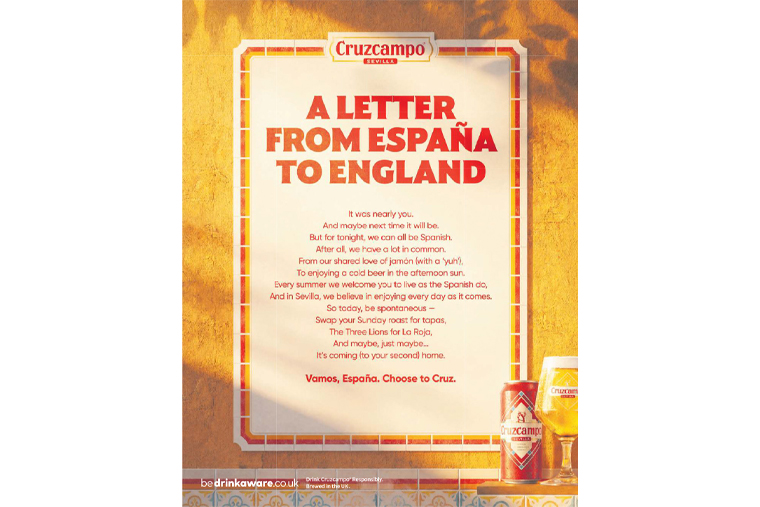
Meanwhile, the largest-ever World Cup meant one of the planet’s cultural showpieces attracted a steady stream of top campaigns in news brands. Brand partnerships also provide myriad entry points for advertisers looking to engage news readers with relatable, memorable content.
Yes, brands can find culture everywhere. It’s not hard for them to find opportunities to align themselves with a cultural moment that at least matters to someone. What this sheer amount of content overload does mean is that being relevant in culture more broadly is harder than ever.
For news brands, culture at scale and for every taste is in their DNA. We now have the proof that it pays.
Banner image: Adobe stock image by Pixel-Shot.
Related Articles
-

Spain is moving from inventory to brand partnerships
11 October 2026 -

A look at 30+ revenue streams publishers are actually building
31 August 2026 -

What’s really defensible in the age of AI?
30 August 2026 -

The week the news business got graded on direction, not results
6 August 2026 -

South Asia’s publishers have the trust but not yet the revenue ...
26 July 2026 -

Editora Globo shifts from selling ads to selling media solution...
21 July 2026 -

Latin American publishers must rewrite ad strategies around out...
20 July 2026 -

The rise of quality and why that matters for advertising
16 July 2026
Upcoming Events
-

Subscriber Acquisition Master Class
10-17 November 2026
-

Media Advertising Summit
New York, United States
07-10 December 2026
-

AI-Native News Product Master Class
18-25 February 2027
-

Media Subscriptions Summit
Oslo, Norway
08-12 March 2027
-

World Congress of News Media
New York, United States
25-30 April 2027
-

Branded Content & Partnerships Master Class
20-27 May 2027
-

Subscriber Retention Master Class
17-24 June 2027
-

Conferencia Latinoamericana
15-16 July 2027
-

South Asia News Media Festival
New Delhi, India
19-22 July 2027
-

Asia/Pacific News Media Summit
19-20 August 2027
-

CEO Roundtable at Kilkenny
Kilkenny, Ireland
24-26 August 2027
-

Media Innovation Week
Amsterdam, The Netherlands
27 September - 01 October 2027








