

6 ways news publishers are turning trust into advertising revenue
Conference Blog | 30 September 2026

The news advertising business that showcased itself at INMA’s Media Innovation Week in Madrid looks less like selling space and more like selling trust. That theme ran from the newsroom visits of the Spanish Media Study Tour to the stage of the European News Media Conference.
The clearest statement of where the business is heading came on the final morning. INMA Advertising Initiative Lead Gabriel Dorosz said the traffic business is dead and news advertising has to be rebuilt around quality: As ad supply shrinks, buyers are paying more for high-quality inventory.
He then sat down with Tom Armstrong, vice president of global advertising at The New York Times, before three award-nominated case studies showed what that looks like in practice.
Here are the key takeaways for news companies.
1. Scarcity rewards publishers who position for premium
Dorosz’s data showed why the old model is failing.
Ad spend on news has fallen 33% since 2019, according to WARC, even as global advertising heads past $1.6 trillion by 2030. Buyer demand is growing for creators (about 24%), connected TV (15%) and social video (14%), while U.S. open-web CPMs have dropped about 20%.
But scarcity is starting to work in publishers’ favour. Ozone data showed U.K. publisher ad supply fell 40% in the second quarter, yet eCPMs made up most of the difference. Agencies and exchanges are building ways to score and prioritise high-quality inventory, and People Inc. is defending rate instead of volume: Sessions are down, rates are up, session revenue is flat, but overall revenue is up.
The most valuable readers matter more as traffic falls. INMA benchmarks show 1% of users drive 27% of pageviews, and one European national publisher gets 81% of its total revenue from 1% of users.
Armstrong said The Times’ results support the case for quality. The company grew digital advertising 21% in the second quarter, driven largely by big partnerships that require integration.
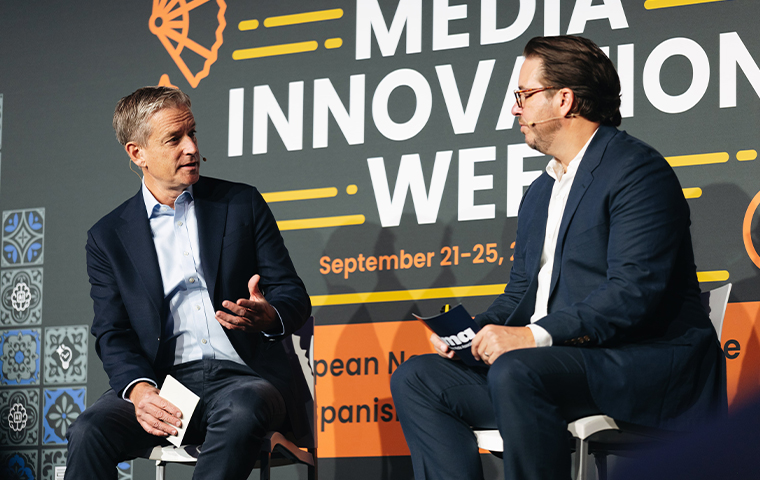
That premium position starts with the reader. About 65% of the Times’ revenue comes from subscriptions and 35% from advertising, Armstrong said, and the company treats the ad experience as part of the product. It has removed many ad slots, runs no pop-ups and sells most of its inventory through proprietary formats.
“It’s a very low ad load, and so when an ad does appear, it’s impactful,” he said.
Removing ads was controversial internally because it meant losing revenue, Armstrong said, but it has since proved to be the right call.
Asked whether a smaller publisher can follow that playbook, Armstrong said staying true to the mission, building relationships and knowing your most engaged users still commands higher CPMs, even with lower traffic.
“You don’t have to have the scale of The New York Times to be successful in that,” he said.
2. Away from CPMs and toward partnerships
Events, creators, branded content and video are best monetised as brand partnerships grounded in editorial trust, not as inventory, Dorosz said. What publishers really sell, he said, is attention, influence and intent.
All week, publishers described that shift away from CPM-based selling.
At Prisa Media’s sports brand AS, executives told study tour participants they have shifted from a CPM mindset to branded content, particularly on social platforms. Social revenue doubled this year, with a target of another 50% next year, and overall advertising is growing even as Web traffic softens.
El Confidencial made a similar bet. Marta Caparrós, who presented the company’s video and social strategy, said viral videos can reach an audience but make it hard to build a voice or monetise it, so the company switched to a creator-led approach.
In a year, its social community and engagement have both tripled, 67% of its TikTok audience is under 34, and the strategy has brought in €1.7 million so far this year.
A Unidad Editorial executive said social monetisation isn’t a volume game: Sponsors look for engagement, and the money comes from branded content and special partnerships. Marca Chief Business Officer Francois Guerin said the brand’s new social-first music news brand, staffed by three young reporters, has already sold two branded campaigns that cover its costs for the year.
In the study tour debrief, Dorosz said branded content is more protectable than inventory because the sponsored moment is built into the journalism itself: “You’re not having a CPM discussion.”
3. First-party data only pays when you prove results
Intent was the focus of Mediahuis Ireland’s case study. At the start of 2025, the company was watching display revenue fall across every category.
Hughie Devine, head of sponsorship and programmatic partnerships, said the fix was declared intent: Ad units on Independent.ie ask readers questions such as “Are you in market for a new car?” and the answers build audience segments in the company’s data platform.
The first Volkswagen campaign sold two electric vehicles worth an estimated €120,000, and Volkswagen then put Independent.ie on every campaign across its brands. Tesco has spent every month for a year, which Devine said meant 12 renewal conversations that each began with a request for results.
In year one, in-market brought in 20 brands and about €200,000, with click-through rates four times higher than before.
The lesson, Devine said, is demonstrating results — not sending a campaign report and hoping the client reads it.
4. Collaborate to compete with the platforms
More than 80% of digital ad spend in the Netherlands goes to big tech platforms, said Merel Gianotten, director of digital advertising development at DPG Media.
DPG’s answer is Ad Manager, an in-house, AI-powered self-service platform that gives advertisers direct access to all of the company’s digital inventory, exclusive high-impact formats and first-party data audiences.
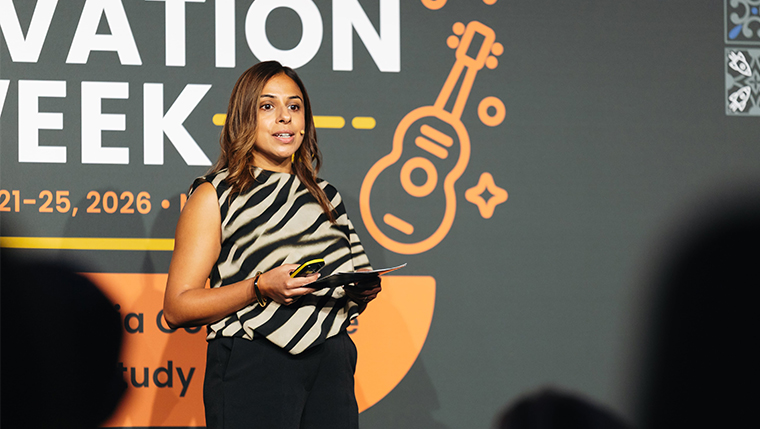
Ozone tackled fragmentation across borders. Dipti Patel, senior publisher development director, said a planner with a €100,000 brief calls Meta, not 15 publishers in six countries. Ozone’s Premium World offers one point of contact for multi-market campaigns. It delivered £2.6 million in incremental publisher revenue in its first year across 56 campaigns for 34 multinational brands.
“It is when they are together that they are stronger,” Patel said of premium publishers.
5. Events are a growth engine, but only if you measure them
Dorosz described a gold rush around events on the study tour but said publishers gave three different answers about how to classify event revenue. If you aren’t tracking it, he said, you can’t tell whether it’s profitable.
The Irish Times learned that the hard way. Group Marketing Director Eimear Moran said the advertising team had been selling events the way it sold inventory, and some events the company considered successful weren’t making the expected margin. It now treats events as a unit in its own right.
Others are further along.
At elDiario.es, events account for about one-third of advertising income, with professional morning events built around topics such as sustainable mobility, where readers’ and advertisers’ interests overlap.
Vocento Chief Digital Officer Noemi Ramirez Garcia said its events, including the Madrid Fusion gastronomy congress, deliver very good margins.
6. Protect independence and the reader experience
Several Spanish publishers showed advertising strategy is also an editorial question. News captures 10% to 12% of Spanish ad spend, about three times the global average, and the government is the country’s third-largest advertiser, Dorosz said in the study tour briefing.
That concentration carries risk:
- El Confidencial said it lost close to €1 million a year in public institutional advertising after publishing exclusives about the government.
- elDiario.es has written into its founding charter that no single advertiser may account for more than 10% of revenue, and members get an ad-free website.
- AS executives said betting advertising is significant but the brand shouldn’t depend on it.
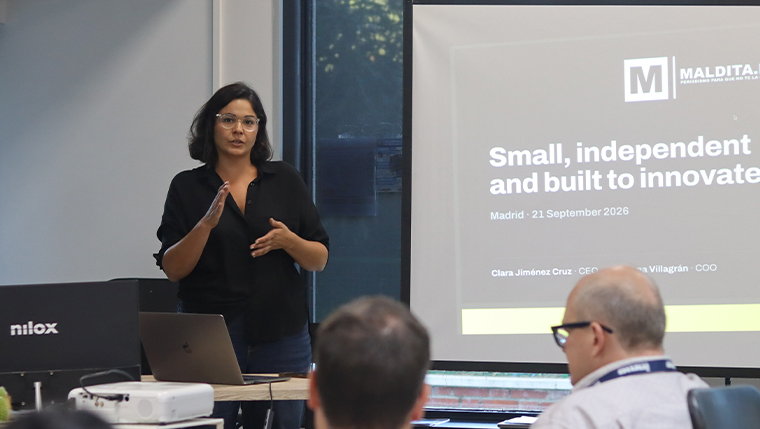
- Fact-checker Maldita.es goes further: It takes no advertising at all, to protect how the public sees its work, and publishes its contracts, CEO Clara Jiménez Cruz said.
Dorosz challenged one common practice: turning ads off for the most valuable readers. His alternative is to make the ads worthy of the journalism, the audience, and the brand.
El País takes a middle path: Logged-in subscribers see fewer ads, and premium subscribers see fewer still, executives told study tour participants.
At Unidad Editorial, Kayode Josiah, business director of El Mundo and Expansión, described a “for you” approach to advertising built on quality over quantity. It would be easy to add 20 more ad positions to a page, he said, but the company is accepting “short-term pain for long-term gain.”
Across the week, the message was consistent. Advertising isn’t disappearing from news media, but the version that is growing is scarcer, better proven and closer to the journalism than the display business it is replacing.
Related Articles
-

Spain is moving from inventory to brand partnerships
11 October 2026 -

Research: 15% of sales directly tied to news brands’ cultural r...
11 October 2026 -

Are events the hero product for publishers?
27 September 2026 -

A look at 30+ revenue streams publishers are actually building
31 August 2026 -

The week the news business got graded on direction, not results
6 August 2026 -

South Asia’s publishers have the trust but not yet the revenue ...
26 July 2026 -

Editora Globo shifts from selling ads to selling media solution...
21 July 2026 -

The rise of quality and why that matters for advertising
16 July 2026
Upcoming Events
-

Subscriber Acquisition Master Class
10-17 November 2026
-

Media Advertising Summit
New York, United States
07-10 December 2026
-

AI-Native News Product Master Class
18-25 February 2027
-

Media Subscriptions Summit
Oslo, Norway
08-12 March 2027
-

World Congress of News Media
New York, United States
25-30 April 2027
-

Branded Content & Partnerships Master Class
20-27 May 2027
-

Subscriber Retention Master Class
17-24 June 2027
-

Conferencia Latinoamericana
15-16 July 2027
-

South Asia News Media Festival
New Delhi, India
19-22 July 2027
-

Asia/Pacific News Media Summit
19-20 August 2027
-

CEO Roundtable at Kilkenny
Kilkenny, Ireland
24-26 August 2027
-

Media Innovation Week
Amsterdam, The Netherlands
27 September - 01 October 2027








