

5 questions shaping INMA’s Media Tech & AI Week
Conference Blog | 18 October 2026

This week in San Francisco, the conversation about AI and the news industry gets practical.
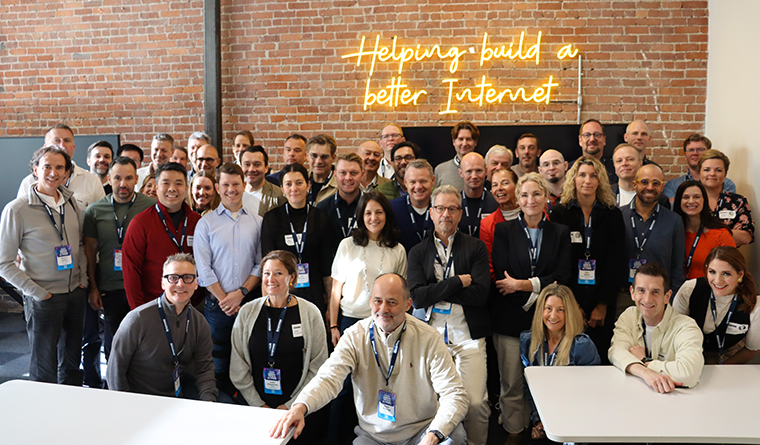
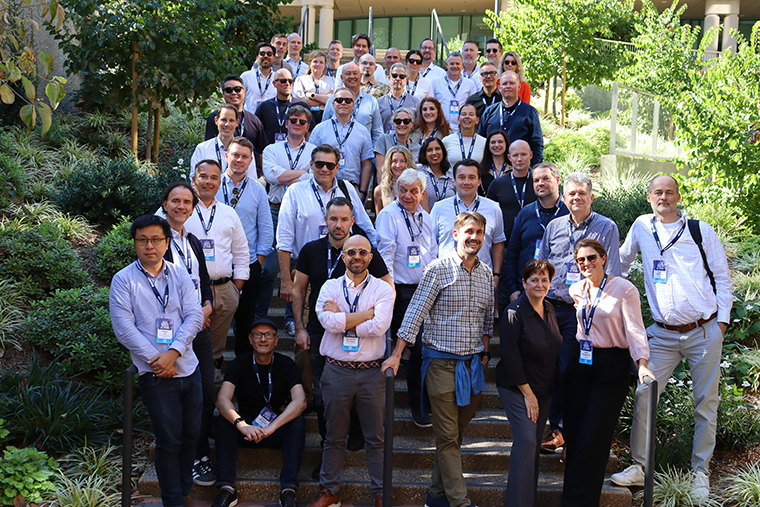
Starting Monday, INMA’s Media Tech & AI Week returns with a three-day executive study tour inside 11 companies, including OpenAI, Microsoft, Cloudflare, Reddit, Salesforce, and Hearst — the association’s eighth study tour of Silicon Valley and the San Francisco Bay Area.
A two-day conference follows at the headquarters of KQED, Northern California’s locally owned public media organisation, bringing news executives and major tech and AI players onto one stage.
“The question for media leaders is no longer whether AI will change our organisations,” said Jodie Hopperton, INMA’s Product & Tech Initiative Lead, who curated the week. “It is how we make the right choices about where to invest, whom to partner with, what to build, and what we should fundamentally rethink.”
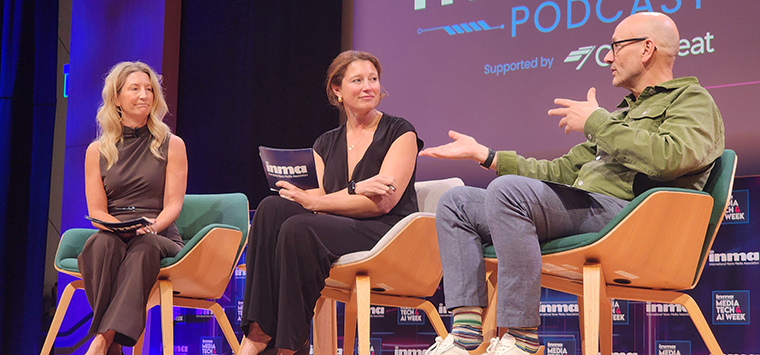
The location is deliberate. Hopperton spent 11 years in California and is drawing on that network to create genuine access and candid conversations: “San Francisco is where many of these ideas become real,” she said.
Across the tour and conference, five questions come up again and again.
Who controls access to journalism?
As AI agents, crawlers, and answer engines join human readers as consumers of news, news companies are deciding who gets in, on what terms, and at what price.
Cloudflare, which has one of the clearest real-time views of how bots move across the Web, will discuss AI permissions and pay-per-crawl. At Reddit, the conversation turns to what happens when human conversation becomes training data.
On the conference stage, James Henderson, founder and CEO of MonetizationOS, will make the case for one system to manage both human and machine audiences, and Jocelyn Lee, director/publisher partnerships at Microsoft, will share what the company learned from its closed publisher pilot and what AI agents actually value when they assess content. AWS, which hosts one of the study tour stops, will look at how to make bots, agents, and LLMs pay for the content they consume.
Underneath it all sit technical standards many executives make decisions without seeing. David Buttle of SPUR, Doug Leeds of RSL, and Hillary Slattery of IAB Tech Lab will explain how content is identified, accessed, and licensed, and why fragmentation is the biggest risk.
How will audiences find news?
Discovery increasingly happens inside AI answers, and most publishers have little idea how they appear there.
Mex Cooper, head of audience development at Nine Publishing in Australia, will share what Nine learned from auditing where its journalism surfaces, or gets sidelined, in AI summaries. Maddie Shepherd, director of SEO at CBS News, and Greg Love of ScalePost will discuss measuring AI visibility with real data rather than sample prompts.
The shape of content is changing, too.
Microsoft is moving away from grid-based feeds towards fluid formats built for agentic AI, and Steven Johnson, co-founder of Gemini Notebook, will join Mediacorp and Daily Maverick to explore “liquid content” that adapts across surfaces.
Shuwei Fang, senior fellow at CUNY and co-founder of Signals at Scale, will frame the bigger shift: from an attention economy to an intention economy, in which technology acts on what people want rather than simply capturing what they look at.
And TikTok’s news partnerships team will share how publishers can reach new audiences on the platform.
What will people pay for?
Several sessions return to the direct relationship with audiences.
Substack co-founder Hamish McKenzie will discuss ideas from his forthcoming book, How to Save the Media. Satwant Singh, senior vice president and head of monetisation at the NBA, will show how the league personalises by geography, time zone, and subscription intent, from spoiler-free modes to condensed highlights for European fans. Julie Young, founder and CEO of Laurel, will give a candid consumer view of what frustrates her about the news products she pays for.
The San Francisco Standard, one of America’s fastest-growing local news companies, will share its work on an AI-native news app backed by a Lenfest Institute grant. On the business side, Salesforce, Snowflake, and LiveRamp will look at how data, identity, and agents are reshaping advertising, subscriptions, and pricing.
How do news organisations move from pilots to operations?
At OpenAI, participants will explore what separates successful AI adoption from isolated pilots. Hearst’s Tim O’Rourke, vice president of editorial innovation and AI strategy, and Bill Nagel, publisher and CEO of the San Francisco Chronicle and SFGATE, will discuss operationalising AI across a large media company while balancing governance and trust.
Chase Davis of The Lenfest Institute will join Chicago Public Media and The Philadelphia Inquirer to share what worked, and what didn’t, in moving AI tools into newsrooms. Tisé Ben-Eka of Google will describe how big tech scales AI adoption beyond engineering, and Lucas Gonzalez Pagliere of Anthropic will offer a look inside a frontier lab at which capabilities are real today.
Four start-ups (Sence, HyperContent.AI, Stardust, and Spread) will demo products built specifically for news media.
Why does trust matter more now?
As synthetic content spreads, credibility becomes a competitive asset with both readers and machines.
Stanford researcher Maty Bohacek will present research suggesting AI-written material may already be narrowing the diversity of ideas online. Factiverse’s Maria Amelie and Storyful’s James Law will explore how verification and provenance shape both human trust and machine interpretation. Everlaw, whose platform AP, ProPublica, and Wired use for large-scale investigations, will share lessons from the legal sector on data sovereignty.
The common thread is the question the study tour puts to every host: What do media leaders need to understand today to remain competitive tomorrow?
Related Articles
-

Marketers should outsource tasks, not thinking
25 October 2026 -

AI’s effect on super user math
15 September 2026 -

At Mediacorp’s CNA, loyalty means giving audiences a reason to ...
20 August 2026 -

Tribun Network turns print “dots” into AI-powered insight
20 August 2026 -

The news company tech stack is now geopolitical
19 August 2026 -

Nation Media Group focuses editorial strategy on stories that m...
4 August 2026 -

Briefly News empowers journalists with AI tool suite Nova
4 August 2026 -

AI adoption in newsrooms should move from experiment to strateg...
12 July 2026
Upcoming Events
-

Subscriber Acquisition Master Class
10-17 November 2026
-

Media Advertising Summit
New York, United States
07-10 December 2026
-

AI-Native News Product Master Class
18-25 February 2027
-

Media Subscriptions Summit
Oslo, Norway
08-12 March 2027
-

World Congress of News Media
New York, United States
25-30 April 2027
-

Branded Content & Partnerships Master Class
20-27 May 2027
-

Subscriber Retention Master Class
17-24 June 2027
-

Conferencia Latinoamericana
15-16 July 2027
-

South Asia News Media Festival
New Delhi, India
19-22 July 2027
-

Asia/Pacific News Media Summit
19-20 August 2027
-

CEO Roundtable at Kilkenny
Kilkenny, Ireland
24-26 August 2027
-

Media Innovation Week
Amsterdam, The Netherlands
27 September - 01 October 2027








