

The news company tech stack is now geopolitical
Product & Tech Initiative Blog | 19 August 2026

The AI industry is consolidating around two centres of power: Silicon Valley and China.
Companies in these regions increasingly control the models, computing infrastructure, and platforms on which publishers are building their AI strategies. Choosing a model is therefore no longer simply a technical or commercial decision. It is an operational, editorial, and geopolitical risk decision.
That’s a new consideration for the majority of media companies.
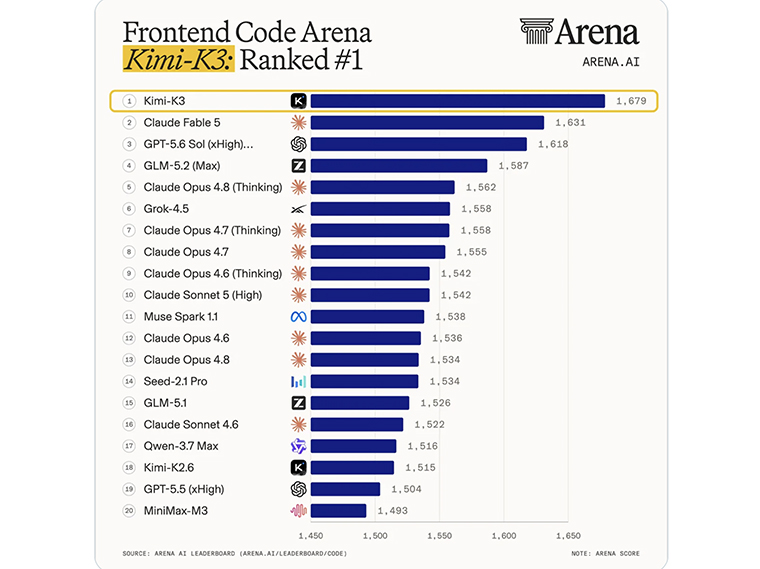
Most publishers do not control the technology on which they are becoming dependent.
U.S. companies such as OpenAI, Anthropic, Google, and Meta remain central to the global technology ecosystem, while Chinese developers are rapidly closing the performance gap. European publishers may be able to choose between these technologies, but the companies developing them answer to their own investors, commercial interests, and national governments.
Below is an outline of considerations for media companies.
Model access is not guaranteed. A system can appear to be a dependable part of the technology stack until it is changed, restricted, or withdrawn. Providers can raise prices, alter terms, reserve their best capabilities for strategic partners, or deprioritise particular markets. Governments can also influence which systems are released, what they can do, and who may use them. This can happen, seemingly, in hours, not days or weeks.
For news organisations, the consequences extend far beyond business continuity. A publisher could invest heavily in integrating a model and redesigning workflows around it, only to lose an important capability. More seriously, a compromised system could expose unpublished investigations, confidential communications, or information about sources. AI infrastructure cannot be treated as neutral, permanently available software.
China’s growing AI ecosystem creates valuable alternatives and different risks. Chinese and open-weight models may offer strong performance, lower costs, or greater flexibility. Some can be deployed on a publisher’s own infrastructure, reducing reliance on a hosted service. But open models also place more responsibility for security, safety, and governance on the organisation deploying them. Closed systems concentrate control; open systems shift control and risk to the user.
The provider’s values and government relationships now travel with the product. Employees and customers increasingly judge AI tools not only by price and performance but by the actions of the companies behind them. An organisation’s choice of AI provider can affect trust in the organisation itself. The reputation of the supplier is becoming part of the reputation of the publisher.
Given these factors, European publishers are beginning to map where their critical technology sits. Some are evaluating regional providers such as Mistral. Others are self-hosting open-weight models, creating approved-model lists, or building routers that allow applications to move between providers.
The aim is not to eliminate American or Chinese technology — often an unrealistic goal — but to understand the dependency and retain meaningful options.
The governing principle should be reversibility. Publishers can integrate through a model router rather than wiring one provider into every product; maintain several approved models for different levels of sensitivity; keep confidential newsroom work inside controlled infrastructure; and negotiate portability, notice periods, and data protections into contracts.
A credible exit plan should exist before any model becomes business critical.
Avoiding frontier models altogether is not a realistic answer. The most capable systems can improve journalism tools, accelerate product development, and enable services that weaker models cannot.
Publishers that refuse to use them may fall behind. The goal is to use frontier models where their performance makes a material difference without allowing any one of them to become irreplaceable. Routine or sensitive work may be better served by open, regional, or self-hosted alternatives.
Geography also shapes how organisations respond to AI. European media tends to approach it more cautiously, while attitudes in Asia and the United States are often more opportunity-focused. Caution can produce stronger governance but slow experimentation; optimism can accelerate innovation but create dependency before the risks are understood.
Publishers need both ambition and a clear view of where control sits.
This is a new category of operational risk. Capability, price, and reliability are no longer enough to assess an AI provider. Publishers must also consider geography, jurisdiction, government relationships, data access, and commercial concentration.
Who can change or withdraw the technology? What newsroom information passes through it? Could access or pricing shift without meaningful notice? How quickly could the organisation replace it?
The world’s AI capability may be concentrating, but a publisher’s strategy does not have to. News organisations cannot ignore the best technology emerging from Silicon Valley and China. Nor can they assume access will remain stable, affordable, or politically neutral.
Your tech stack is now geopolitical. It needs to be governed accordingly.
If you’d like to subscribe to my bi-weekly newsletter, INMA members can do so here.
Banner photo: Adobe stock image by Abu.
Related Articles
-

Marketers should outsource tasks, not thinking
25 October 2026 -

5 questions shaping INMA’s Media Tech & AI Week
18 October 2026 -

AI’s effect on super user math
15 September 2026 -

At Mediacorp’s CNA, loyalty means giving audiences a reason to ...
20 August 2026 -

Tribun Network turns print “dots” into AI-powered insight
20 August 2026 -

Nation Media Group focuses editorial strategy on stories that m...
4 August 2026 -

Briefly News empowers journalists with AI tool suite Nova
4 August 2026 -

AI adoption in newsrooms should move from experiment to strateg...
12 July 2026
Upcoming Events
-

Subscriber Acquisition Master Class
10-17 November 2026
-

Media Advertising Summit
New York, United States
07-10 December 2026
-

AI-Native News Product Master Class
18-25 February 2027
-

Media Subscriptions Summit
Oslo, Norway
08-12 March 2027
-

World Congress of News Media
New York, United States
25-30 April 2027
-

Branded Content & Partnerships Master Class
20-27 May 2027
-

Subscriber Retention Master Class
17-24 June 2027
-

Conferencia Latinoamericana
15-16 July 2027
-

South Asia News Media Festival
New Delhi, India
19-22 July 2027
-

Asia/Pacific News Media Summit
19-20 August 2027
-

CEO Roundtable at Kilkenny
Kilkenny, Ireland
24-26 August 2027
-

Media Innovation Week
Amsterdam, The Netherlands
27 September - 01 October 2027








