

Brut India earns young audience trust through social-first journalism
Conference Blog | 23 July 2026

News publishers hoping to win younger audiences should stop asking how to bring Gen Z back to traditional news products and instead rethink how journalism is delivered, according to Mehak Kasbekar, country manager and editor-in-chief of Brut India.
Speaking at the INMA South Asia News Media Festival, Kasbekar said younger audiences have not abandoned news; they have changed how they discover, consume, and judge it. Success depends on meeting them on the platforms they already use while maintaining the trust and editorial standards that distinguish professional journalism.
Building a newsroom around young audiences
Brut India was built specifically for an audience legacy media largely overlooked. Rather than defining itself by traditional news categories, the company focuses on topics that younger people care about and want to discuss, ranging from politics and public policy to pop culture, entertainment, climate, and social issues.
“Brut is culture,” Kasbekar said. “We do everything that a young generation cares about and would like to speak about and intelligently have information on.”
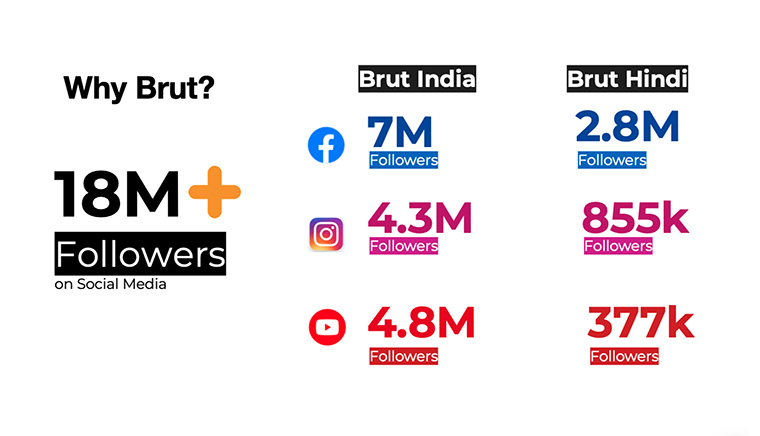
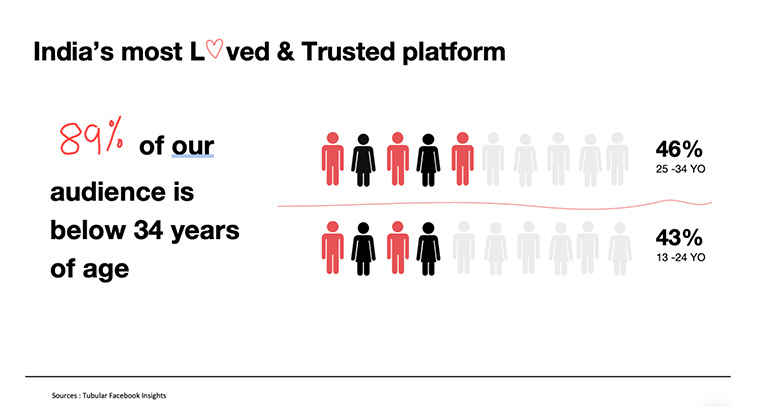
That approach has produced significant scale. Brut India reported more than 8 billion video views across platforms, 18 million followers, 1.7 billion engagements in 2025, and an audience in which 89% are younger than 34. The company has also maintained a nearly even split between male and female audiences while successfully expanding its Hindi-language presence on social media.
Trust before speed
For publishers, however, Kasbekar said the more important lesson is not scale but trust.
Citing the Reuters Institute Digital News Report, she noted interest in news is declining and news avoidance is increasing, yet trusted publishers continue to outperform. Brut has built its reputation by prioritising accuracy over speed, deliberately avoiding the race to break news first.
“At Brut, we are not known for being the fastest or doing any kind of breaking news — we don't,” she said. “But our readers expect that if it's on Brut, it must be true.”
To reinforce that trust, the organisation tracks every correction it makes and publicly acknowledges errors, whether they involve a factual mistake, an incorrect title, or another detail. Transparency, she said, has become essential for younger audiences who increasingly expect publishers to explain where information comes from, who reported it, and how it was verified.
Going where audiences already are
Brut’s strategy also challenges many traditional newsroom assumptions.
Rather than expecting audiences to visit Web sites or homepages, the company chose to distribute journalism where younger people already spend their time. It launched on emerging platforms, including Snapchat, and found the platform ultimately generated stronger programmatic revenue than larger competitors.
“I recruited my first producer and reporter for Snapchat three years ago,” Kasbekar said. “People asked, ‘Can you even do news on Snapchat?’ And we said, ‘Yes, we can.’”
The company adopted several principles that continue to shape its newsroom: becoming video-first instead of text-first, prioritising shareability and engagement over simple view counts, embracing mobile journalism, and designing content for social platforms instead of websites. Journalists are also encouraged to ask “So what?” when developing stories, ensuring every piece offers audiences meaningful context or constructive engagement rather than simply repeating events.
Human stories create stronger connections
Kasbekar also encouraged publishers to humanise journalism by finding the people whose experiences best illustrate larger issues.
“Make news feel human,” she said. “Can you put a face to it? Can you find a character who’s telling that story of change, or pain, or an issue?”
During the audience discussion, Kasbekar rejected the idea that adapting journalism for younger audiences necessarily makes it less serious. Instead, she said publishers must work harder to explain important issues in formats and language younger people naturally consume on social media.
“The younger generation wants us, as news publishers, to work harder to speak to them in their language,” she said. “Can we take that news and serve it in a way which a younger generation understands and would like to see?”
The responsibility rests with publishers rather than audiences, Kasbekar said. Whether through creators, engaging presenters, or platform-native storytelling, news organisations must adapt their storytelling while preserving the journalism underneath.
“We also need to put faith in younger people in our newsrooms to be able to deliver that.”
Related Articles
-

AI’s effect on super user math
15 September 2026 -

At Mediacorp’s CNA, loyalty means giving audiences a reason to ...
20 August 2026 -

Tribun Network turns print “dots” into AI-powered insight
20 August 2026 -

Nation Media Group focuses editorial strategy on stories that m...
4 August 2026 -

Indian Express builds a video-first future around trusted journ...
20 July 2026 -

Economist launches subscription tier targeting younger audience...
20 July 2026 -

Grupo RBS builds social-first video operation to expand audienc...
20 July 2026 -

Inside Denník N’s successful subscription strategy
15 July 2026
Upcoming Events
-

Subscriber Acquisition Master Class
10-17 November 2026
-

Media Advertising Summit
New York, United States
07-10 December 2026
-

AI-Native News Product Master Class
18-25 February 2027
-

Media Subscriptions Summit
Oslo, Norway
08-12 March 2027
-

World Congress of News Media
New York, United States
25-30 April 2027
-

Branded Content & Partnerships Master Class
20-27 May 2027
-

Subscriber Retention Master Class
17-24 June 2027
-

Conferencia Latinoamericana
15-16 July 2027
-

South Asia News Media Festival
New Delhi, India
19-22 July 2027
-

Asia/Pacific News Media Summit
19-20 August 2027
-

CEO Roundtable at Kilkenny
Kilkenny, Ireland
24-26 August 2027
-

Media Innovation Week
Amsterdam, The Netherlands
27 September - 01 October 2027








