

What 11 Bay Area companies agree on about news in the AI era
Conference Blog | 26 October 2026

Over three days in San Francisco and Silicon Valley, participants on INMA’s Media Tech & AI study tour visited 11 companies: Reddit, Microsoft, Snowflake, Salesforce, Everlaw, OpenAI, The San Francisco Standard, LiveRamp, Hearst, Cloudflare, and AWS.
The same questions came up at nearly every stop. Who, or what, is visiting publishers’ sites? What makes LLMs pay? Who owns the relationship with the reader? And what is left that only journalists can do?
The audience is increasingly machines
Much of the Web’s traffic now comes from machines rather than from people. Cloudflare said agentic and other non-human traffic is now more than 60% of what it sees. AWS said non-human traffic makes up more than half of requests across its CloudFront network.
Most of that traffic never shows up in publishers’ analytics. Agents that operate a real browser are usually counted as people.
The hosts’ response was consistent. Reddit described moving from being permissive by default to asking visitors to show they are human by default. Cloudflare said publishers are shifting from block lists, which keep out known bad actors, to allow lists, which block everyone and let in select verified bots.
A harder question followed the group all week: what to do about one-third kind of visitor, the AI agent acting on behalf of a real person, sometimes a paying subscriber. Reddit and LiveRamp said they are still working out how to recognise, count, and charge for those agents, while Cloudflare said they have solved this issue.
Scarcity, and solidarity, get publishers paid
Cloudflare’s message on getting paid by AI companies was blunt: content has to be genuinely scarce before anyone will pay for it. “Make it as scarce as possible,” a Cloudflare executive said.
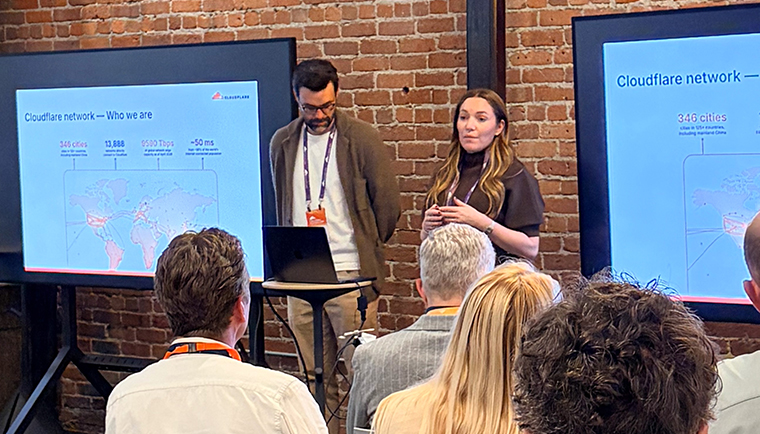
Cloudflare described three ways for publishers to get paid: one-to-one licensing deals, a pay-per-use marketplace, and paid access to individual articles. AWS described the market in three shapes, with big direct deals at the head, pay-per-request payments at the tail, and collective deals in between. The early money is modest.
A Dutch participant described a collective agreement with Google and Microsoft covering every publisher in the Netherlands. It brought in little cash but set a legal baseline.
Licensing also brings dependency. Reddit said licensing revenue is real but small next to advertising. Hearst said its OpenAI deal hasn’t significantly changed referral traffic, and that AI platforms still send far less than Google. Griffin Gaffney, CEO and co-founder of The San Francisco Standard, called such deals “a race to the bottom. It’s the exact same thing the social media companies did.”
The closing debrief named the dilemma. For any single large publisher, a side deal may always look better than holding out, but each one weakens the scarcity the whole industry depends on.
Discovery is moving into AI, so know your reader
LiveRamp said product discovery is moving quickly from search into AI conversations, faster than anyone has worked out how to measure or price it.
LiveRamp’s advice was to invest in readers who identify themselves, in AI that understands publishers’ own content far more precisely, and in partners who can connect the two.
The platforms are rethinking the reader’s journey, too.
Microsoft is rebuilding MSN around what a user needs when they arrive: catching up, the wider world, and their own world. It described AI-generated formats as entry points that keep the publisher visible and send readers on to the original reporting. Participants pushed back on AI-rewritten headlines. At OpenAI, news is a small share of ChatGPT search, and publishers asked for data on what readers are looking for and for recognition of original sources.
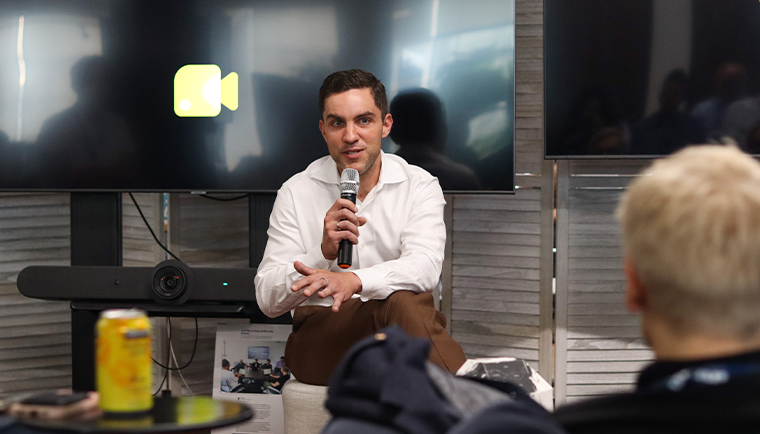
The San Francisco Standard offered a publisher’s answer. Gaffney said a chatbot that answers questions about a publisher’s archive is “literally just a worse version of Claude,” so the Standard’s app uses AI to package its journalism instead, in briefings, pull quotes, story maps, and event listings.
“Ultimately you have to own the relationship with the reader as best as you can,” Gaffney said. The Standard does that through newsletters with average open rates above 50%, an app for paying subscribers, and events.
AI is only as good as the data and the organisation behind it
Snowflake’s Will Allen said building an agent is quick. The slow part is organisational: agreeing what a company means by “subscriber” or “retention,” and deciding who can see what. His advice was to start small with a trusted group rather than wait for a perfect plan.
Salesforce made a similar case for connecting the systems most publishers still run separately. Its agent-to-agent ad deal with Nine and Dentsu ran from brief to booking, with a human approving.
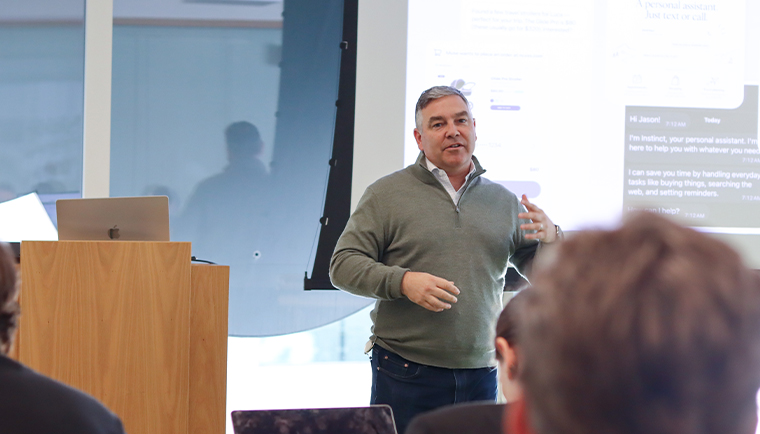
Salesforce’s Futures team added a reality check. AI does well where answers can be checked and drifts towards generic advice where they can’t, so human judgment stays essential for editorial bets, brand voice, and ethical calls.
The team expects AI to become mundane, “kind of like electricity, which you can kill somebody with, which you wouldn’t start a business without,” said Mark Escobosa, vice president of Salesforce Futures.
Time, not volume, and trust as the moat
The clearest newsroom gains on the tour came from research and routine work, not AI-written stories. After missing a story, a politics reporter at The San Francisco Standard helped build a system that files public records requests for officials’ calendars automatically, posts what comes back to Slack, and summarises it.
Everlaw, which brings legal discovery technology to investigative journalism, showed AI that answers only from the documents provided, cites every source, and gives no answer when the evidence isn’t there. Baird Helgeson, managing editor of Newsday and a study tour participant, described how his team used it to find patterns across thousands of child protective services records. He called it “sort of a golden era of reporting” for small teams.
Hearst described its approach in San Francisco and beyond as “cautious innovation”: no AI-generated story generation at scale, human checks at the points that matter, and an emphasis on one-on-one training. A central team called the DevHub builds tools once and scales them across Hearst’s newsrooms, with one success being a public information monitor covering hundreds of meetings that has produced a steady stream of stories. The goal is to take production work off journalists so they have more time in their communities.
OpenAI said it wants AI to make journalism more human, taking on drudgery while journalists keep the judgment.
Great journalism doesn’t come from “sitting on the internet and looking at stuff,” Gaffney said. “You have to be going around in real life and listening to people and talking to them.” Elizabeth Ralph, the Standard’s ideas editor, said its longest, most deeply reported stories are the ones that travel farthest, and one investigation converted about 20 subscribers.
Trust runs through all of it, and it is easy to lose. As one U.S. local publisher put it in the debrief, readers don’t pay to learn what the mayor said at a press conference. They pay for the backstory that comes from knowing the mayor.
Nobody has all the answers yet
At Cloudflare and AWS, the hosts came with as many questions for publishers as answers.
That may be the most useful takeaway of all. The models, the deals, and the standards are all still forming, which means publishers have more influence over how this turns out than it may feel.
Related Articles
-

Marketers should outsource tasks, not thinking
25 October 2026 -

WSJ executive councils show how publishers build communities th...
19 October 2026 -

AI’s effect on super user math
15 September 2026 -

At Mediacorp’s CNA, loyalty means giving audiences a reason to ...
20 August 2026 -

Tribun Network turns print “dots” into AI-powered insight
20 August 2026 -

Nation Media Group focuses editorial strategy on stories that m...
4 August 2026 -

Briefly News empowers journalists with AI tool suite Nova
4 August 2026 -

Indian Express builds a video-first future around trusted journ...
20 July 2026
Upcoming Events
-

Subscriber Acquisition Master Class
10-17 November 2026
-

Media Advertising Summit
New York, United States
07-10 December 2026
-

AI-Native News Product Master Class
18-25 February 2027
-

Media Subscriptions Summit
Oslo, Norway
08-12 March 2027
-

World Congress of News Media
New York, United States
25-30 April 2027
-

Branded Content & Partnerships Master Class
20-27 May 2027
-

Subscriber Retention Master Class
17-24 June 2027
-

Conferencia Latinoamericana
15-16 July 2027
-

South Asia News Media Festival
New Delhi, India
19-22 July 2027
-

Asia/Pacific News Media Summit
19-20 August 2027
-

CEO Roundtable at Kilkenny
Kilkenny, Ireland
24-26 August 2027
-

Media Innovation Week
Amsterdam, The Netherlands
27 September - 01 October 2027








