

Globe and Mail offers good news for fighting news fatigue
Newsroom Innovation Initiative Blog | 17 June 2026

In an era of news overload and fatigue, the old maxim “if it bleeds, it leads” no longer applies. During this week’s Webinar, the INMA Newsroom Innovation Initiative explored some of the alternative mindsets — and approaches — that are surfacing in its place.
Sonali Verma, lead of the initiative, opened by acknowledging the dramatic change in reader behaviour:
“I’ve been a journalist for a few decades now, and you often hear this belief that bad news sells more editions,” she said. “But what we’ve been seeing for the past several years is quite the opposite. Our audiences feel overwhelmed by the amount of negative news out there.”
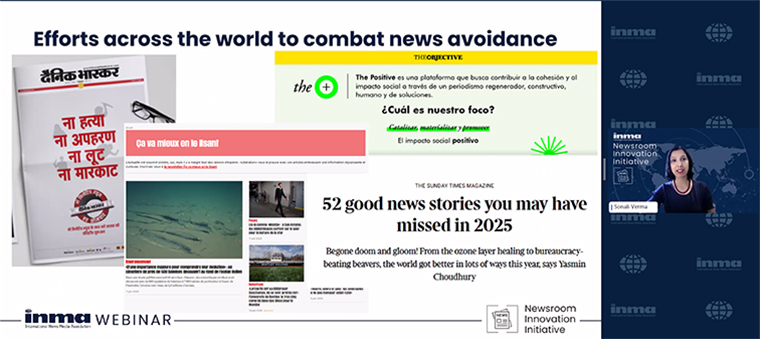
She shared information from the Reuters Institute for the Study of Journalism at Oxford, which reinforces the prevalence of news avoidance, although there’s no single culprit driving it. Almost one-third of survey participants feel “worn out” by the amount of news, and 40% said news has a negative effect on their mood. In 2017, 29% of people said they avoided the news; today, that number stands at 42%.
“It’s really something that we in the news business have to think about and have to tackle, and news brands are responding to this,” Verma said, sharing examples from India, France, Spain, and the UK, where news organisations are balancing the bad news with positive stories.
Sharing positive stories is also a strategy adopted by The Globe and Mail in Canada to bring readers back. Angela Pacienza, executive editor, explained how the company retooled its content strategy to become more appealing to readers.
Shut the front door
One of the first problems to address, Pacienza said, was how to stop stressing readers out. “Our homepage, which we call the front door, just reinforced all the negative news,” Pacienza said.
That was preventing people from wanting to return and led the company to reevaluate the types of stories it was publishing. Although The Globe and Mail published some positive stories, that wasn’t what readers found on the homepage.
An inventory of content was eye-opening, Pacienza said:
“We had too much about war and politics and institutions and not enough that was about helping people live their daily lives, news that they could actually use as parents, as children, partners — just people in society kind of thing.”
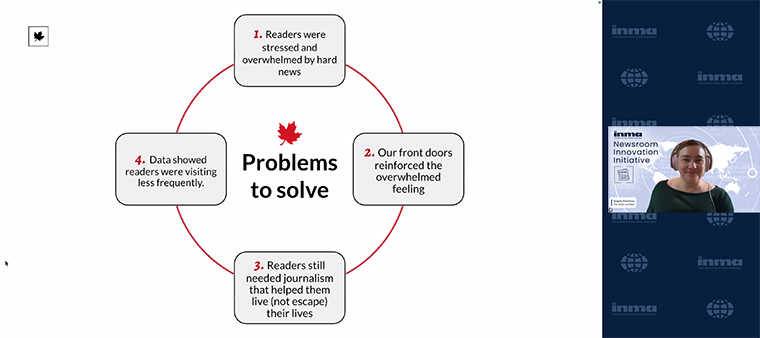
Data showed a direct correlation between ongoing coverage of the Israeli-Gaza War and declining traffic. So, almost two years ago, Pacienza took the helm of the new “How We Live Group,” which focuses on what matters in people’s daily lives.
The company approved funding for five new hires and allocated the resources required for the department to thrive. Not only did it change the content being produced, but it changed how it was displayed.
“We put these human-based stories in our sacred news spaces at the top of our newspage, places that traditionally people might not have done,” she said. “We improved our games and puzzles. Anything that would be considered fun, we really moved forward.”
To strengthen relationships with readers, the news company began running weekly Q&As — everything from what movies to watch to how to deal with school bullies. Most of the questions focused on lifestyle, education, and health topics, Pacienza said.
Harnessing happiness
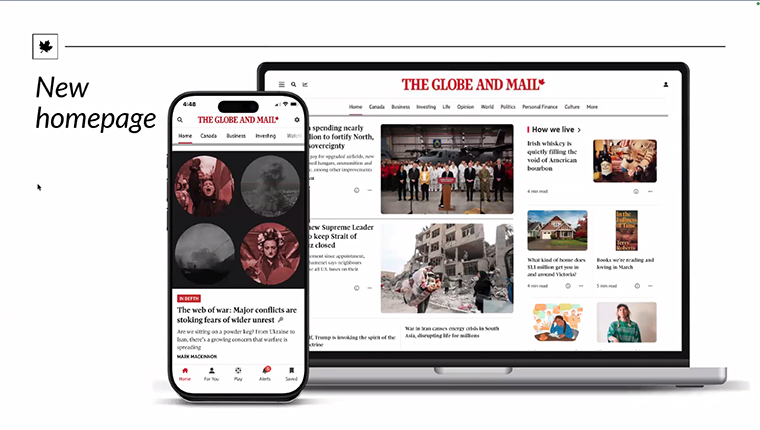
Comparing homepages, Pacienza showed that the previous design was traditional newspaper fare: “People getting killed, stabbing attacks, the usual.”
Now, it sports a more visual site. At 4 p.m. every day, the How We Live section moves to the top of the homepage and, on weekends, “it lives at the top of the page the entire time.”
During business hours, readers can find it about halfway down the page. Scheduling by hour of the day has been successful and allows it to run traditional news stories, counterbalanced by “other things people might be curious about or that help them live their lives.”
As part of the change, new beats were created — and that’s where Pacienza acknowledged “we took a few gambles.” One of the bigger gambles was to move reporter Erin Anderson onto a new beat as happiness reporter.
“Erin used to be our mental health reporter, and during COVID she wrote a lot about suicide rates, how miserable everybody was. And even coming out of COVID, she was still writing about that,” Pacienza explained. “So what she’s really done is just flipped and reframed her beat to happiness. She comes at everything through a happiness lens.”
That includes everything from how watching sports or going to a Taylor Swift concert makes people happy to how planting more trees contributes to happiness.
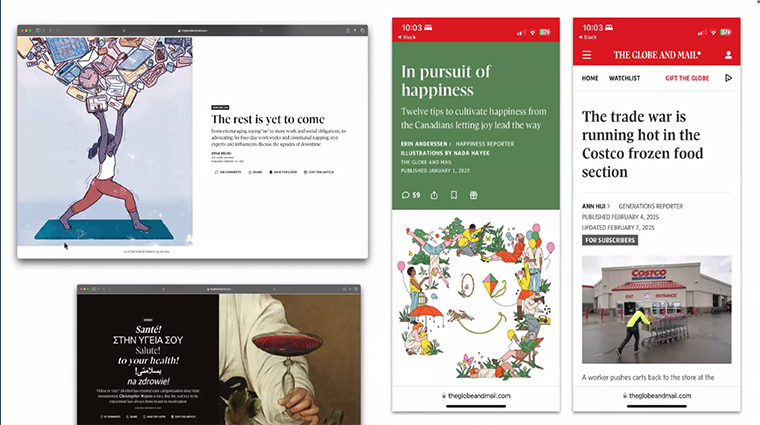
“It has been hugely, hugely successful. We thought we were only going to do it for a year, but we’ve extended it indefinitely because readers don’t seem to be getting tired of it,” Pacienza said. The stories have a long engagement time and also bring in new subscriptions.
In addition to the happiness beat, the newsroom has beefed up its health team and added food, culture, and healthy living. Advice and service were also added, something Pacienza said the newsroom had always dabbled in, but now there’s a full-time editor managing freelancers.
“She has created a whole series of franchises under advice and service such as Ask A Doctor and The Sleep Whisperer. We have a child psychologist who writes for us once a month about issues that young people are dealing with,” she said.
“In the past, as a journalism industry, our system was always about what’s the worst things we can bring forward and keep those coming. And so now we need a whole lot more balance. The world has changed dramatically.”
The power of positivity
The new focus of the How We Live Group has led to creating stellar journalism and an uptick in open rates: “We’re seeing open rates in the 5-6% range on some of this content, whereas some of our news stories are in the 3-4% range. So that for us really shows that people are looking for this type of content,” Pacienza said.
Engagement times are longer, and her favourite outcome is the flood of positive comments. Readers express appreciation for the feel-good, helpful content and, for a subscription-based business, that’s crucial. With outcomes exceeding targets, she said there are no plans to slow down and offered advice for other newsrooms interested in exploring a similar approach.
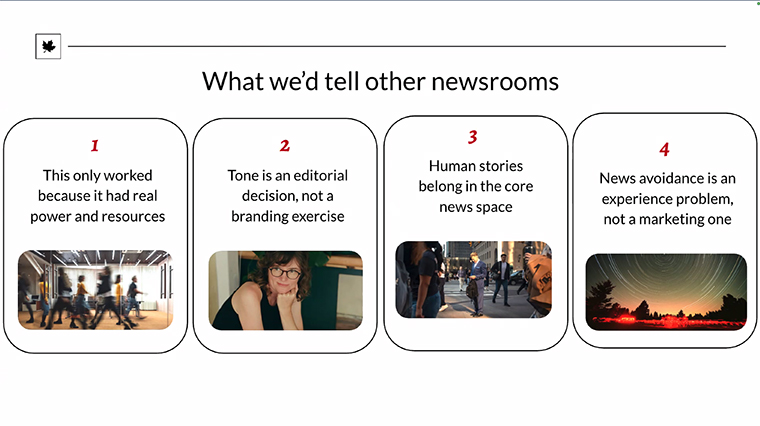
“This only worked because we put real authority and resources behind it. We didn’t just tell the newsroom we wanted counterprogramming or more positive stories. We really put people behind it so we could talk through how to accomplish it,” she said.
“I think my overall message is … what this group tries to do is help people live in the world that we live in. So it’s not just positive stories; it’s about how do we give me some actionable items about living in a world that is increasingly feeling more lonely or more isolating.
“Try to give people some practical solutions and also have some fun with it.”
Related Articles
-

Stuff builds a “liquid content CMS” to free journalists for big...
26 October 2026 -

How Svenska Dagbladet turned the reader “aha” moment into a met...
19 October 2026 -

Arena Holdings learns reaching millions isn’t the same as servi...
8 October 2026 -

VG turned AI video into discovery engine for premium content
14 September 2026 -

WSJ Japan finds AI translation is “not a one-and-done deal”
24 August 2026 -

Punch builds an AI-ready newsroom without sacrificing trust
6 August 2026 -

South Asia’s publishers no longer expect young readers to come ...
27 July 2026 -

Infobae embeds AI into newsroom while keeping journalists in co...
21 July 2026
Upcoming Events
-

Subscriber Acquisition Master Class
10-17 November 2026
-

Media Advertising Summit
New York, United States
07-10 December 2026
-

AI-Native News Product Master Class
18-25 February 2027
-

Media Subscriptions Summit
Oslo, Norway
08-12 March 2027
-

World Congress of News Media
New York, United States
25-30 April 2027
-

Branded Content & Partnerships Master Class
20-27 May 2027
-

Subscriber Retention Master Class
17-24 June 2027
-

Conferencia Latinoamericana
15-16 July 2027
-

South Asia News Media Festival
New Delhi, India
19-22 July 2027
-

Asia/Pacific News Media Summit
19-20 August 2027
-

CEO Roundtable at Kilkenny
Kilkenny, Ireland
24-26 August 2027
-

Media Innovation Week
Amsterdam, The Netherlands
27 September - 01 October 2027








