

Local news publishers need to tap into journalists’ trusted expertise
Satisfying Audiences Blog | 04 October 2026

For some years, news publishers have been encouraged to collaborate with creators and learn from them. I think that is great. We need to learn and understand the mechanisms of how they build bonds with their audiences.
But I also think local newsrooms might be overlooking something obvious: We already have creators. We call them reporters.
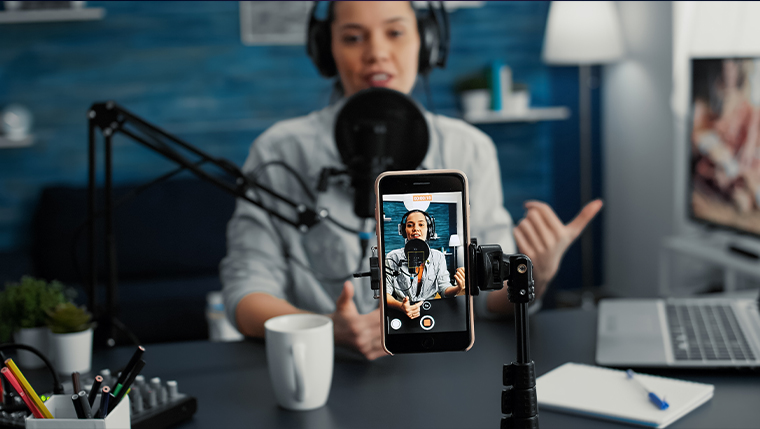
At NTM, where I work with 16 local news brands in Sweden, we have spent the past few years trying to reach younger audiences in new ways. One part of that has been a much stronger focus on social video and putting journalists — not just the news brand — in front of the audience.
The results have been encouraging. During 2025, our Instagram followers increased by 43%, while average reach grew by 180%. One of our local news brands increased its numbers of followers by more than 200% from already decent levels.
But our most important lesson is not that we need more Instagram videos. It is the potential power of people connecting with people. Audiences can have a relationship with a journalist in a way they rarely have with a logo.
Local journalism has a creator advantage
Think about what successful creators are good at. They know who they are talking to. They return to the same subjects. They develop relatable formats and voices. They explain complicated things simply. And they give their audience a reason to come back.
Now think about good local reporters. They know the community. They have access to politicians, businesses, schools, sports clubs, police, and other institutions. They understand the history behind an issue. And they can tell people not only what happened, but why it matters where they live.
That is an extraordinary starting position.
Yet traditional newsrooms often hide that strength. A reporter can spend days understanding a complicated decision at city hall. We publish the article or video, add a byline, and then let the newspaper’s social media account post it into a feed alongside a mix of completely different stories.
The guideline for reporters for many years has been not to show themselves and, instead, remain the anonymous puppet master of a story. A creator-inspired approach would look very different. The reporter might look into the camera and say: “This decision sounds incredibly boring. But if you live in this part of the city, there are three things you should know.”
Same journalistic foundation. Completely different relationship.
Don’t just turn journalists into influencers
This does not mean every reporter should become an influencer. And it definitely does not mean every journalist should suddenly be required to make five random TikToks a day.
I think newsrooms sometimes ask the wrong question: How do we get all our reporters to make more video? A much more interesting question is: Which journalists could build a meaningful audience around which subjects?
For local media, the possibilities are obvious.
Imagine the housing reporter who becomes the person people follow to understand where they want to move and whether they can afford to buy a home there. The city reporter explains how different parts of the town are changing. The food critic is the person people trust when deciding where to spend their money. The sports reporter covers the local team for 10 years and can explain why a new signing actually matters.
These are not influencers. They are journalists with expertise, personality and a relationship with their audience. And this is also where I think many newsrooms, including ours, have only done half the job so far.
We have learned that we need to present news in a more personal way on social platforms. But we have not yet fully connected the person telling the story with a clear area of expertise.
Too often, different reporters appear in front of the camera talking about completely different topics That may make the journalism more personal and creator-like, but it does not necessarily build a lasting relationship.
I believe specialisation, trust, recognition, and relationship building go hand in hand. That is where the real opportunity lies.
From beats to relationships
This also challenges how we organise newsrooms. Traditionally, we might say, “Anna covers city hall.” That describes our organisation. It does not describe the value Anna creates for the audience.
What if we instead said, “Anna helps people understand how decisions at city hall affect their everyday lives.” That sounds like a small distinction. I think it is a big one. It moves us from organising journalism around institutions to organising it around people and their needs. For real.
It also creates the possibility of building strong, recognisable journalist-led formats around important local subjects. Not just reporter beats but something closer to reporter franchises. A journalist becomes associated not only with a topic but with a clear promise to the audience.
Social media is only the shop window
There is another part of this I think publishers need to address. It is not enough to build these relationships only on social platforms. What we show — and the way we tell stories in the social media shop window — also needs to feel natural when people enter our own products.
Otherwise, we risk building a strong relationship between an audience and a journalist on Instagram or TikTok, only to send that audience into a news product where the journalist almost disappears.
Many news products, including ours, are still largely structured around the old newspaper model — news, sport, business, culture — or around formats, such as a video section.
Perhaps parts of the future news product should also be organised around people. Who do you trust? Whose expertise do you value? Who do you want to hear from again?
That could be an important step if we want to move relationships built on social platforms into our own channels — and eventually turn those relationships into stronger loyalty and sustainable reader revenue.
The uncomfortable question
Of course, there is a risk. What happens if a journalist builds 50,000 followers and leaves? Is the audience loyal to the journalist or publisher?
But making journalists invisible is a poor way of protecting the brand in 2026. The stronger model must be one where the journalist and publisher reinforce each other. The journalist benefits from the credibility, access, resources, editing, and journalistic standards of the newsroom. The news brand benefits from the human relationship the journalist can build.
The journalist should not become bigger than the brand, but the brand should not be afraid of the journalist becoming known. In an age of abundant content, relationships may matter more. And, to hold on to newsrooms’ most valuable “assets,” maybe our businesses need to look at the soccer field. Salaries and benefits will maybe have to be more aligned to the value the reporter creates, if you want to hold on to your stars.
There is one more reason I think local publishers should take this seriously. AI can already summarise information, rewrite it, personalise it, translate it, and package it in countless different ways. Content is becoming abundant.
But AI cannot easily reproduce the accumulated trust between a local journalist and a community. That could make trust, expertise, personality, and human connection increasingly valuable.
For local journalism, this matters. Our competitive advantage is not only that we know more about our communities than most other organisations. It is that real people are out there doing the journalism — people who know the place, who understand its history, who ask questions on behalf of the people who live there, and who come back tomorrow to continue the story.
For years, publishers have optimised content: SEO, headlines, home pages, push notifications, algorithms, and social distribution. Perhaps the next thing we need to optimise is relationships.
For years, we have asked how to make people follow our journalism. Perhaps we should spend more time asking which journalists and expertise people would choose to follow.
And, luckily for local newsrooms, they already have the Holy Grail key to success within their walls. All they need to do is to make sure their reporters spend as much time as possible out on the field.
And, news organisations can’t be scared to show them to the world as the important local lighthouses they actually are.
Banner image: Adobe stock image by Miljan Živković
Related Articles
-

AI’s effect on super user math
15 September 2026 -

At Mediacorp’s CNA, loyalty means giving audiences a reason to ...
20 August 2026 -

Tribun Network turns print “dots” into AI-powered insight
20 August 2026 -

Indian Express builds a video-first future around trusted journ...
20 July 2026 -

Economist launches subscription tier targeting younger audience...
20 July 2026 -

Grupo RBS builds social-first video operation to expand audienc...
20 July 2026 -

Inside Denník N’s successful subscription strategy
15 July 2026 -

Rheinische Post programme turns print loyalty into digital conf...
11 June 2026
Upcoming Events
-

Subscriber Acquisition Master Class
10-17 November 2026
-

Media Advertising Summit
New York, United States
07-10 December 2026
-

AI-Native News Product Master Class
18-25 February 2027
-

Media Subscriptions Summit
Oslo, Norway
08-12 March 2027
-

World Congress of News Media
New York, United States
25-30 April 2027
-

Branded Content & Partnerships Master Class
20-27 May 2027
-

Subscriber Retention Master Class
17-24 June 2027
-

Conferencia Latinoamericana
15-16 July 2027
-

South Asia News Media Festival
New Delhi, India
19-22 July 2027
-

Asia/Pacific News Media Summit
19-20 August 2027
-

CEO Roundtable at Kilkenny
Kilkenny, Ireland
24-26 August 2027
-

Media Innovation Week
Amsterdam, The Netherlands
27 September - 01 October 2027








