

Publishers are selling smaller verified audiences to advertisers
Advertising Initiative Blog | 28 September 2026

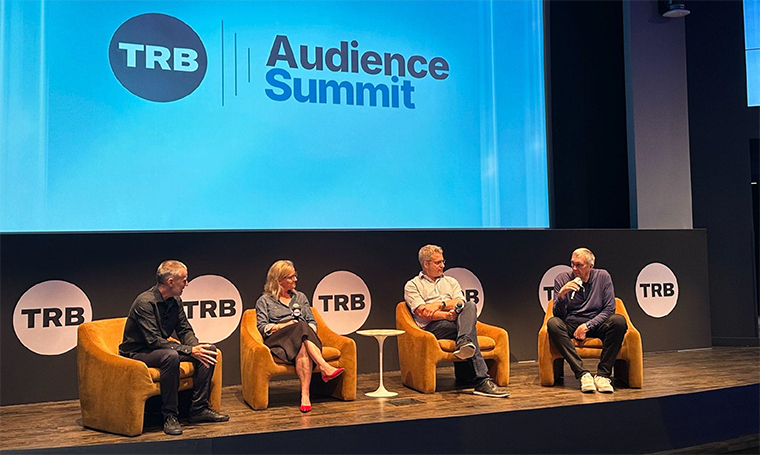
Mike Reed, chief executive officer of USA Today Co., opened the main stage at last week’s TRB Audience Summit in New York City, a one-day gathering of 200+ news and publishing executives.
“If I have 150 million uniques on my platform a month, and I make two or three dollars a year off those, and 50 million come from search, and I can take the other 100 million that don’t come from search and create a much more engaged, personalised experience — and make six bucks a year versus two or three, I don’t need 150 million,” he said. “I’m fine with the 100.”
The idea that publishers have to replace every lost search visit, he said, “is a bit of a misnomer.” Once the audience that remains is engaged and growing, “I won’t need Google search traffic, which is our least monetisable traffic.”
He’s been saying a version of this to investors since August.
On their Q2 earnings call in August, Reed called one-and-done traffic “our least valuable and least monetisable audience,” as unique visitors fell from 180 million in Q1 to 158 million in Q2 on lower search referrals. In that quarter, digital-only ARPU hit a record US$10.47, up 34.4% year over year, while digital advertising revenue fell 9.2% to US$79.8 million.
The audience got smaller and the paying relationship got more valuable, but the ad line hasn’t followed yet (unlike People Inc’s “non-session revenue strategy.”) Their strategy to address that revolves around a data partnership USA Today announced back in August meant to turn anonymous visits into what Reed calls “known relationships.”
The same idea ran through every session of the day with different labels: personas, cohorts, passion clusters, ideal customer profiles, engaged time.
Danielle Varvaro, chief revenue officer of Newsweek, was direct about where Newsweek starts: “We’ve been the scale and reach play for many years.” Alongside that, they’ve spent years building cohorts in healthcare, technology, and AI. “This is not an answer to traffic declining this year,” she said. “We’ve been developing these cohorts for years.”
In healthcare, that means hospital and physician rankings first published seven or eight years ago, along with business-of-health content, events, Webinars, newsletters, and last year’s acquisition of Adprime, a healthcare demand-side platform that gives advertisers direct access to physicians.
Their pitch is also changing: “We’re selling 300,000 people that are signed up specifically within the healthcare field,” she said. “That’s more valuable than ‘we have a million eyeballs and we want to get our ad out to everyone.’”
It also means they need a different kind of salesperson, so Newsweek invests “in the sellers that then go out to market to sell in a different way than a seller or programmatic seller would sell.”
The rankings are also monetisable: “There are brands that come to buy the badge and they also want to be associated with it.” And Newsweek picks categories they can win. “We don’t really do educational rankings. We know it’s a very crowded space. For us, we’re the top for health.”
Anna Bateson, chief executive officer of Guardian Media Group, described moving the newsroom’s measure from pageviews to engaged time, alongside a rebalancing away from text (“We had some amazing statistic that we published the equivalent of two novels a day”) toward video, audio, and visual journalism.
The Guardian is one of the few large news sites still growing traffic: July visits were up 14% versus three years earlier, per Press Gazette, while the top 50 U.S. news sites combined were down 37% from their July 2024 peak. Guardian Media Group’s results, published the same week as the summit, put U.S. revenue at £63.8 million, up 14% and now 41% of the business, with 1.4 million recurring supporters worldwide and 500,000 of them in the U.S.
Advertising is about a quarter of The Guardian’s U.S. revenue. On advertising, Bateson was clear: “I think advertising will still matter. And I think advertising will evolve and adapt. I think our relationship with certain kinds of really key partners and brands will endure.”
Their 2031 strategic plan forecasts more of the Guardian’s traffic comes from agents than from people: “I think we will still have ads. I think our Web site may become something that is more of a sort of service to the agentic audiences.” She cited new Ofcom data that 21% of U.K. adults now use AI apps as a source of news (37% among 25- to 34-year-olds).
On an earlier B2B panel, Will Lee of Adweek described a sponsored lunch at a retail conference limited to companies that sell products in a specific chain’s stores, to the point of turning away a credit card company because all it sells there is gift cards.
“It’s like giving access. That’s really the model,” he said. “When you boil it down, that’s what we’re doing.”
Robert Dippell of Morning Brew said: “It’s kind of like going from a ‘what you know’ business to ‘who you know,’ in some ways.”
Nicholas Thompson of The Atlantic said, “Our traffic is down from Google, our subscriptions are up,” and the company is pushing readers toward its app, newsletters, and print: “Five years from now, I bet you, we’re doing either the same number of print issues or more. We will not do what most media companies do, which is less.”
Nada Arnot, managing director of The Economist, said Play, the audio and video tier piloting in four countries since July, is aimed at younger audiences. As for ads: “On the advertiser side, that will be important going forward. Right now, it’s not the main priority.”
In the salons (conducted under Chatham House Rule), a large subscription newspaper’s audience lead described five personas defined by motivation rather than demographics, none of them more than half the subscriber base, built into a newsroom dashboard every journalist can see.
Each story is measured against the time spent you would expect for its length and topic, and the rule is that not every story has to do every job: Some are for engagement, some for acquisition. A passion-vertical publisher with both media brands and utility apps is unifying declared interests and inferred behaviour into one customer record so it can sell bundles by passion cluster.
The head of a large local news network described a high school sports vertical where video minutes went from 6,000 to 30 million in the first six weeks of the season, where search traffic has not declined, and where the audience widened from parents to recruiters and colleges, which then became a sellable data business.
She was candid that pageviews had been the driver of programmatic revenue. And when that declined, the company reinvested in exclusive reporting rather than chasing them, which is becoming the driver of monetisation, not scale.
Across the day, here’s what I heard is changing on the advertising side:
The pitch, which is now focused on a named cohort with a number attached, not reach.
The profile of the salesperson. Newsweek is hiring people who sell access and association, not impressions.
The metrics. Engaged time, expected time spent, ARPU. The numbers publishers now manage to are ones advertisers increasingly being sold.
The data infrastructure. USA Today is building a single customer record as the source of truth.
And a last observation that the ad business is the part of this shift that is lagging a bit. The personas built for retention are the same raw material advertisers want, but some of the publishers in the room were still packaging those for advertisers and working on getting it right.
As I wrote in August, the supply side is repricing as impressions get scarcer. What I heard in New York is that publishers are still in the process of pivoting. And on the ad side, some of that work is still to come.
I’ll explore this topic further in upcoming Advertising Initiative programming, including in Madrid on Friday morning with a publisher who is well ahead of this work. Tom Armstrong, who leads international advertising for The New York Times, will talk about how The Times turned first-party data and reader obsession into a multi-year run of double-digit digital ad growth. And at the Media Advertising Summit in December, Lauren Wetzel of WPP will share what the largest agency group is looking for from these audiences, while Kristen Butler and Penny Hicks will talk through how The Globe and Mail is Canada is transforming its commercial organisation to sell them.
If you’d like to subscribe to my bi-weekly newsletter, INMA members can do so here.
Banner image: Adobe stock image by Jo.
Related Articles
-

Spain is moving from inventory to brand partnerships
11 October 2026 -

Research: 15% of sales directly tied to news brands’ cultural r...
11 October 2026 -

6 ways news publishers are turning trust into advertising reven...
30 September 2026 -

A look at 30+ revenue streams publishers are actually building
31 August 2026 -

The week the news business got graded on direction, not results
6 August 2026 -

South Asia’s publishers have the trust but not yet the revenue ...
26 July 2026 -

Editora Globo shifts from selling ads to selling media solution...
21 July 2026 -

The rise of quality and why that matters for advertising
16 July 2026
Upcoming Events
-

Subscriber Acquisition Master Class
10-17 November 2026
-

Media Advertising Summit
New York, United States
07-10 December 2026
-

AI-Native News Product Master Class
18-25 February 2027
-

Media Subscriptions Summit
Oslo, Norway
08-12 March 2027
-

World Congress of News Media
New York, United States
25-30 April 2027
-

Branded Content & Partnerships Master Class
20-27 May 2027
-

Subscriber Retention Master Class
17-24 June 2027
-

Conferencia Latinoamericana
15-16 July 2027
-

South Asia News Media Festival
New Delhi, India
19-22 July 2027
-

Asia/Pacific News Media Summit
19-20 August 2027
-

CEO Roundtable at Kilkenny
Kilkenny, Ireland
24-26 August 2027
-

Media Innovation Week
Amsterdam, The Netherlands
27 September - 01 October 2027








