

AI adoption is a management problem, not a technology problem
Conference Blog | 29 October 2026

Imagine your first day at a new job. Nobody expected you. There’s no desk, no laptop, no manager, and no job description. Then a stranger asks you for next year’s audience growth strategy. You do your best with some quick research and a few guesses. The stranger glances at it, says it isn’t what they wanted, and walks off without a word of feedback.
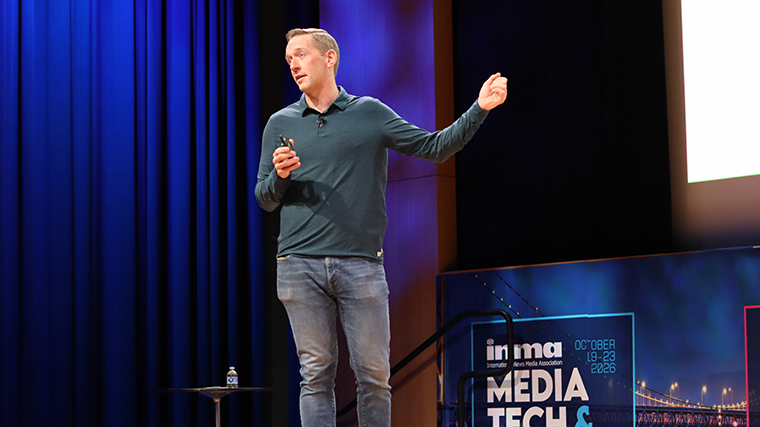
Tisé Ben-Eka opened her session at INMA’s Media Tech & AI Week in San Francisco with that scenario, then asked the room who was at fault. Almost nobody blamed the new hire. Nearly everyone blamed the company.
“And yet, this is pretty much how a lot of us initially treat AI,” said Ben-Eka, who works for a large Big Tech company. She spoke in a personal capacity.
Organisations buy capable agents, drop them into complex workflows without context, and conclude AI doesn’t understand their business when the results disappoint. “Maybe,” she said, “but maybe we’re also terrible managers.”
That idea — that the hard part of AI is organisational, not technical — ran through the week, from Silicon Valley to U.S. local newsrooms.
There is no secret playbook
There is no hidden room in Silicon Valley where tech companies have figured out how to get employees to trust and use AI, said Ben-Eka, who runs agent-building workshops for non-technical colleagues. Even at the companies leading the AI race, the technology is moving faster than organisational strategy.
The gap is clearest outside engineering. Engineers ship code in hours that used to take days; business teams get similar tools and use them to write e-mails.
She named two causes.
-
The first is context. Engineers’ work lives in repositories with tracked changes and automated tests. Elsewhere, knowledge sits in old e-mail chains, spreadsheets called “Budget Final V4,” and decisions never written down. An agent can read the numbers in seconds but doesn’t know which to trust or who signs off.
-
The second is people. Employees are really asking three questions, Ben-Eka said: Does this shrink what I do? Does this take decisions away from me? Does this reduce my influence? The better the technology gets, the more real those fears become.
“That’s not a technical problem; that’s a management problem,” she said.
The slow part isn’t the technology
Will Allen, head of product at Snowflake, made the same point on the study tour. He built a working agent on his own Web site data in about five minutes. What takes time is agreeing who defines terms such as revenue or retention, and who gets to see what.
“It’s almost always process,” he said.
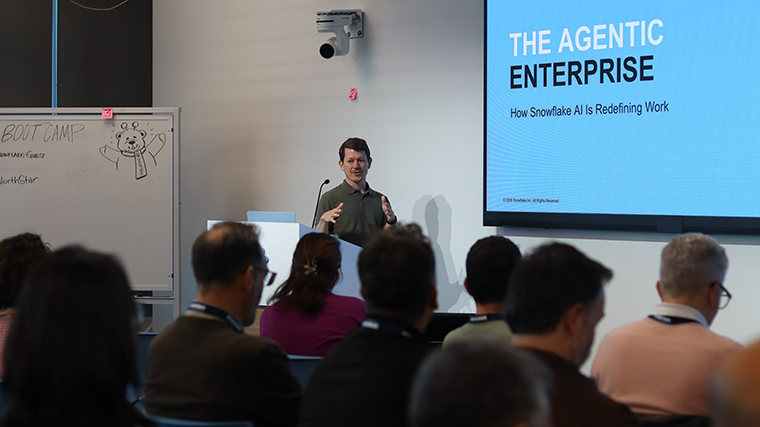
A study tour participant whose company is running an AI literacy programme put numbers on it: Building an agent takes about half a day; working out what belongs in it takes three and a half weeks.
Marc Escobosa of Salesforce’s Futures team argued the bigger job is redesign. Most knowledge jobs are bundles of tasks, he said, held in department structures that trace back to 1930s railroads. For 40 years, companies asked people to work like software because there were no capable agents.
Now leaders have to unbundle those jobs task by task and decide “how do we actually want to redo this wiring.”
Onboard agents like employees
Ben-Eka’s answer is what she calls the AI onboarding stack — the six things any new hire needs: role, context, scope, tools, rhythm, and feedback, with memory underneath.
“These aren’t really AI concepts; they’re mostly management concepts,” she said.
Writing an agent’s job description means rewriting someone else’s: If an agent now prepares the weekly numbers, the analyst who used to do it needs a new answer about what they do. Scope settles authority — the agent recommends, the human decides — and that is where an organisation answers “what happens to me?”
People become managers of agents, but “it’s only a promotion if the organisation treats it like one.”
Context matters, especially in media. Asked which stories performed best, an agent might recommend more viral listicles without knowing what the audience editor knows: Those readers never came back. Nobody told the agent what success means.
What newsrooms learned
The Lenfest AI Collaborative and Fellowship Program has embedded AI fellows in 11 U.S. newsrooms since late 2024. Success depended less on what fellows could build than on who they were and how they worked with the rest of the organisation, said Chase Davis, technical lead at The Lenfest Institute. Fellows landed in newsrooms where journalists feared being automated out of a job.
“That relationship and that trust has to be earned. It can’t be imposed,” Davis said.
Kevin Hoffman, AI fellow at The Philadelphia Inquirer, learned that the hard way. He spent about six months building a search tool for 50 years of Inquirer archives, largely in isolation. Adoption was low. On his next project, a tip aggregator for the Inquirer’s hyperlocal newsletters, he talked with an editor every day for about three months as she graded its output.
The tool got good — and use of the archive tool, which he had barely touched, started climbing. Colleagues trusted him now. Before long, reporters were building their own tools, and his job had shifted from engineer to adviser.
At The San Francisco Standard, experimenting is part of the culture. Staff members hold brown-bag lunches to share how they use AI. And when a politics reporter wanted a system to file public records requests automatically and summarise the results in Slack, CEO Griffin Gaffney said yes. What travels from the Standard, he said, is “the mindset of a team that doesn’t have a bunch of baggage.”
Hearst executives said mass training sessions for hundreds of people didn’t change its culture; one-on-one work with individual teams did. So did taking staff fears seriously rather than steamrolling them, and executives showing how they use AI themselves.
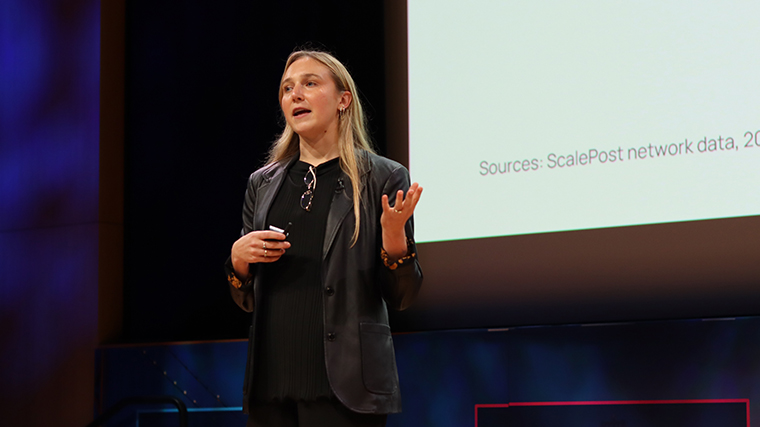
At CBS News, Maddie Shepherd, vice president of SEO and AI discovery at CBS Digital, said the lesson applies to data, too. When the company began tracking how AI platforms cite its journalism, the numbers went into Chartbeat, where editors already look, rather than another dashboard.
Expecting editors on breaking news to check yet another platform “is actually pretty unrealistic,” she said. “We really need to collaborate with reality.”
The real question
Ben-Eka closed by turning the industry’s favourite question around. Plenty of time has gone into asking how much more capable AI can become, she said.
“I think the next big challenge isn’t that, but rather how capable we can make our organisations working with AI.”
Related Articles
-

6 lessons from INMA’s Media Tech & AI Conference
29 October 2026 -

Marketers should outsource tasks, not thinking
25 October 2026 -

Scaling AI tools means scaling support at Sanoma Media
11 October 2026 -

What news CEOs are investing in — and what they are killing
8 September 2026 -

The front door is gone — and Asia-Pacific publishers are rebuil...
26 August 2026 -

Nation Media Group focuses editorial strategy on stories that m...
4 August 2026 -

Briefly News empowers journalists with AI tool suite Nova
4 August 2026 -

Why are audiences going to AI answer engines for news?
30 June 2026
Upcoming Events
-

Subscriber Acquisition Master Class
10-17 November 2026
-

Media Advertising Summit
New York, United States
07-10 December 2026
-

AI-Native News Product Master Class
18-25 February 2027
-

Media Subscriptions Summit
Oslo, Norway
08-12 March 2027
-

World Congress of News Media
New York, United States
25-30 April 2027
-

Branded Content & Partnerships Master Class
20-27 May 2027
-

Subscriber Retention Master Class
17-24 June 2027
-

Conferencia Latinoamericana
15-16 July 2027
-

South Asia News Media Festival
New Delhi, India
19-22 July 2027
-

Asia/Pacific News Media Summit
19-20 August 2027
-

CEO Roundtable at Kilkenny
Kilkenny, Ireland
24-26 August 2027
-

Media Innovation Week
Amsterdam, The Netherlands
27 September - 01 October 2027








