

6 lessons from INMA’s Media Tech & AI Conference
Conference Blog | 29 October 2026

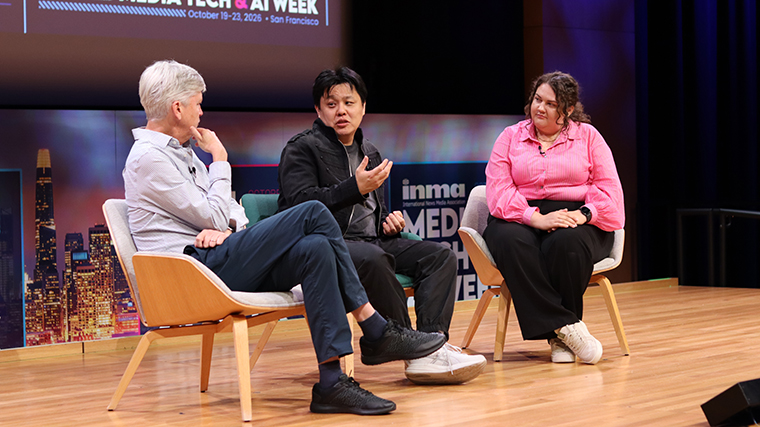
For four years, news media executives have been told AI is coming for their business. Over two days in San Francisco, INMA’s Media Tech & AI Conference offered a more nuanced message, and for many in the room, a more hopeful one.
“I was really happy as a journalist that there is so much positivity about the value of journalism,” Kerstin Hasse, INMA’s Young Audiences Initiative lead and conference co-moderator, said during The Debrief, the closing live podcast.
The optimism came with a warning: The technology is moving faster than most news organisations can adapt. Robert Whitehead, INMA’s Digital Platform Initiative lead and co-moderator, told the room that Google, Anthropic, and OpenAI had released 12 models in the past month alone.
Six lessons ran through the two days, which followed a three-day study tour through Silicon Valley and San Francisco.
1. The next customer may not be human
Again and again, speakers returned to the same shift. Personal AI agents are starting to research, choose, and pay on behalf of readers, and that changes who publishers are selling to.
James Henderson, founder and CEO of MonetizationOS, called agents “the best thing to happen to this industry in 30 years.” He said they remove the friction that has long kept would-be readers from paying.
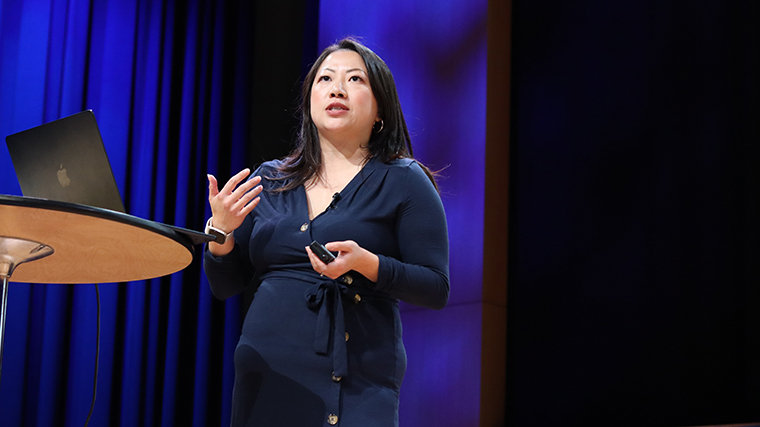
Shuwei Fang, senior fellow at CUNY and co-founder of Signals at Scale, described the same shift as a move from the attention economy to an intention economy. In that economy, information becomes an input machines act on, not just something people read.
Few publishers are ready for that customer, and INMA research leads said so plainly.
2. Control comes before revenue
If machines are customers, news companies have to decide who gets in.
Across the licensing and visibility sessions, the advice converged: Identify your traffic, block what you can’t identify, and make offers on your own terms.
“You set the terms, not the bots,” said Eyal Knoll Wel Roth, monetisation in media EMEA industry specialist at AWS.
By the end of the second day, CBS News was among those rethinking its approach. It plans to move from deciding which bots to block to deciding which ones to let in. One startup in the conference’s pitch session, Spread, offered a different answer to the same problem: verifying that a visitor is human before letting them in.
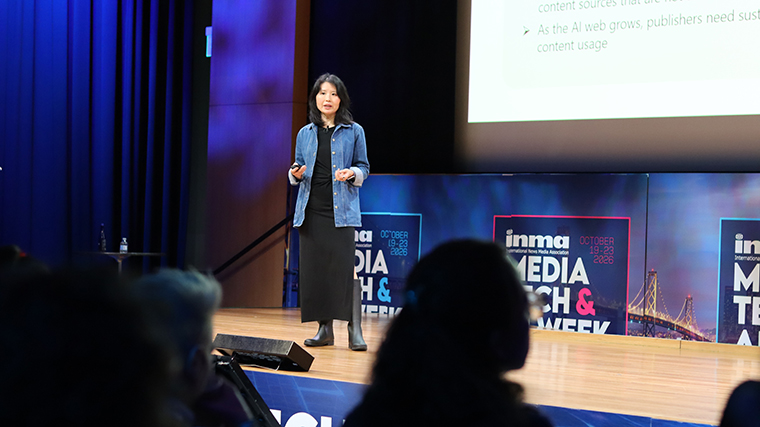
Control has trade-offs. Nine Publishing’s audit showed that blocking AI crawlers protects content but can leave even a highly trusted brand uncited, with competitors getting the credit. Microsoft’s Jocelyn Lee cautioned that a licensing deal makes content available to AI systems but doesn’t guarantee anyone will want it.
The publishers best placed to win, several speakers said, are those with something no one else has, such as local depth, original reporting, i.e., a clear niche.
3. Humans and machines want different things
One of the sharpest ideas of the conference was that serving people and serving machines may pull in opposite directions.
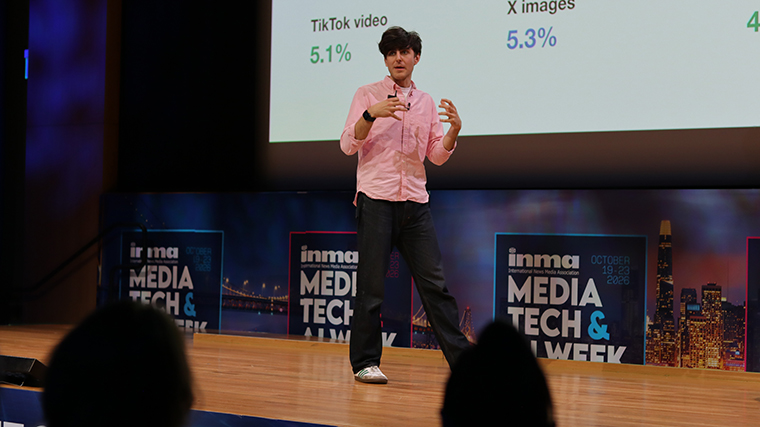
Maty Bohacek, a researcher at Stanford University, said human readers increasingly value distinctive voices and strong storytelling as AI-written content floods the Web. Machines, though, favour structure, specificity, and plain facts.
“To the language model, our writing is the slop,” he said.
Fang made a similar point in economic terms. The information market is splitting into a premium end built on brand and trust and a commodity end built on integration. The undifferentiated middle, where many news publishers sit, is being squeezed.
News publishers may need to build deliberately for both ends rather than hoping one product serves everyone.
4. Readers will build their own front page
Jodie Hopperton, INMA’s Product & Tech Initiative lead and the conference curator, opened the event with a list of questions. The first was who will own the next interface to news. By the end, the answer looked increasingly like the reader.
Julie Young, founder and CEO of Laurel, showed what happens when a paying subscriber loses patience with how news is packaged. She built her own AI tool to turn her subscriptions into a personalised feed.
Google’s Gemini Notebook is moving to let authenticated users bring paid content into its environment. Startups pitching at the conference showed where this is heading: HyperContent.AI, the winner, rebuilds published stories for any format on demand, while Stardust turns a publisher’s content into conversational agents on WhatsApp and iMessage. The NBA described redesigning its digital products so agents and fans alike can get what they need.
The implication is uncomfortable. A publisher’s Web site or app may no longer be where its journalism is experienced. Fang asked the room a more difficult question: How do you stay close to customers when there may be no interface at all?
5. Trust is the moat, but it has to be earned in public
Speakers agreed trust is journalism’s greatest asset in an era of synthetic content. They also agreed that legacy brands can’t simply claim it.
Hamish McKenzie, co-founder of Substack, said direct relationships and trusted individual voices are where loyalty now lives. He urged publishers to think of themselves as networks rather than monoliths.
Whitehead said an old masthead no longer earns trust on its own.
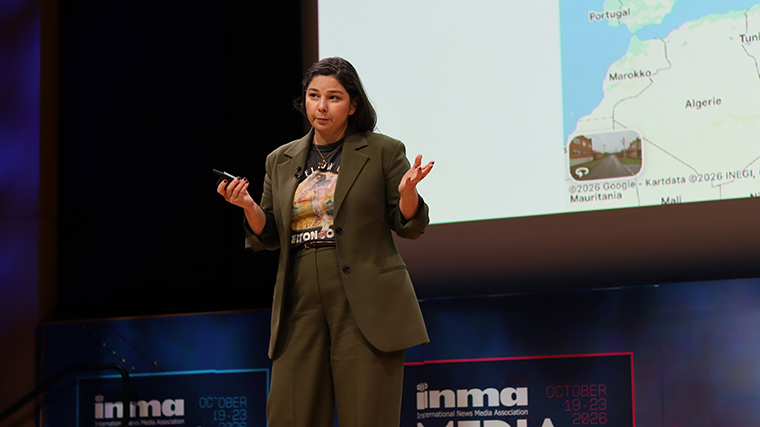
Maria Amelie, CEO and founder of Factiverse, said AI chatbots are becoming a new information infrastructure that journalists need to watch. Her company’s audit of how chatbots answered questions about Norway’s 2011 terrorist attack found some softening the attacker’s ideology.
Storyful’s James Law said journalists should show their work and explain how they know what they know. “When content is cheap, credibility becomes more valuable,” he said.
6. Getting AI to work is a people problem
The most practical sessions shared one message: The technology is rarely the hardest part.
Tisé Ben-Eka, who works in marketing finance at a large Big Tech company and spoke in a personal capacity, said organisations often give AI agents no context and then blame the results on the tools. “But maybe we’re also terrible managers,” she said.
Fellows in the Lenfest Institute’s AI programme reported the same pattern from newsrooms. Tools built in isolation went unused. Tools built alongside journalists, solving problems they actually had, spread on their own.
Chicago Public Media, one of the fellowship newsrooms, has applied that lesson to Chicago.com, a new set of neighbourhood forums. AI helps moderate posts and curate news there, but it stays in the background of a product built around community, said Sarah Darby, vice president of data and analytics.
Newsrooms in INMA’s Gemini Notebook project found the same. Sarah Hoek of Daily Maverick and Alvin Chong of Mediacorp both said the hardest part was getting colleagues to use the tools, not building them.
Hopperton named data as the other prerequisite. Publishers’ data sets don’t have to be merged, she said, but they do need to connect, with an agentic layer on top that can query them. When that works, “it really is a superpower for our business.”
Ready or not
The conference ended where it began, between optimism and urgency.
Hasse said publishers haven’t designed their platforms for agents: “We’re really not ready.”
Whitehead was more bullish, saying agents could make the industry more capable than it has ever been, and that the moment calls for acting now rather than waiting.
Hopperton, who curated the week, ended on the same note: “I see more opportunity and more excitement than I feel I have done in years.”
Related Articles
-

Marketers should outsource tasks, not thinking
25 October 2026 -

WSJ executive councils show how publishers build communities th...
19 October 2026 -

AI’s effect on super user math
15 September 2026 -

At Mediacorp’s CNA, loyalty means giving audiences a reason to ...
20 August 2026 -

Tribun Network turns print “dots” into AI-powered insight
20 August 2026 -

Nation Media Group focuses editorial strategy on stories that m...
4 August 2026 -

Briefly News empowers journalists with AI tool suite Nova
4 August 2026 -

Indian Express builds a video-first future around trusted journ...
20 July 2026
Upcoming Events
-

Subscriber Acquisition Master Class
10-17 November 2026
-

Media Advertising Summit
New York, United States
07-10 December 2026
-

AI-Native News Product Master Class
18-25 February 2027
-

Media Subscriptions Summit
Oslo, Norway
08-12 March 2027
-

World Congress of News Media
New York, United States
25-30 April 2027
-

Branded Content & Partnerships Master Class
20-27 May 2027
-

Subscriber Retention Master Class
17-24 June 2027
-

Conferencia Latinoamericana
15-16 July 2027
-

South Asia News Media Festival
New Delhi, India
19-22 July 2027
-

Asia/Pacific News Media Summit
19-20 August 2027
-

CEO Roundtable at Kilkenny
Kilkenny, Ireland
24-26 August 2027
-

Media Innovation Week
Amsterdam, The Netherlands
27 September - 01 October 2027








