

Readers’ agents are becoming customers, and most publishers can’t see them
Conference Blog | 28 October 2026

Personal AI agents came up in almost every session at INMA’s Media Tech & AI Week in San Francisco, and several speakers and moderators were already using them.
Meta’s Muse, OpenAI’s Dots, and Instinct, a start-up that has just raised US$1 billion, all launched in the past few weeks. Google’s Gemini has Spark. Most are not yet available in Europe, which only added to the curiosity in the room.
Satwant Singh, senior vice president and head of monetisation at the NBA, told the conference he left his phone in a security bin at Porto airport in September. In a pre-agent world, he said, he would have written it off.
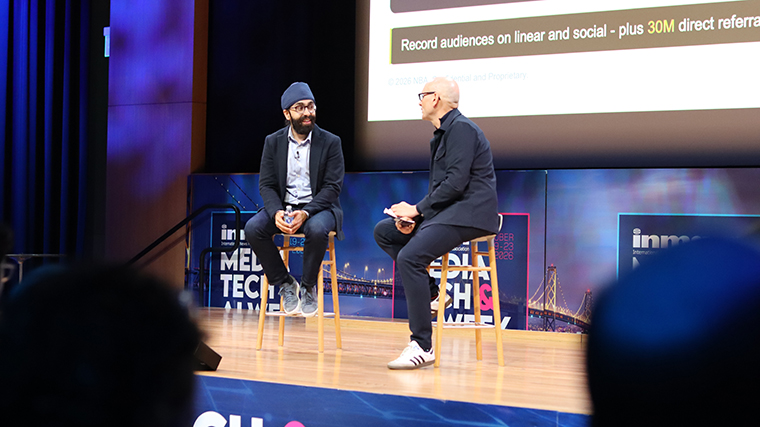
Instead, his agents contacted airport security in Portuguese, found a local shipping company, and arranged for the company to collect the phone from airport staff. His only real involvement was authorising the shipping payment. The phone arrived home a few days before the conference.
That is the behaviour James Henderson, founder and CEO of MonetizationOS, asked publishers to take seriously.
The chore of paying for news
Henderson opened his session with a poll. Would the audience let AI research a product for them? Every hand went up. Shortlist one? Nearly every hand stayed up. Select and buy it? A few dropped. When he swapped “product” for “news,” more hands came down.
“News feels a little bit more personal,” he said. “But I’m sorry to break this to you, but a lot of your readers think paying for news is a bit of a chore, too. And AI is extremely good — a [personal] agent’s even better — at removing chores.”
Henderson, who called AI agents “the best thing to happen to this industry in 30 years,” said publishers should think of each reader’s agent as a decision engine. It serves its owner, picks whichever site does the job best, and does not care about a homepage or a traditional offer.
That cuts both ways. A cancellation flow built on five screens of “are you sure?” takes an agent seconds to get through, so some readers who stayed out of habit will easily be able to leave your ecosystem.
But Henderson said hassle has kept far more people out than it kept in: the person who wants one article rather than a subscription, the person who would pay for three months but not a year, the person who would pay $2 but won’t fill in a form to do it.
“The same technology that makes it easier than ever to stop paying for news may make it easier than ever to start,” he said.
Price the decision, not the access
Agents also change what publishers can learn. A human visitor arrives, reads, and leaves without saying why. An agent has to state what it is looking for to get a good answer, and because the publisher decides who gets in, Henderson said, publishers can make saying why part of the deal.
His example: Two agents ask about building plan applications on the same street. One works for a curious neighbour. The other works for someone about to spend US$600,000 on a house there. Today, both are probably charged the same thing, which is likely nothing. The neighbour only wants to know the basic facts; the buyer’s agent needs every application, all current and sourced.
“For 30 years, we’ve priced access. You’re either in or you’re out,” Henderson said. “You can price the decision, the impact, not the access.”
Shuwei Fang, co-founder of Signals at Scale, framed the risk the next morning: As AI systems increasingly consume information on behalf of people, “the audience becomes someone else’s customer.” Henderson’s argument is that it doesn’t have to be the case.
The visitors you can’t see
There is a practical problem first. Many of these agents do not announce themselves.
Agents working in “computer use” mode click, type, and navigate a site the way a person does. Robert Whitehead, INMA’s Digital Platform Initiative lead, told the conference that on most publishers’ analytics they currently show up as human readers.
“We haven’t solved that yet,” he said.
That leaves publishers stuck on the readers they most want to keep.
During the study tour, participants debated a hypothetical Daily Memphian subscriber who sets an AI assistant a task to collect the newspaper’s top three stories every morning. One participant asked whether that wasn’t simply fine.
“Do we let personal agents acting on behalf of our paid subscribers come through? How are they identified?” Whitehead asked.
Media businesses need to recognise them in a new category as acting on behalf of a legitimate, known and paying subscriber, otherwise, he said, publishers would lose the power to monetise this powerful cohort.
Henderson’s first test is whether a publisher can talk to all its traffic. He pointed to Bargain Finder, a 1995 shopping agent: The CD stores that blocked it simply vanished from the results, and the ones that let it in had no control over what it did.
“Who gets in? For what? And on what terms?” he said. “Without it, honestly, nothing else I’m about to say will work.”
Infrastructure providers are building for that. Megha Kande, senior manager of product management for Amazon CloudFront, told the study tour AWS was working on ways for publishers to serve different versions of a page to different visitors: an interactive version for a personal agent, older or limited content for an unpaid scraper.
The subscriber question
The hardest and most important part of the challenge is the agent sent by someone who has already paid. In the closing The Debrief podcast, Whitehead asked whether publishers would let in agents representing their subscribers to read what their owners paid for. None of the cohort, he said, was saying yes.
Julie Young, founder and CEO of Laurel, is already that reader. She pays for the Financial Times but built her own bot, signed in through her browser, that reads her subscription and turns it into a personalised feed. Asked what she would do if the FT blocked it, she said she would cancel.
When an attendee told her the FT’s terms prohibit it, she pushed back: She sees herself as an ideal paying customer. Whitehead’s answer was that the FT has no way of knowing at the moment if her personal agent wasn’t actually leading a double life as a part-time crawler for AI training. So right now it’s easiest for publishers to block, at least until the filtering technology catches up.
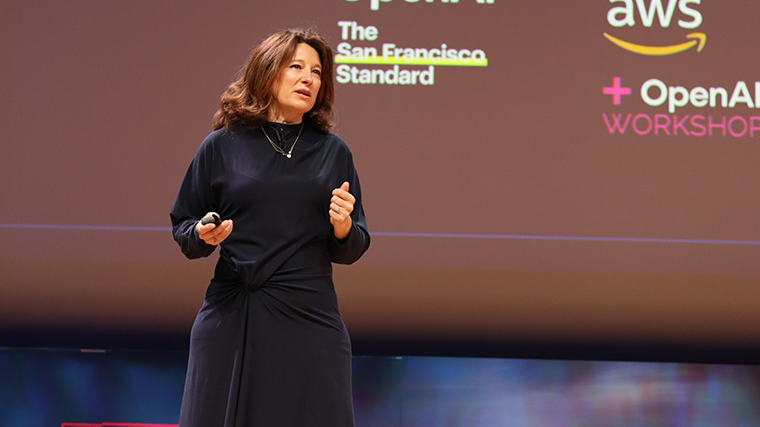
Jodie Hopperton, curator of the San Francisco summit and INMA’s Product & Tech Initiative lead, said one publisher emailed her during the week to say it had built an MCP connection for authenticated subscribers access (the interface between a publisher and an AI model), the first publisher she had come across.
Google is building a similar access route in one of its hottest AI products. Steven Johnson, co-founder of Gemini Notebook, told conference attendees that its new Expert Intelligence framework will let readers link subscriptions so a research agent can retrieve articles from publications they pay for.
Anyone who receives the sharing link for that particular Notebook creation is would need their own subscription to read them. Publishers would opt in, and the news piece isn’t built just yet.
Three questions for next week
Henderson rom MonetizationOS left publishers with these three tests:
-
Can you talk to all your traffic, human or machine?
-
Can you make an offer to every reader, not three tiers and a student rate, but potentially 1,000 offers?
-
Can you afford to serve them all?
The last question is where agents start to increase capacity for publishers, too. He compared it to Rowland Hill’s penny post of 1840, which made millions of letters worth sending once handling costs fell. He labelled that as an Era One step-change.
Unified reader data, headless systems, and agents that test and learn on their own can bring the cost of an offer close to zero.
“Two dollars a month from someone’s agent can be a great business if it costs you almost nothing to serve,” Henderson said. “In Era Two, we fixed the model by cutting. In Era Three, you grow the revenue while the cost base holds.”
His closing question for media executives in 2027 was both blunt and buoyant. “Who sets the terms?” he posed.
“Because if it’s us,” he said, “we win.”
Related Articles
-

Why publishers are blocking bots by default to starve the black...
28 October 2026 -

What makes an AI choose your news brand?
14 October 2026 -

Licensing won’t save media, but authentication might
13 October 2026 -

INMA report: AI’s dependence on journalism gives publishers new...
30 September 2026 -

When the agent — not the app — becomes the interface
30 September 2026 -

AI is now media’s operating environment
28 September 2026 -

INMA spends 5 days in Madrid learning what actually works
20 September 2026 -

Publisher culture, not tech, is the real constraint on AI in La...
27 July 2026
Upcoming Events
-

Subscriber Acquisition Master Class
10-17 November 2026
-

Media Advertising Summit
New York, United States
07-10 December 2026
-

AI-Native News Product Master Class
18-25 February 2027
-

Media Subscriptions Summit
Oslo, Norway
08-12 March 2027
-

World Congress of News Media
New York, United States
25-30 April 2027
-

Branded Content & Partnerships Master Class
20-27 May 2027
-

Subscriber Retention Master Class
17-24 June 2027
-

Conferencia Latinoamericana
15-16 July 2027
-

South Asia News Media Festival
New Delhi, India
19-22 July 2027
-

Asia/Pacific News Media Summit
19-20 August 2027
-

CEO Roundtable at Kilkenny
Kilkenny, Ireland
24-26 August 2027
-

Media Innovation Week
Amsterdam, The Netherlands
27 September - 01 October 2027








