

South Asia News Media Festival spotlights strategies shaping the region’s media future
Conference Blog | 19 July 2026

The INMA South Asia News Media Festival returns to New Delhi this week with a programme designed to take participants beyond the conference room and inside some of the region’s leading media organisations.
Combining a two-day study tour with a two-day conference, the festival offers media executives an opportunity to explore how publishers are approaching AI, product development, audience engagement, business innovation, and digital transformation before bringing those ideas into broader conversations with industry leaders from across South Asia.
AI is reshaping newsroom workflows. Publishers are searching for new ways to deepen audience engagement and diversify revenue. Legacy news brands are adapting to changing consumer habits while preserving the trust that has defined them for decades.
Through company visits, case studies, and discussions with industry leaders, the festival is curated to provide practical ideas that participants can take back to their own organisations.
“The festival is designed to move key conversations forward for South Asia by combining behind the scenes learning with honest peer discussion,” said Madhavi Sekhri, head of INMA’s South Asia Division and curator of the conference.
“The region has the advantage of strong news brands, deep local and language connections, and enduring audience trust, even as it navigates changing habits, platform dependency, technology disruption, and monetisation pressure. I hope attendees leave with practical ideas, stronger connections, and renewed confidence in the next phase of growth for South Asian news media.”
A behind-the-scenes look at media innovation
The festival opens with one of INMA’s signature experiences: an immersive study tour that takes participants inside organisations exploring new approaches to journalism, technology, product development, audience engagement, and business innovation.
The tour begins at the Indian Institute of Technology Delhi, where participants will examine emerging technologies with practical applications for news publishers. Discussions will explore multilingual AI, newsroom copilots, archive search, information retrieval, and multi-agent systems, offering insight into how research is beginning to influence the next generation of newsroom tools.
The focus then shifts to HT Digital, where participants will explore how publishers are expanding beyond traditional journalism through content-to-commerce initiatives, fintech, affiliate businesses, and utility-driven products. As news organisations seek to strengthen consumer relationships and diversify revenue, the visit will examine how editorial brands can extend their value beyond content alone.
At The Indian Express, discussions turn to storytelling and product development, with a focus on multimedia expansion, new formats, and evolving audience behaviour. Participants will see how a legacy news organisation is adapting its products while maintaining its editorial identity.
The second day continues with visits to NDTV and Moneycontrol, highlighting different approaches to audience engagement. At NDTV, sessions explore newsroom evolution, cross-platform publishing, and video operations, while Moneycontrol shares lessons in building audience habit through market data, subscriptions, alerts, community, and digital products designed for repeat use.
The study tour also looks beyond traditional media. A visit to Paytm examines customer journeys, retention strategies, lifecycle marketing, and AI-driven personalisation — approaches that increasingly influence how publishers think about audience engagement. Participants also visit Times Internet, reinforcing the week's emphasis on digital products and innovation.
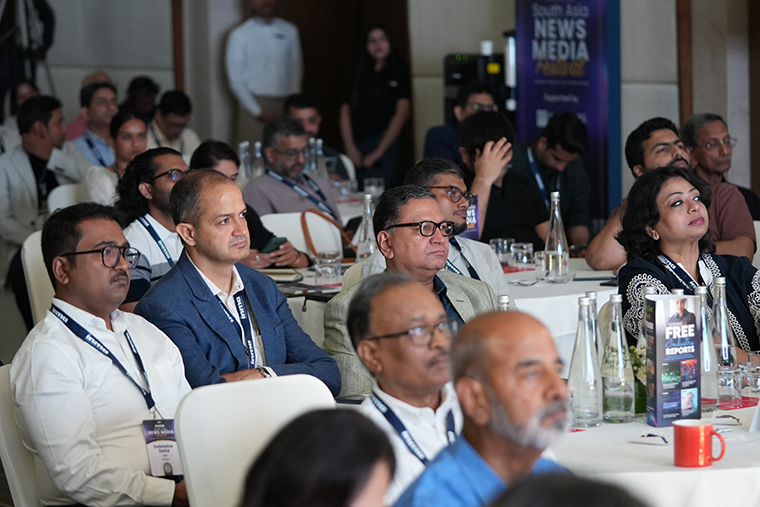
Taken together, the study tour gives participants a closer look at how organisations are approaching technology, editorial innovation, product development, and new business opportunities while providing practical ideas that can be adapted within their own news organisations.
A conference focused on relevance and growth
Beginning Wednesday, the conference builds on the study tour with two days of discussions focused on the strategies, case studies, and ideas shaping South Asia’s news media industry.
The conference agenda tackles the broader week’s theme of moving from traffic to value — how publishers build deeper habit, trust, attention, first-party relationships, and clearer advertiser value (not just scale).
The first day explores how publishers can strengthen trust, sharpen brand identity, and build deeper audience habits. Sessions examine why strong news brands matter; how live content encourages repeat engagement; how print is being revalued around trust, attention, influence, local authority, and advertiser outcomes; and how regional media organisations are strengthening audience relationships across platforms.
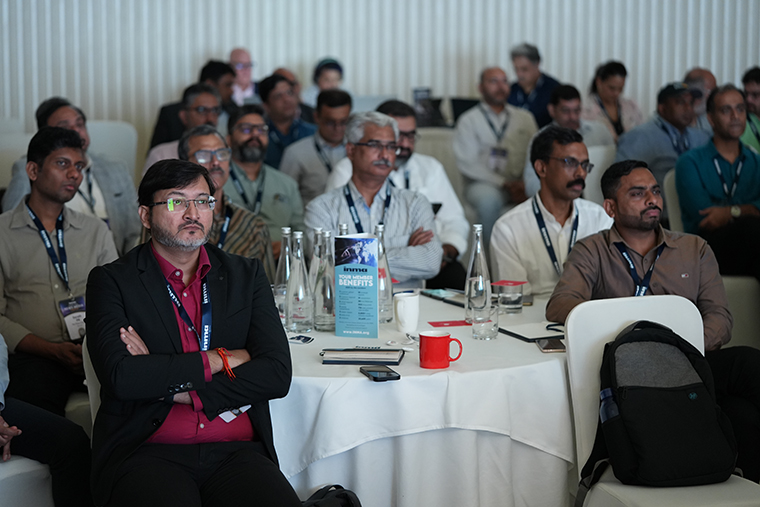
AI is also woven throughout the programme. Discussions examine how AI can support newsroom workflows, improve production processes, and assist editorial teams while maintaining the judgement and credibility that remain central to trusted journalism.
Leading executives from organisations including The Hindu Group, Bennett Coleman & Co. Ltd., HT Media, Hindustan Times, The Times of India, Eenadu, Malayala Manorama, Vikatan, and Bangladesh’s Prothom Alo will share how their organisations are responding to changing audience expectations while balancing innovation with long-standing editorial values.
The conference’s second day shifts the conversation toward implementation.
Sessions explore practical approaches to strengthening advertising businesses, using first-party data more effectively, improving operational efficiency, and identifying new revenue opportunities.
AI continues as a recurring theme, with discussions examining its role in audience engagement, product development, advertising, and commercial operations rather than treating it as a standalone topic.
Across the programme, speakers will share case studies and practical examples that demonstrate how editorial, product, technology, and commercial teams are working together to adapt their organisations for the future.
Learning through experience
What distinguishes the South Asia News Media Festival is the way its two components complement one another.
Participants begin the week by seeing how organisations are putting new ideas into practice, then spend two days exploring those themes through conference sessions, case studies, and conversations with media leaders from across South Asia.
By combining behind-the-scenes visits with peer learning and strategic discussions, the festival is designed to give participants practical ideas they can take back to their own organisations while creating opportunities to build relationships with colleagues from across the region.
Related Articles
-

Readers’ agents are becoming customers, and most publishers can...
28 October 2026 -

Why publishers are blocking bots by default to starve the black...
28 October 2026 -

What makes an AI choose your news brand?
14 October 2026 -

Licensing won’t save media, but authentication might
13 October 2026 -

AI is now media’s operating environment
28 September 2026 -

5 lessons from the INMA Young Audiences Summit
28 September 2026 -

Agents, liquid content, vibe coding raise questions for news me...
9 September 2026 -

What I told 40 CEOs (and won’t gatekeep from you)
30 August 2026
Upcoming Events
-

Subscriber Acquisition Master Class
10-17 November 2026
-

Media Advertising Summit
New York, United States
07-10 December 2026
-

AI-Native News Product Master Class
18-25 February 2027
-

Media Subscriptions Summit
Oslo, Norway
08-12 March 2027
-

World Congress of News Media
New York, United States
25-30 April 2027
-

Branded Content & Partnerships Master Class
20-27 May 2027
-

Subscriber Retention Master Class
17-24 June 2027
-

Conferencia Latinoamericana
15-16 July 2027
-

South Asia News Media Festival
New Delhi, India
19-22 July 2027
-

Asia/Pacific News Media Summit
19-20 August 2027
-

CEO Roundtable at Kilkenny
Kilkenny, Ireland
24-26 August 2027
-

Media Innovation Week
Amsterdam, The Netherlands
27 September - 01 October 2027








