

What a week in Madrid taught publishers about young audiences
Conference Blog | 27 September 2026

Across five days in Madrid at INMA’s Media Innovation Week— two days of study tour visits to Spanish publishers and three days at the European News Media Conference — one question kept resurfacing on stage and off: How do news brands reach people who may never pick up a newspaper or type in a homepage URL?
Spain was a fitting place to ask. In the study tour’s opening briefing, INMA representatives noted that news Web sites are about 10 percentage points weaker as a news source in Spain than elsewhere in Europe — across generations. Many Spaniards, not only young ones, never built the habit of visiting news sites directly.
Kerstin Hasse, INMA’s Young Audiences Initiative lead, framed the challenge as a set of fears that keep publishers up at night: that audiences on social platforms will never come back, that creators will take over journalism, and that young people have stopped reading.
In a session with Sonali Verma, INMA’s Newsroom Innovation Initiative lead, she set out to “hunt one ghost after the other.”
Speakers across the week offered working answers and candid admissions about what hasn’t paid off yet.
They’re on the platforms — and many will stay there
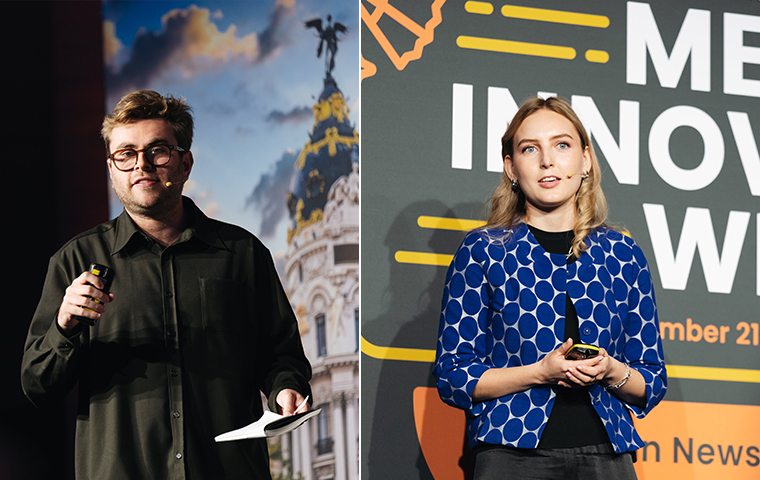
Jonas Lips, online host/social media at DPG Media in Belgium, said 76% of Belgian teenagers and people in their 20s get news via Instagram and 71% via TikTok. Vertical video, he said, is “often their first point of contact with news.” Lips, who works with one colleague, launched HLN on TikTok; it is now Belgium’s most-followed news brand there.
He was blunt about the limits: “I would like to say that they click through to our Web site or they take a subscription just because we are active on TikTok. But that is not reality. Not now, 2026,” he said. TikTok and Instagram are a showcase for the brand.
Hasse’s answer to the fear that these audiences never come back is to build products that don’t need them to. The Boston Globe’s B-Side, a newsletter for young Bostonians that grew out of a newsroom incubator, was never designed to send readers to the main site. It makes money through advertising and ticketed dinners where readers meet strangers.
“Getting Gen Z and Millennials to meet other people that they don’t know — that’s a superpower,” Hasse said.
Funke’s new creator-led local news brand in Hamburg took the same view: “The plan was never to link anybody to any platform because young people want to stay where they are,” said Smilla Luise Schwoerer, business development manager at Funke Media. “So we need to monetise them there, like creators do all the time.”
On the study tour, El Confidencial’s audiovisual lead said the news company had stopped chasing viral videos and started “making journalism on social.” When footage of a pink sky over Birmingham spread online, El Confidencial explained why it happened — which no one else was doing — and the video became one of its first TikTok hits.
The company has tripled its social community in a year, 67% of its TikTok audience is under 34, and social video has brought in €1.7 million so far this year.
Faces, not logos — though not always young faces
INMA CEO/Executive Director Earl Wilkinson told attendees that trust “has moved from the masthead to the person.” He credited much of INMA’s work here to Hasse and shared findings from her initiative’s Young Audiences Summit the week before: 27% of people worldwide get news from a creator every week, and creators now outrate news brands on every attribute measured.
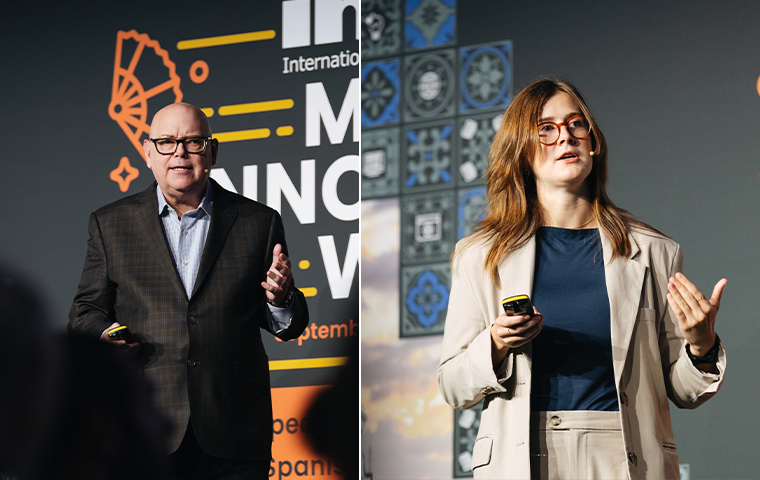
Lips puts the same face and voice in every video, but he rejects the notion that the face must be young. He coaches veteran colleagues, including HLN’s war correspondent, to answer audience questions in short selfie videos. “If that is a person above 40 years old, that is OK,” he said.
The study tour stops backed him up: AS showed a streaming star in his 50s with a large young following, and at the day-one debrief, a tour leader noted that some of the creators they had seen were around 60.
Lena Leibetseder, head of digital publishing at Russmedia in Austria, saw it differently. “A younger audience doesn’t bond with a logo or a brand anymore,” she said. “They need a person that’s their age, that looks like them, that talks like them.”
De Telegraaf is betting on its journalists. “Faces matter more than logos,” said Editor-in-Chief Kamran Ullah. Younger generations don’t want to become subscribers, he said; they “just want to follow … the journalists they like.”
The Dutch publisher now sends newsletters under individual journalists’ names. Against an industry benchmark of about 40%, its best-known crime reporter’s newsletter opens at 70%, and a 26-year-old tech and AI journalist still building her profile reaches 85%.
Bring creators — and young people — inside
When Hasse asked who in the room was afraid of bringing creators into the newsroom, hands went up. “Will creators take over journalism? Probably yes, but it doesn’t mean that you cannot be a part of it,” she said.
Her example was Mediahuis, which built a Gen Z-focused newsroom next to its legacy titles because the new unit “had to be breakable” — free to pivot, learn, and unlearn. The model rests on Mediahuis research showing 71% of Dutch young people don’t want to pay for news, but 90% of its followers are open to branded content.
“To reach these young audiences, we need to be young,” said Ana Ormaechea Hernández, chief product officer at Prisa Media. “We need to bring them inside the newsroom.”

Pilar Gil, CEO of Prisa Media, said the group acquired Post United, which she called the largest social sports platform for young people; its young team is now reshaping social practice across Prisa’s sports brands, including AS.
At Unidad Editorial, a Marca executive told study tour participants the sports brand staffs its social and YouTube team with 20- to 22-year-olds, to change how the newsroom thinks about social. Marca also hired three reporters that age to cover music festivals; three months in, the project draws 5 million video views a month.
A colleague called it a prototype for the group: “What is the youth brand for El Mundo? What is the youth brand for Expansión?” At the debrief, one participant noted that several Spanish newsrooms named social platforms as their main focus for next year.
Asked what she would change as a newly appointed editor-in-chief, Hasse was specific: Move budget to video and social, give those teams real space in the newsroom, survey what people actually want, and make management “younger and more female.”
Relevance without dumbing it down
The last ghost Hasse tackled was the fear that young people will stop reading. Her answer: Many already have.
“Text is not king anymore,” she said, citing the Reuters Institute’s Digital News Report finding that 54% of Americans now get news via social media and video networks.
That is no excuse to go shallow. When The Economist brought vertical video into its app, it made the videos richer, and they performed better on social, too.
“You cannot underestimate young people,” Hasse said. “Make it rich. Make it count.”
Lips’ formula echoes that: a clear “what’s in it for me” in the first three seconds, “clear, simple language without dumbing it down,” and topics from young people’s own lives, including money, housing, relationships, climate, and politics.
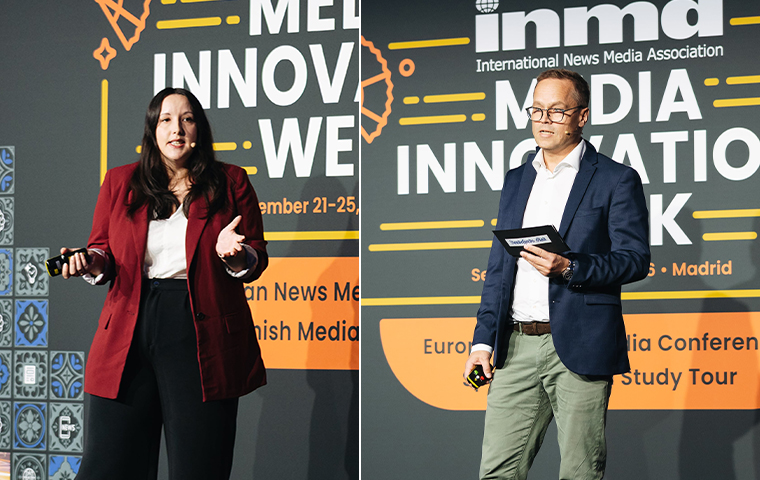
The case study session on attracting younger audiences showed how:
-
elDiario.es responded to a report that almost two in five people under 24 would not mind living in a somewhat undemocratic regime for a better quality of life. Izaskun Pérez, audiovisual director, said the newsroom partnered with a production company and two influencers to produce ten vertical videos debunking myths about the Franco dictatorship in two weeks. Factos Franquistas drew hundreds of thousands of views, more than half from people aged 18 to 34.
-
Beobachter, a Swiss brand nearing its 100th anniversary, found personal finance resonated most with younger readers. Laura Crimmons, head of growth management and audience development at Ringier (which owns Beobachter), described a street-interview video series hosted by a lawyer-journalist that led viewers into a one-season newsletter promising they would save at least 100 francs. It achieved a 67% unique open rate, and 85% of sign-ups stayed to the end. “A season beats an endless newsletter,” Crimmons said.
-
Sandefjords Blad, a local Amedia title in Norway, focused on speed. “Young readers do care about news, but they don’t wait for it,” said Editor-in-Chief Steinar Ulrichsen. “If we aren’t first, we are not credible.” Its desk now cuts breaking news clips for TikTok while stories develop; one drew more than 90,000 views.
Niche can work, too. Marc Isler, member of the executive board at Tamedia, said a Swiss politics podcast fills rooms at live recordings with listeners around 30. “They don’t want all our package,” he said. “They just want Swiss politics.”
Play the long game on revenue
One revenue idea from Sweden came up in three separate sessions. Two years ago, NTM made its digital product free for everyone under 25, with no trial period and no time limit. Wilkinson called it “the idea of the year.”
Henrik Ekwall-Larson, subscription sales manager at NTM, said the company had been “way too geared towards sales and conversion” with its youngest readers. The offer has guardrails: one session per user, age verification and payment details at sign-up, and automatic renewal at 50% off at 25 and full price at 30.
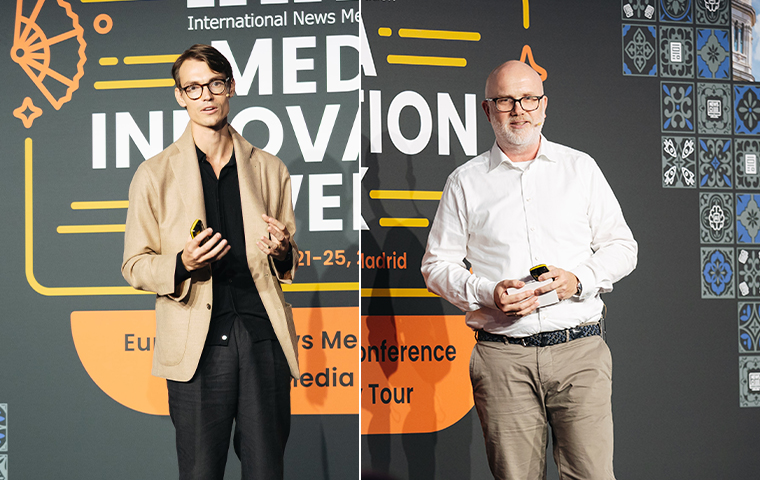
A year and a half after rolling out across all NTM titles, subscribers under 25 are up 400%, only 2.5% of the new free subscribers had a previous paid relationship with NTM, 90% are entirely new relationships, and 35% of those who have aged out still pay.
DPG Media ran a similar campaign in Belgium, offering free HLN subscriptions to students under 26 with Lips as its face. Lips said it drew 50,000 sign-ups on the first day. “Today’s young viewers can become tomorrow’s subscribers,” he said, though he added it is too early to measure revenue.
The study tour showed why patience matters. At elDiario.es, an executive said readers skew younger than at many Spanish brands, but paying members skew older because, in Spain, “it is the older generation who have the money.” Many even pay for their children’s subscriptions. Its daily podcast, with 1.5 million listeners, is where it reaches younger people.
Hasse pointed to another path: The Economist’s new Economist Plus tier, which bundles video, email briefings, and podcasts. “If we fly, we choose if we want to fly economy or business,” she said. “So why don’t we offer something similar in media?”
Tord Selmer-Nedrelid, head of audio and video at Amedia, shared a line from one of the company’s editors-in-chief: “Not all young people will become subscribers, but all young subscribers will expect video.”
Related Articles
-

WSJ executive councils show how publishers build communities th...
19 October 2026 -

AI’s effect on super user math
15 September 2026 -

At Mediacorp’s CNA, loyalty means giving audiences a reason to ...
20 August 2026 -

Indian Express builds a video-first future around trusted journ...
20 July 2026 -

Economist launches subscription tier targeting younger audience...
20 July 2026 -

Grupo RBS builds social-first video operation to expand audienc...
20 July 2026 -

10 years later, user needs must be twinned with content formats...
1 July 2026 -

Why are audiences going to AI answer engines for news?
30 June 2026
Upcoming Events
-

Subscriber Acquisition Master Class
10-17 November 2026
-

Media Advertising Summit
New York, United States
07-10 December 2026
-

AI-Native News Product Master Class
18-25 February 2027
-

Media Subscriptions Summit
Oslo, Norway
08-12 March 2027
-

World Congress of News Media
New York, United States
25-30 April 2027
-

Branded Content & Partnerships Master Class
20-27 May 2027
-

Subscriber Retention Master Class
17-24 June 2027
-

Conferencia Latinoamericana
15-16 July 2027
-

South Asia News Media Festival
New Delhi, India
19-22 July 2027
-

Asia/Pacific News Media Summit
19-20 August 2027
-

CEO Roundtable at Kilkenny
Kilkenny, Ireland
24-26 August 2027
-

Media Innovation Week
Amsterdam, The Netherlands
27 September - 01 October 2027








