

Why European news media leaders are betting on brand again
Conference Blog | 29 September 2026

Near the end of the first conference day at INMA’s Media Innovation Week in Madrid, the European Board asked the room where it would put its entire budget in 2027. Brand came out on top, chosen by 39% of respondents.
Then Eimear Moran, group marketing director at The Irish Times Group, asked for a show of hands from those who actually plan to invest in brand next year. One hand went up.
That gap between belief and budget ran through the whole week. Across two study tour days and three conference days, publishers kept arriving at the same conclusion from different directions: When content is abundant and traffic can’t be trusted, the brand is what’s left.
Brand is the moat when traffic can’t be trusted
INMA CEO Earl Wilkinson set the frame in his opening keynote. The things publishers built their businesses around (reach, speed, the article itself) have become abundant in the AI era. What remains scarce, he said, is trust, judgment, and human relationships.
The data backs him up.
Clara Soteras, a Spanish media SEO consultant, shared new research showing Google’s AI Overviews now appear in roughly half of searches in Spain. Her biggest surprise was the rise of AI answers on searches that name a news brand. Brand, she said, is something publishers can use to build products around their authority.
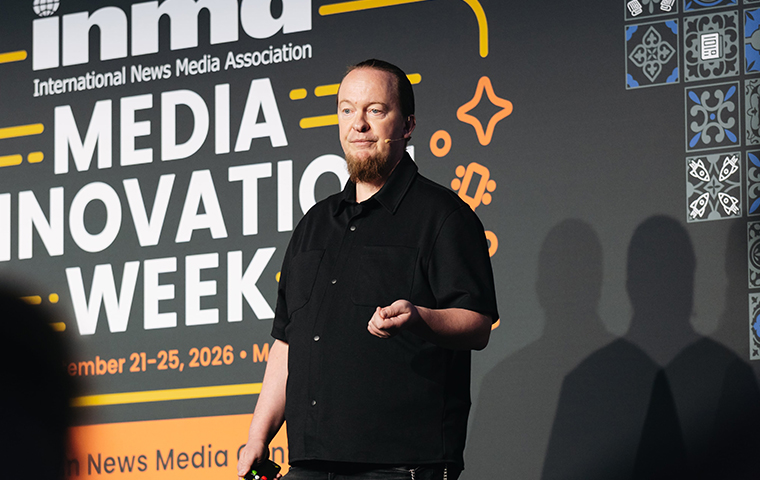
Olaf Seydel, head of engagement and growth at Die Zeit, made a related point. When readers search for a publisher’s product by name, such as Die Zeit’s energy monitor, that navigational demand is hard for search and answer engines to turn into a zero-click result. Even in rented distribution, he said, brand demand is an asset you can own.
Distinctiveness beats optimisation
Anders Braso, chief marketing officer at Monocle, argued that for 20 years the industry has borrowed its language from tech: scale, frequency, speed, and optimisation. He suggested learning from luxury instead.
“Nobody needs Chanel,” Braso said. People still desire it.
Monocle has built that kind of desire partly by going against the grain. It opened more foreign bureaus while other newsrooms centralised, opened its own shops as retail moved online, and stays off TikTok and Instagram by choice. It also defines its audience less by demographics than by shared taste, outlook, and values.
Distinctiveness, Braso said, is when people recognise you before they see your logo. The best brands have codes: the illustration, typography, photography, stories, and tone they choose. Eventually the brand becomes an adjective, and something can feel very Monocle.
The most important code isn’t visual, he said. All good brands are well-edited brands, and marketers should befriend the editors and journalists who are good at saying no or asking whether something is good enough. When everyone optimises against the same data, brands start to look and sound the same.
“Data will never tell us what we should be doing next.” It certainly wouldn’t have told Monocle to launch premium seasonal newspapers, which advertisers now love.
Print plays a particular role. Braso described it as Monocle’s haute couture, the place that sets the standard for the rest of the brand. Nobody tells Chanel to stop making couture because everyone is buying fragrance, he said, though that doesn’t make digital fast fashion.
Distinctiveness can also mean defying your own reputation. Vocento’s ABC, one of Spain’s most conservative dailies, runs a narratives unit producing some of the most experimental visual storytelling in the country. Fernando Belzunce, Vocento’s editorial managing director, said it gives the classic brand a modern accent, and such pieces draw four times the views of standard articles.
elDiario.es went the other way. Executives said the digital native’s name and design were deliberately understated to keep attention on its journalism.
And sometimes distinctiveness means admitting the name no longer fits. After three years of rebuilding under Mediahuis, Euractiv concluded its brand didn’t reflect who it had become, said Emmanuel Naert, head of product. The company revealed a new name the week after the conference.
Earn awareness by standing for something
Several of the week’s strongest awareness campaigns started with a cause or an insight rather than a slogan.
Nieuwsblad wanted to become more top of mind with readers aged 30 to 50 (its average reader is 51). The Belgian daily ran an editorial series on greening school playgrounds, then invited schools to compete for a free makeover, with voting only available in its app.
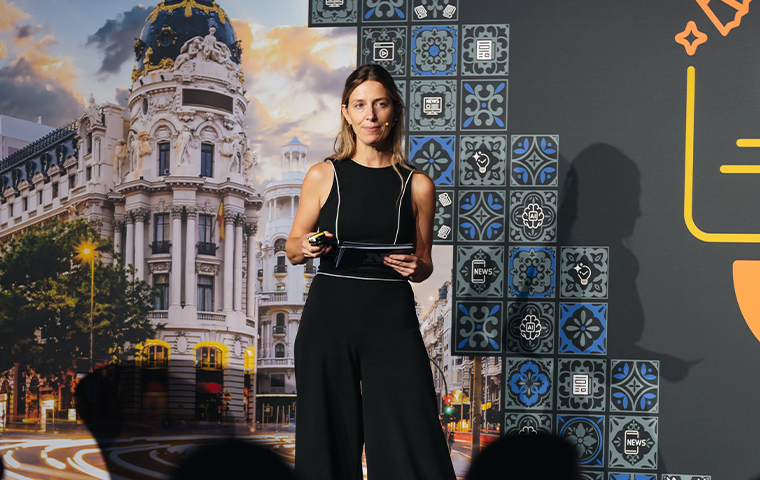
Liesbet Brigou, head of brand, said 663 schools entered, about 10% of all schools in Flanders and Brussels. The campaign drew 160,000 votes, 45,000 new app downloads, and 11,000 newsletter sign-ups. A retail partner invested nearly €200,000, and the regional environment minister approved €3 million for green playgrounds shortly afterwards.
Aller Media’s goal after consolidating into one Nordic company was not just to know women better, but “to be known for knowing them,” said Regine Sandberg, senior commercial analyst. The resulting Nordic Women Report surveyed more than 4,000 women and fed a cross-Nordic campaign on harmful social media content that drew responses from government ministers.
Nordwest-Medien’s agency took a similar approach to sponsorship, offering a start-up competition winner a multi-day strategy workshop instead of free ad space. Nicola Albrecht, head of InnovateMedia, said it produced a lasting client relationship and credibility a logo placement couldn’t buy.
Blick used its own editorial promise to shift a stubborn image. Switzerland’s leading tabloid still carries the legacy of readers who once hid it inside a more serious paper. Maximilian Börke, head of marketing at Ringier, said trust is a hygiene factor for Blick, not the reason people come.
Its “What moves you, moves us” campaign dramatised how one story lands differently on different people, and it lifted both trust and brand metrics.
His advice: Aim high, be authentic, and let them smile.
Take the brand off the screen
Some of the most powerful brand moments happened in person.
El País celebrated its 50th anniversary with a free three-day festival that drew more than 40,000 people. Pilar Gil, CEO of Prisa Media, said one couple travelled from California to attend. Moran called it the ultimate emotional connection: People cried watching the journalists they read.
Monocle extends its brand into cafés, shops, and seasonal pop-ups, and Braso borrowed a second lesson from hospitality. A good host chooses the room, the guests, and who should meet whom, and knows when to step back, which he said is a pretty good description of a media company. Every extension is a front door that should make visitors curious about the other rooms.
Tech companies would rather publishers build on their platforms, he said, but a house is more interesting: different rooms, same standards.
Even print is being reframed as a brand asset. Tomás de Cos, editor-in-chief and digital strategy officer at AS, said the sports daily’s print edition no longer makes money but remains important for awareness and marketing, which makes it hard to close.
Put faces in front of the logo
Speakers repeatedly argued that the brand now travels through people.
Kamran Ullah, editor-in-chief of De Telegraaf, said faces now matter more than logos. The Dutch daily relaunched newsletters under individual journalists’ names rather than section titles. Open rates reached 70% for its crime reporter and 85% for a 26-year-old tech journalist, against an industry benchmark around 40%. The logo still matters, Ullah said, as the stamp of trust.
At the Kyiv Independent, a fundraising email built around a journalist’s own story drove three times more conversions than polished marketing imagery, said Owain Jones, head of marketing.
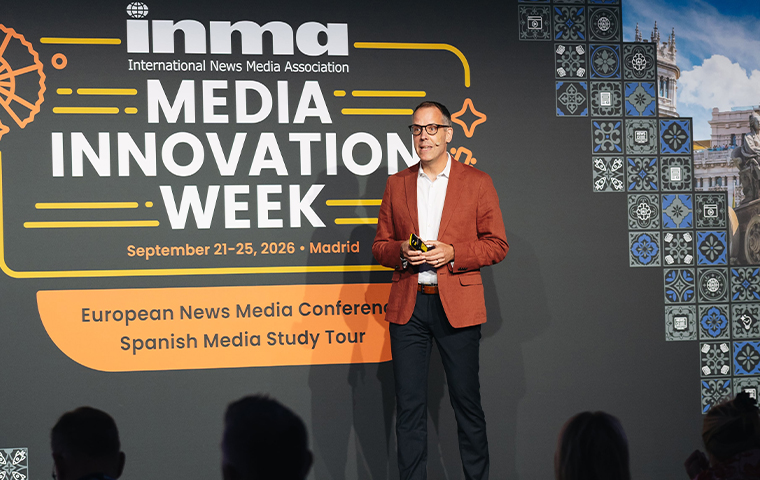
Marc Isler, member of the executive board at Tamedia, chose brand as his single 2027 bet. He said publishers should put journalists at the front of their campaigns and show how they work, because younger audiences often have no idea what a news brand actually does.
Stop cutting it first
Moran’s closing plea from the board panel was aimed at CFOs and CEOs. Brand, she said, is the first thing that often gets cut in budget conversations, and it has to be back on the table.
Isabel Russ of Russmedia summed up day one the same way: Talent follows a strong brand, and so do future audiences. So brand should not be the first thing to go in the next budget meeting.
Related Articles
-

How DMG Media built creator journalism inside its legacy brand
1 October 2026 -

7 themes from Madrid show publishers trading traffic for relati...
28 September 2026 -

Why Euractiv is giving up a 25-year-old name
23 September 2026 -

Good Food turns cultural love of food into brand value
16 September 2026 -

Newsday’s Together Long Island initiative unites companies and ...
13 August 2026 -

South Asia publishers are growing, transforming, and leading in...
3 August 2026 -

In Latin America, the diversified ad business has already arriv...
2 August 2026 -

Editora Globo shifts from selling ads to selling media solution...
21 July 2026
Upcoming Events
-

Subscriber Acquisition Master Class
10-17 November 2026
-

Media Advertising Summit
New York, United States
07-10 December 2026
-

AI-Native News Product Master Class
18-25 February 2027
-

Media Subscriptions Summit
Oslo, Norway
08-12 March 2027
-

World Congress of News Media
New York, United States
25-30 April 2027
-

Branded Content & Partnerships Master Class
20-27 May 2027
-

Subscriber Retention Master Class
17-24 June 2027
-

Conferencia Latinoamericana
15-16 July 2027
-

South Asia News Media Festival
New Delhi, India
19-22 July 2027
-

Asia/Pacific News Media Summit
19-20 August 2027
-

CEO Roundtable at Kilkenny
Kilkenny, Ireland
24-26 August 2027
-

Media Innovation Week
Amsterdam, The Netherlands
27 September - 01 October 2027








