

7 themes from Madrid show publishers trading traffic for relationships
Conference Blog | 28 September 2026

When INMA CEO Earl Wilkinson opened the conference portion of Media Innovation Week in Madrid, he promised 37 case studies from 37 companies in three days, with practicality over theory.
The sessions delivered. Speakers from across Europe and beyond described the same pressures (collapsing search traffic, AI answer engines, and platforms that keep audiences inside their walls) and a remarkably consistent set of responses.
Seven themes ran through the three days of the European News Media Conference.
1. The visit is no longer the unit of the business
Wilkinson framed the problem in his opening keynote: “The visit is no longer the unit of the news business.” Google organic traffic to publishers fell 33% in the past year, he said, 68% of searches now end without a click, and referrals from AI chatbots remain below 1%.
Clara Soteras, a media SEO and audience growth consultant, brought fresh Spanish data. AI Overviews now appear on roughly half of Spanish searches, up from about 30% last November, and on 85% of question-style queries. Breaking news is still largely protected by Top Stories, but that window is narrowing.

Greg Piechota, INMA’s Readers First Initiative lead, said the industry isn’t hitting a subscription ceiling but a Web site ceiling. About 80% of subscriptions are still sold through Web site checkouts, the very channel in decline.
His prescription: Protect the core, then open side doors, starting with e-mail, which he said the industry badly underestimates.
Die Zeit and Seznam.cz showed what building your own destination looks like.
Olaf Seydel, Die Zeit’s head of engagement and growth, said owned traffic “is not Plan B.” He walked through gifted articles, a follow feature for authors and podcasts, and products like the paper’s energy monitor that people now search for by name. Pavel Bouska of Seznam.cz described a publisher-owned social platform, built with 70 Czech publishers, that now has nearly 3 million monthly active users.
As Wilkinson put it: “Audiences are not leaving the field. They’re not leaving the stadium. They’re just leaving you.”
2. Faces matter more than logos
Trust, Wilkinson said, has moved from the masthead to the person. His advice: Name three people in your company that audiences should know by name, and fund them.
De Telegraaf is doing exactly that.
Editor-in-chief Kamran Ullah said “faces matter more than logos” and described relaunching topic newsletters under individual journalists’ names. One, from the newspaper’s veteran crime reporter, still sees 70% open rates a year in. Another, from a 26-year-old tech and AI reporter who is not yet a household name, reaches 85%. The Dutch industry benchmark is around 40%.
The Kyiv Independent found the same thing in its marketing. Head of Marketing Owain Jones said membership e-mails written by a journalist on the front line drove three times more conversions than polished campaign creative. The organisation grew membership 78% in 2025, with average churn of 1.67%.
The risk, Ullah said, is that star journalists may one day decide they don’t need the brand. His answer: Invest in them anyway and earn their loyalty.
3. Distinctiveness is the strategy
If one talk was quoted in the hallways all week, it was Monocle’s.
Chief Marketing Officer Anders Braso said the news industry spent 20 years behaving like tech (scale, speed, and optimisation) and should learn from luxury instead.
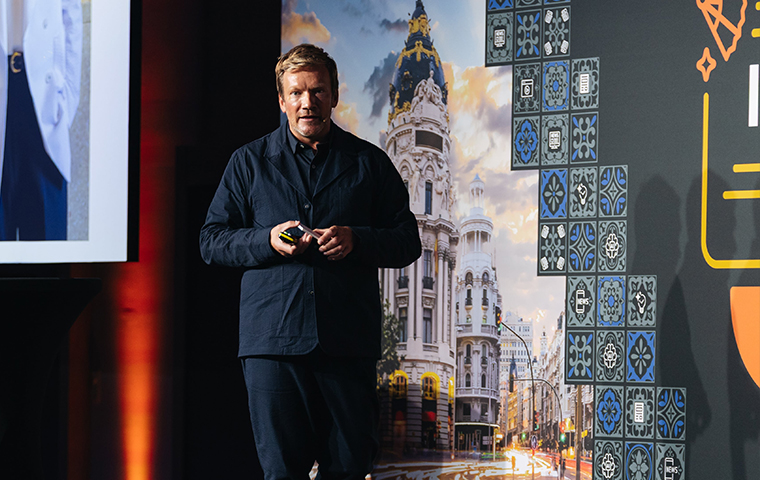
“Nobody needs Chanel,” he said, but people still desire it. Data can confirm what worked in the past, he said, but “data will never tell us what we should be doing next.”
Other brand cases showed distinctiveness built through relevance.
Blick, Switzerland’s leading tabloid, lifted both trust and brand scores with a humorous campaign showing that the same story moves different people in different ways.
Nieuwsblad in Belgium invited schools to compete for a green playground: 663 schools entered, 160,000 people voted in the app, the brand gained 45,000 app downloads, and the Flemish environment minister committed €3 million to greener playgrounds.
Aller Media surveyed more than 4,000 Nordic women and turned the findings into a report that fuelled editorial campaigns, commercial partnerships, and more than 50 articles by other outlets.
When INMA’s European board polled the room on where members would put their entire 2027 budget, brand came out on top with 39% of the vote.
4. Video is no longer optional
INMA Young Audiences Initiative Lead Kerstin Hasse put it bluntly: “Text is not king anymore.” The second conference day showed how publishers are responding.
Jonas Lips, the DPG Media online host who built HLN’s TikTok following past 569,000, said his team is two people and a short news video takes about 20 minutes to make.
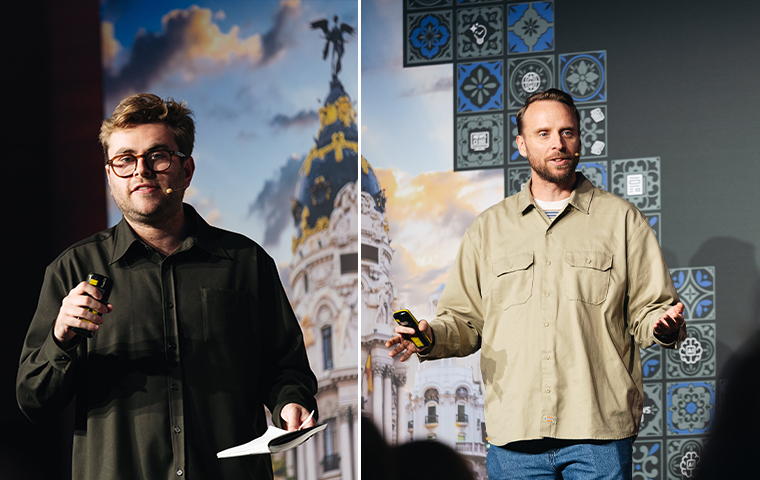
Amedia made 2025 its “year of video” across 129 local newsrooms, working from a line its editors use: Not all young people will become subscribers, but all young subscribers will expect video.
The lesson, said Head of Audio and Video Tord Selmer-Nedrelid, is that the editor-in-chief has to own the change: “The boss must lead. You can’t delegate it.”
Video is also becoming a discovery route into paid content. VG’s AI tool turns premium articles into short videos, and the best of them reach click-through rates above 25% back to the article.
But Øystein Reistadbakk, VG’s editorial lead for subscriptions, said reporter adoption is declining because the task still takes 10 to 15 minutes. Even efficient workflows need champions.
At the top of the market, The New York Times doubled video production in Q2 2026 and launched a vertical Watch tab, said Tom Armstrong, vice president of global advertising.
5. Advertising bets on premium over reach
INMA Advertising Initiative Lead Gabriel Dorosz said commoditised reach and display is a dying business, and that as inventory shrinks, publishers should position deliberately for the premium end of the market.
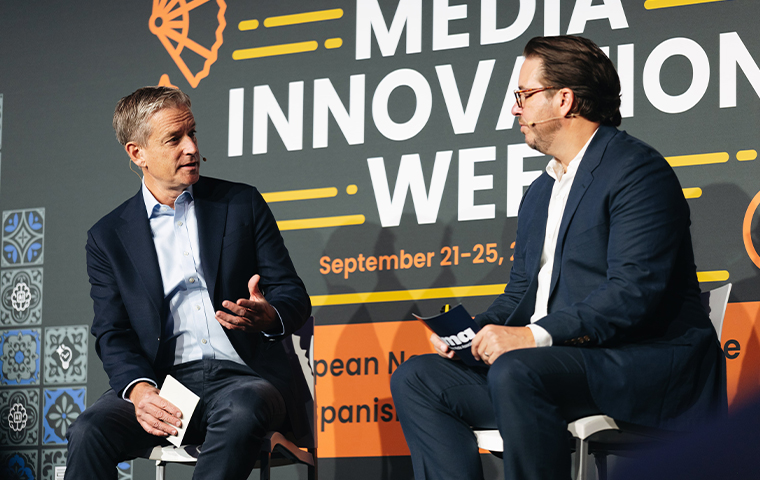
The New York Times shows what that looks like. Armstrong said the Times removed ad slots, allows no pop-ups, and treats the reader experience as non-negotiable, a choice that was controversial internally at the time.
The result: Digital advertising grew 21% in Q2, the 6th straight double-digit quarter & 10th straight overall for digital advertising growth.
Other publishers are finding their own routes.
Mediahuis Ireland’s In-Market product asks readers to declare purchase intent (are you shopping for a car? a mortgage?) and builds audiences from the answers. Its campaigns delivered click-through rates four times higher than before, said Hughie Devine, head of sponsorship and programmatic partnerships.
Ozone’s Premium World gave international buyers one point of contact for premium publishers across markets, generating £2.6 million in incremental publisher revenue in its first year.
And DPG Media built its own self-service ad platform as an alternative to Big Tech, which takes more than 80% of Dutch digital ad spend.
6. Reader revenue grows up
Several sessions focused less on acquiring subscribers than on pricing, packaging, and keeping them.
Boston Globe Media used dynamic renewal pricing to move subscribers from US$7 a week to US$9, US$10, and US$11. The average rate rose 19% while volume still grew 1%, said Tom Brown, senior vice president of consumer revenue.
His mantra: “Price the journalism and not the media itself.”
NTM in Sweden went the other direction for its youngest readers, offering free subscriptions to everyone under 25. Its under-25 base grew 400%, 90% of those readers were entirely new relationships, and 35% of those who have aged out are now paying, said Henrik Ekwall-Larson, subscription sales manager. Only 2.5% came from existing paid subscribers.
Habit products are carrying weight, too.
Tamedia’s standalone games app sees nearly nine in 10 players return, and daily players spend an average of 12 minutes, said Marc Isler, managing director of premium digital. El País’ course-style evergreen newsletters, on topics such as sleep, reach open rates of 60% to 65%, said Newsletter Editor Bernardo Marín García.
7. AI adoption is a people project
The AI conversation shifted from which tools to use to how to get people using them well.
Sanoma Media Finland gave each journalist three hours of one-on-one coaching with a trusted newsroom colleague, logging nearly 1,400 coaching hours. “We started by scaling AI tools. We ended up scaling the support,” said Heidi Iivonen, development manager.
Christophe Israël, founder of OKLab, said governance is a leadership function, not a document gathering dust. “If everyone is responsible, no one is,” he said, pointing to Prisa Media, which paused for three months to set up oversight committees before scaling.
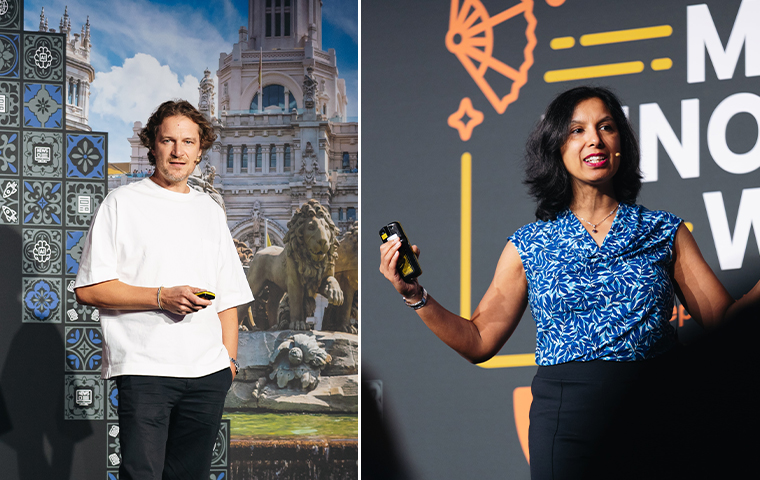
INMA Newsroom Innovation Initiative Lead Sonali Verma shared cases where AI builds capacity rather than replacing people, including MediaCorp’s bot that coaches reporters on their video pitches. Politiken used AI coding to build interactive election tools in days.
Prisa Media CEO Pilar Gil added a defensive note: Publishers must refuse to let platforms extract their content with impunity, and stand together when they do.
The common thread
Across three days, the pattern was clear. The things publishers built their businesses on (reach, speed, and the article itself) are becoming abundant. What remains scarce is trust, judgment, and human relationships.
The publishers doing best in Madrid weren’t waiting for traffic to return. They were putting journalists in front, building products people seek out by name, and pricing for the value of the relationship rather than the size of the audience.
Related Articles
-

WSJ executive councils show how publishers build communities th...
19 October 2026 -

Bundling is a pricing decision, rebundling is an organisational...
18 October 2026 -

5 lessons from the INMA Young Audiences Summit
28 September 2026 -

The 3 editorial pillars of Chile’s first streaming news channel
23 September 2026 -

AI’s effect on super user math
15 September 2026 -

What I told 40 CEOs (and won’t gatekeep from you)
30 August 2026 -

At Mediacorp’s CNA, loyalty means giving audiences a reason to ...
20 August 2026 -

Indian Express builds a video-first future around trusted journ...
20 July 2026
Upcoming Events
-

Subscriber Acquisition Master Class
10-17 November 2026
-

Media Advertising Summit
New York, United States
07-10 December 2026
-

AI-Native News Product Master Class
18-25 February 2027
-

Media Subscriptions Summit
Oslo, Norway
08-12 March 2027
-

World Congress of News Media
New York, United States
25-30 April 2027
-

Branded Content & Partnerships Master Class
20-27 May 2027
-

Subscriber Retention Master Class
17-24 June 2027
-

Conferencia Latinoamericana
15-16 July 2027
-

South Asia News Media Festival
New Delhi, India
19-22 July 2027
-

Asia/Pacific News Media Summit
19-20 August 2027
-

CEO Roundtable at Kilkenny
Kilkenny, Ireland
24-26 August 2027
-

Media Innovation Week
Amsterdam, The Netherlands
27 September - 01 October 2027








