
New INMA report: What news publishers need to know about AI and advertising
INMA News Blog | 12 November 2026

INMA today released “AI and Advertising: What You Need to Know,” a report from its Advertising Initiative examining how artificial intelligence is changing the economics, workflows, and power structures of advertising — and how news media companies can respond.
Written by INMA Advertising Initiative Lead Gabriel Dorosz, the report draws on hundreds of research reports, articles, and analyses published primarily during 2026; discussions from INMA’s CEO Roundtable in Vail and the wider work of the initiative; and interviews conducted in September 2026 with 28 advertising and revenue leaders from news publishers, sales houses, agencies, ad-tech companies, and research organisations.
In 2026, AI became standard practice across much of advertising, with targeting, bidding, creative optimisation, and reporting increasingly automated. Yet the industry is still grappling with AI’s true costs, its return on investment, consumer acceptance, the rise of autonomous buying agents, and who will ultimately capture the value these systems create.
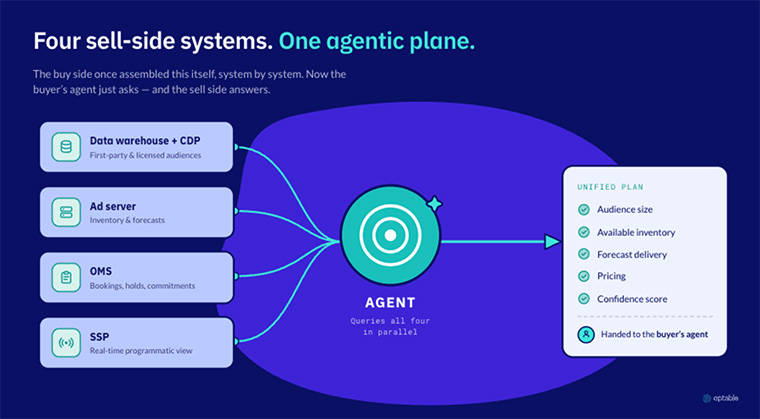
So far, the report finds, the greatest benefits have gone to large technology platforms. Google, Meta, and Amazon dominate AI-enabled advertising because they let advertisers buy inventory directly, automate decision-making, and measure outcomes within their own environments — and OpenAI’s emerging advertising business appears to be following a similar model.
News publishers cannot compete on those terms. Their opportunity lies in what platforms cannot easily replicate: trusted environments, proprietary advertising products, high-quality audiences, and evidence of real business outcomes.
“Whether the buyer is a human media planner today or an autonomous agent tomorrow, proof of value will increasingly determine where advertising dollars flow,” the report states.
The report identifies six key lessons for media companies:
Sell more of what platforms cannot self-serve.
Price impressions based on proven quality.
Protect the human product.
Make data and inventory machine-readable.
Own the seller agent and define the rules.
Remove organisational barriers.
The report is organised into three parts.
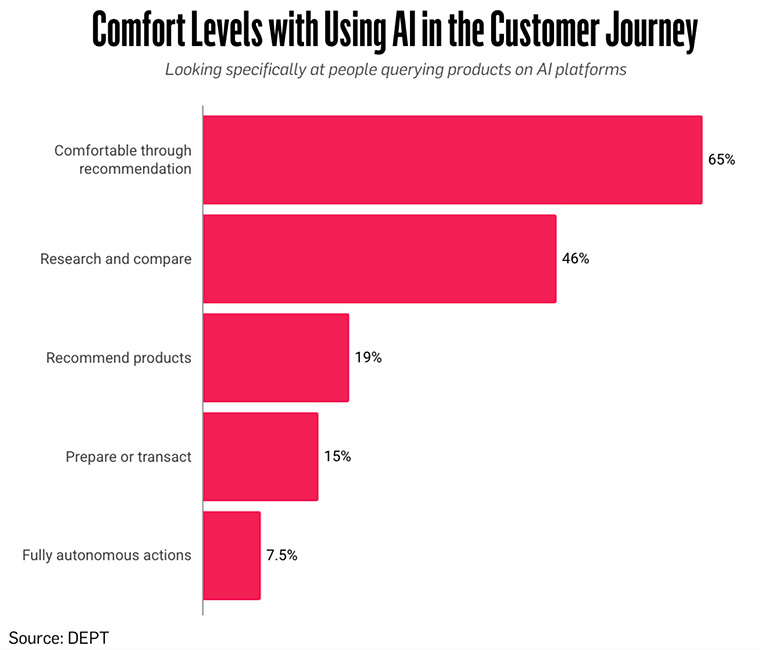
- “The State of Play” examines AI-related advertising spending, questions surrounding ROI, and consumer attitudes towards AI.
- “The New Machinery” explores agentic trading, competing industry standards, AI-driven commerce, bots, and AI-generated answers.
- “What It Means for News Media” makes the case that publishers’ most defensible asset is trust — converted into attention, influence, and purchase intent and supported by data.
The report also stresses that the opportunity to act is immediate: The next 12 to 18 months represent a critical period, while industry standards, commercial relationships, and agent-driven marketplaces are still taking shape.
“Ultimately, the winners in AI-era advertising will not be the companies with the most technology. They will be those that can most clearly demonstrate value,” the report concludes.
“AI and Advertising: What You Need to Know” is available for free to INMA members and for purchase by non-members here.
Related Articles
-

AI is now media’s operating environment
28 September 2026 -

5 lessons from the INMA Young Audiences Summit
28 September 2026 -

In moving from an attention to an intention economy, who gets p...
16 September 2026 -

Agents, liquid content, vibe coding raise questions for news me...
9 September 2026 -

What’s really defensible in the age of AI?
30 August 2026 -

What I told 40 CEOs (and won’t gatekeep from you)
30 August 2026 -

Latin American publishers must rewrite ad strategies around out...
20 July 2026 -

Dow Jones turns complex B2B data into “prosumer” content with c...
13 July 2026
Upcoming Events
-

Media Advertising Summit
New York, United States
07-10 December 2026
-

AI-Native News Product Master Class
02-09 February 2027
-

Media Subscriptions Summit
Oslo, Norway
08-12 March 2027
-

Africa Media Revenue Summit
18 March 2027
-

World Congress of News Media
New York, United States
25-30 April 2027
-

Branded Content & Partnerships Master Class
20-27 May 2027
-

Subscriber Retention Master Class
17-24 June 2027
-

Africa Audience & Technology Summit
15 July 2027
-

Conferencia Latinoamericana
15-16 July 2027
-

South Asia News Media Festival
New Delhi, India
19-22 July 2027
-

Asia/Pacific News Media Summit
19-20 August 2027
-

CEO Roundtable at Kilkenny
Kilkenny, Ireland
24-26 August 2027