

Tamedia’s recipe for adoption success includes AI Academy
Newsroom Innovation Initiative Blog | 03 June 2026

How do you get hundreds of journalists so comfortable with AI that they are proactively asking to use AI tools? Nadia Kohler, Tamedia’s director of AI and data, outlined the Swiss publisher’s remarkably successful training programme at our Berlin seminar.
Here are some of her insights:
• Implement a mandatory, step-by-step training programme. The company launched a compulsory AI onboarding programme for every employee, regardless of role, to ensure they know the rules, tools, and where to ask questions.
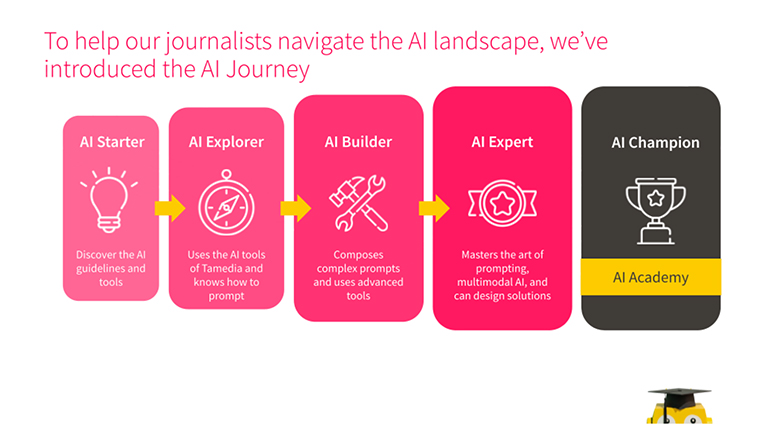
• Provide dedicated time and space for development. Tamedia set up an AI Academy, a one-year programme, to ensure participants could “really dedicate time and they are not kind of struggling with, ‘Oh, I need to run to this press conference or someone is calling me,’” Kohler said.
Participants needed to apply to attend the academy. They must commit to at least two hours a week to do either testing or some training for their teammates, serving as de facto ambassadors for the AI training programme.
When the programme launched last fall, Kohler had expected the first cohort to be about 15 people. But when more than 100 employees applied to be part of it, they ended up with four cohorts of a total of 47 people.
• Talk about uncomfortable topics. Training must go beyond technical skills to address the impact on jobs and the industry, conversations that create buy-in and engagement, she said. Tamedia’s AI bootcamps cover discussions on topics such as “How is our industry changing?” and “What does it mean for our business model?”
People “have a huge need to talk about it — and they want to be a part of the solution,” she said.
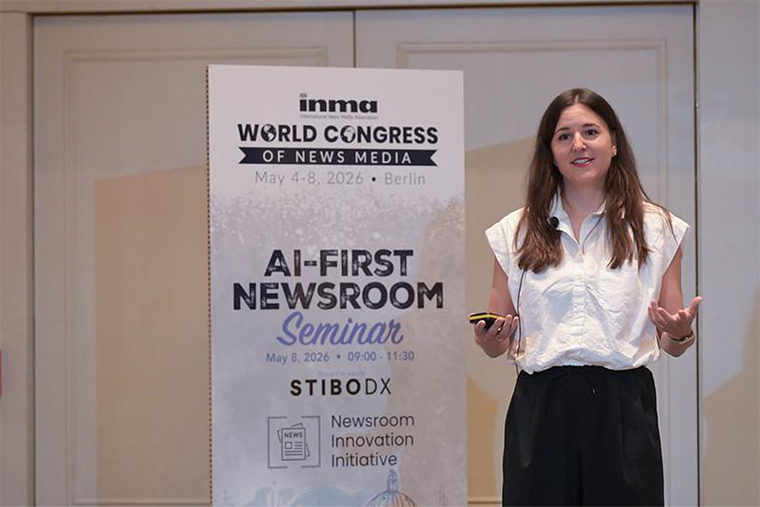
• Use external voices to accelerate conversations. Bringing in an outside expert can validate internal messaging and spur dialogue.
For example, Tamedia asked Ippen Media’s Editor-in-Chief Markus Knall to address their staff. Knall has been a strong proponent of AI use for a few years now, openly talking about his bold ambitions to reshape journalism using AI.
“I have to say, our people were a little bit shocked by the thesis and the way they are tackling it, but it really helped,” Kohler said. “Because if I am telling them all the time, ‘Hey, things are changing,’ it’s like, ‘Yeah, you need to say that.’ But if someone else is coming from a similar language area, with similar issues and challenges, it is something else.”
• Prioritise action over perfection in training. Keep training groups small and focus on application.“It’s not about being a university and having a perfect training programme. It’s about trying to figure out together how we can learn and how we can grow,” Kohler said.
• Integrate end-users early in the prototype phase. Successful adoption is driven by including the people who will ultimately use the tool from the beginning. Be prepared to listen to user feedback and remove unpopular features.
• Promote cross-functional conversation. Mixing journalists with people from other departments (like marketing and customer service) enhances product development. This mixing creates “fantastic” dynamics and helps participants understand what other departments are doing and how collaboration could work, Kohler said.
• Remember AI leadership is vital. Dedicated time for AI development requires support from leadership. “The management, the team leads are crucial for that. If you do not have the buy-in of the editors-in-chief and the team leads, it’s not going to work,” Kohler points out.
• Seek feedback from the non-adopters. It is important to understand why some people are not using the tools. Tamedia conducts an anonymous AI survey every six months, asking people who are not using the tools for reasons why. “Listening to those people is really relevant. You cannot just ignore them,” Kohler said.
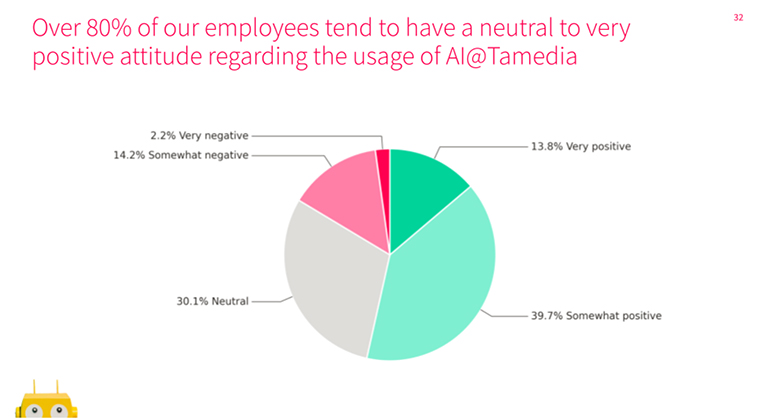
• Focus on the optimistic majority. Leverage the support of employees who are already on board.“Over 80% of our employees are at least neutral to super optimistic,” she said, so Tamedia focuses on finding the people who can help bring their colleagues from the red zone into at least the gray zone.
If you’d like to subscribe to my bi-weekly newsletter, INMA members can do so here.
Banner photo: Adobe stock image by Thapana_Studio.
Related Articles
-

INMA report: AI’s dependence on journalism gives publishers new...
30 September 2026 -

The 3 editorial pillars of Chile’s first streaming news channel
23 September 2026 -

VG turned AI video into discovery engine for premium content
14 September 2026 -

Inside MK Media Group’s AI transformation journey
25 August 2026 -

WSJ Japan finds AI translation is “not a one-and-done deal”
24 August 2026 -

Punch builds an AI-ready newsroom without sacrificing trust
6 August 2026 -

Infobae embeds AI into newsroom while keeping journalists in co...
21 July 2026 -

Why are audiences going to AI answer engines for news?
30 June 2026
Upcoming Events
-

Subscriber Acquisition Master Class
10-17 November 2026
-

Media Advertising Summit
New York, United States
07-10 December 2026
-

AI-Native News Product Master Class
18-25 February 2027
-

Media Subscriptions Summit
Oslo, Norway
08-12 March 2027
-

World Congress of News Media
New York, United States
25-30 April 2027
-

Branded Content & Partnerships Master Class
20-27 May 2027
-

Subscriber Retention Master Class
17-24 June 2027
-

Conferencia Latinoamericana
15-16 July 2027
-

South Asia News Media Festival
New Delhi, India
19-22 July 2027
-

Asia/Pacific News Media Summit
19-20 August 2027
-

CEO Roundtable at Kilkenny
Kilkenny, Ireland
24-26 August 2027
-

Media Innovation Week
Amsterdam, The Netherlands
27 September - 01 October 2027








