

INMA president says news industry faces “survive or thrive” moment
World Congress Blog | 06 May 2026

Journalism must fundamentally rethink its relationship with audiences as platforms, AI, and changing consumer habits reshape the news industry, INMA President Gert Ysebaert told delegates Wednesday at the opening of the INMA World Congress of News Media.
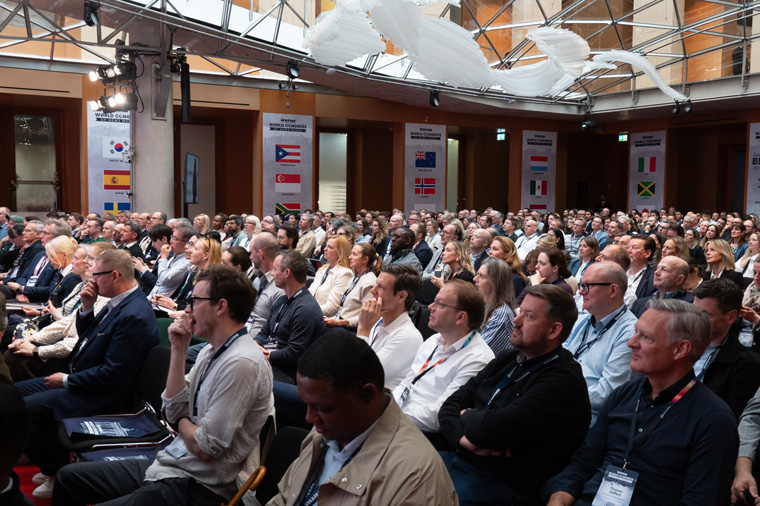
Speaking to a record 750 news executives from 38 countries gathered in Berlin, Ysebaert described the news industry as being at an inflection point — one requiring publishers move beyond traditional reach strategies and toward deeper audience relationships.
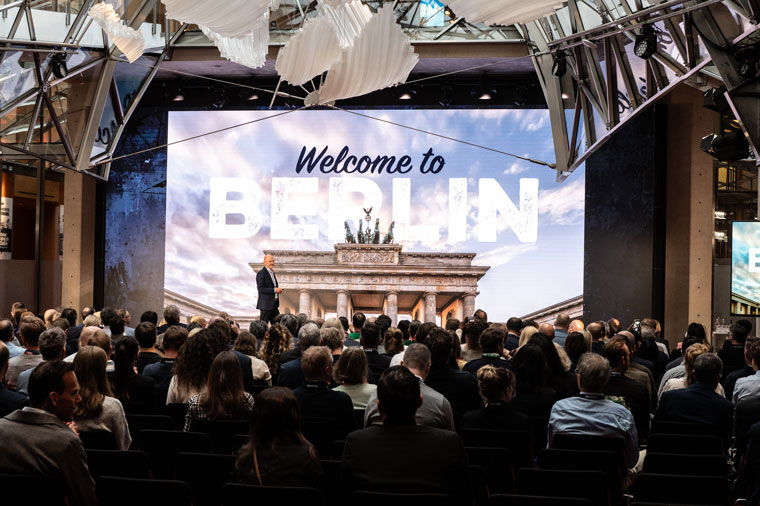
“So attention is no longer a given,” said Ysebaert, CEO of the Belgium-based Mediahuis Group. “It’s about being chosen.”
“Journalism is at risk”
Ysebaert pointed to mounting pressure from politicians, misinformation, social platforms, audience fragmentation, and AI systems that use journalism “without attribution, without permission.”
“At the same time,” he said, “people are starting to doubt what is real and what is fake. That also applies to what we are doing.”

The news industry, he argued, is increasingly squeezed between platforms and the creator economy while advertisers chase cheaper attention elsewhere.
From reach to relationships
A central theme of the presentation was the shift from a reach-driven business model to a relationship-driven one.
“Young audiences, new audiences, they don’t build their habits on destinations,” Ysebaert said. “They want journalism to show up where they live, on their platforms, in their formats.”
He also warned that AI intermediaries will further weaken direct audience connections: “AI agents, they will sit between us and our audience.”
Publishers can no longer assume attention will naturally flow to their owned platforms, he said, adding the industry is moving “from a reach business” toward “a relationship model.”
An industry at an “inflection point”
Ysebaert challenged news publishers to confront whether they are delaying transformation because legacy models still generate meaningful revenue.
“What if we prefer to optimise what is still working instead of building for the future?” he asked.
While many publishers still benefit from large traditional audiences and pricing power, he warned that approach “is not sustainable.”
The news industry now faces a strategic choice, he argued: “Survive or thrive?”
Solidarity and collaboration
Ysebaert repeatedly returned to the need for collective action across the news industry.
“It requires that we rethink our business,” he said. “It requires that we rethink our organisation, that we redesign our organisations. And probably it also requires that we redesign our industry.”
He warned isolated deals with AI companies will not solve the news industry’s broader structural challenges: “In the end, we are much, much stronger if we act together. If we act in solidarity.”
Why Germany?
Ysebaert said Germany was chosen by INMA for its 96th Annual World Congress because the country’s news industry remains heavily subscription-driven and is still closely tied to print, making it a valuable testing ground for transformation.
“Probably the change won’t come from Germany,” Ysebaert said. “But it is here that it will be tested, and it’s here that it will be executed.”
All photos by Robert Downs Photography.
Related Articles
-

What publishers learned with OpenAI about agentic AI and audien...
27 October 2026 -

WSJ executive councils show how publishers build communities th...
19 October 2026 -

New regulatory era requires readjustment of subscription growth...
13 October 2026 -

5 lessons from the INMA Young Audiences Summit
28 September 2026 -

AI’s effect on super user math
15 September 2026 -

What I told 40 CEOs (and won’t gatekeep from you)
30 August 2026 -

At Mediacorp’s CNA, loyalty means giving audiences a reason to ...
20 August 2026 -

Indian Express builds a video-first future around trusted journ...
20 July 2026
Upcoming Events
-

Subscriber Acquisition Master Class
10-17 November 2026
-

Media Advertising Summit
New York, United States
07-10 December 2026
-

AI-Native News Product Master Class
18-25 February 2027
-

Media Subscriptions Summit
Oslo, Norway
08-12 March 2027
-

World Congress of News Media
New York, United States
25-30 April 2027
-

Branded Content & Partnerships Master Class
20-27 May 2027
-

Subscriber Retention Master Class
17-24 June 2027
-

Conferencia Latinoamericana
15-16 July 2027
-

South Asia News Media Festival
New Delhi, India
19-22 July 2027
-

Asia/Pacific News Media Summit
19-20 August 2027
-

CEO Roundtable at Kilkenny
Kilkenny, Ireland
24-26 August 2027
-

Media Innovation Week
Amsterdam, The Netherlands
27 September - 01 October 2027








