

Lenfest Institute makes a big bet on publisher-creator partnerships
Young Audiences Initiative Blog | 17 May 2026

The debate about whether creators belong in journalism is over. The question now is how — and who is willing to put real money behind finding out.
This week, the Lenfest Institute for Journalism announced US$818,000 in funding for 10 news organisations joining what they call the Lenfest News Creator Collaborative. The selected organisations will develop and test strategies to partner with independent news creators — with a focus on engaging new audiences and new approaches to both revenue generation and brand marketing — over the course of one year.
The numbers behind the selection are telling: the 10 grantees were chosen from more than 120 applications.
The investment comes at a moment when the urgency around human voices in journalism has never felt greater. As AI-generated content floods the Internet, trust and recognisability are becoming competitive advantages.
I spoke with Tristan Loper, who is head of national programmes at the Lenfest Institute, and he put it plainly: “If there is more and more AI content out there with this sort of synthetic feeling, it creates a need all the more for the human face.”
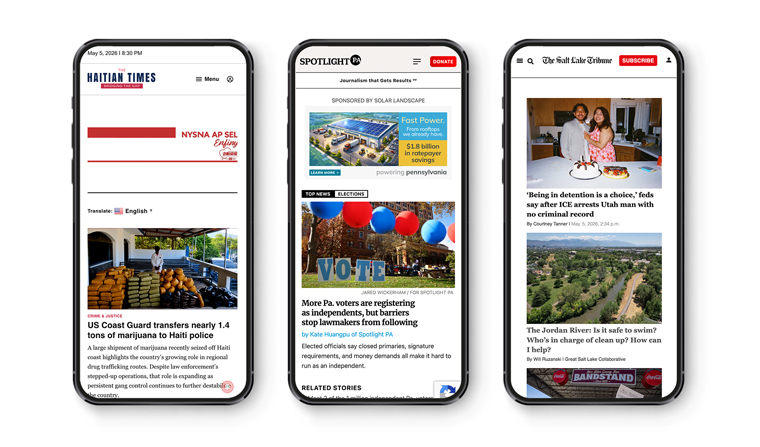
The 10 selected projects reflect very different bets on what creator collaboration can look like. For example:
The Haitian Times is co-creating content series with established Haitian influencers on YouTube and TikTok, a direct answer to the question of how journalism can serve communities.
The Salt Lake Tribune is taking a different route: hiring and developing an on-camera personality to become the face of the newsroom.
And Spotlight PA is perhaps the most ambitious: turning existing staff reporters into creators, including social-first coverage of the 2026 Pennsylvania governor’s race.
These are only three organisations of the 10 selected. But what we already see are three models with one shared question: How do you make this work economically?
Proof is needed
Loper is candid about what this first push can realistically achieve.
“I’m skeptical that this current round will fully answer how news organisations can successfully make money and capture an audience,” he told me.
The more realistic objective, as he sees it, is to establish a clear business justification for creators within journalism — proof this isn’t just a brand awareness play but something with real economic logic. Because without that, he argues, the momentum won’t hold.
The financial reality of independent creator journalism is sobering. As I mentioned here two weeks ago: a recent report by the Center for News, Technology & Innovation found that of 43 independent creator-journalists surveyed in the United States, only five said they could fully fund their lifestyle with content creation income, while just over half said they couldn’t fund their lifestyle from their content at all.

The Lenfest bet is, in part, a bet that the partnership model can change this equation — for creators and newsrooms alike.
What makes it a win-win?
But the deeper question remains: What is actually in it for creators to tie themselves to news organisations, and what is in it for news organisations to genuinely share power with creators?
Neither side has answered this well yet — not in the U.S., which is considerably ahead of Europe in this space, nor here in Europe, where many newsrooms are still debating whether they need to engage with the creator economy at all. (My answer: They do.)
The diversity of the selected projects hints at why there’s no easy answer: There is no single model. The path forward will look different for a community-focused outlet like The Haitian Times than for a legacy brand like Spotlight PA.
The creator trend is filling a gap that newsrooms could also fill if they acted a little smarter. I am looking forward to seeing whether and how these 10 newsrooms will succeed and what lessons the rest of us can take from it.
If you’d like to subscribe to my bi-weekly newsletter, INMA members can do so here.
Related Articles
-

AI’s effect on super user math
15 September 2026 -

At Mediacorp’s CNA, loyalty means giving audiences a reason to ...
20 August 2026 -

Tribun Network turns print “dots” into AI-powered insight
20 August 2026 -

Nation Media Group focuses editorial strategy on stories that m...
4 August 2026 -

Economist launches subscription tier targeting younger audience...
20 July 2026 -

Grupo RBS builds social-first video operation to expand audienc...
20 July 2026 -

Inside Denník N’s successful subscription strategy
15 July 2026 -

AI adoption in newsrooms should move from experiment to strateg...
12 July 2026
Upcoming Events
-

Subscriber Acquisition Master Class
10-17 November 2026
-

Media Advertising Summit
New York, United States
07-10 December 2026
-

AI-Native News Product Master Class
18-25 February 2027
-

Media Subscriptions Summit
Oslo, Norway
08-12 March 2027
-

World Congress of News Media
New York, United States
25-30 April 2027
-

Branded Content & Partnerships Master Class
20-27 May 2027
-

Subscriber Retention Master Class
17-24 June 2027
-

Conferencia Latinoamericana
15-16 July 2027
-

South Asia News Media Festival
New Delhi, India
19-22 July 2027
-

Asia/Pacific News Media Summit
19-20 August 2027
-

CEO Roundtable at Kilkenny
Kilkenny, Ireland
24-26 August 2027
-

Media Innovation Week
Amsterdam, The Netherlands
27 September - 01 October 2027








