

Lessons in creator journalism from The Washington Post
Young Audiences Initiative Blog | 01 October 2026

What happens a legacy brand wants to explores creator journalism in an intentional way?
That’s the kind of question Sara Goo had to sort out when she returned to The Washington Post. Now, as president of the Washington Post Creator, Goo is leading the way in establishing a branded creator network.
As part of INMA’s Young Audience Summit, Goo discussed the process of building a startup at a legacy newsroom, developing criteria for selecting creator talent, and providing support for creators to produce content that aligns with a newspaper brand that is jumping into the creator economy.
The creator network as a start-up
The approach of creating a new pipeline of relevant, timely content started with the positioning of The Washington Post’s creator network.
One key distinction in starting a creator network is where it would live. The creator network “operates outside of the newsroom,” Goo said, allowing more agility and a start-up mentality in its iteration and decision-making.
The newsroom was not the right environment for a process that is meant to be iterative. Washington Post Creator allows for a more nimble, collaborative arrangement.
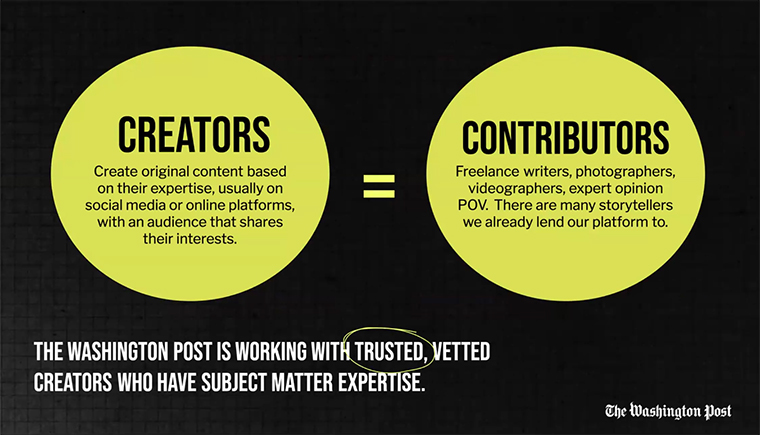
One of the ways in which the creator network functions is by highlighting distinct voices across an array of topical areas through Featured Voices. This lifestyle content vertical is aimed at reaching new demographics. Goo intentionally steered away from hard news, relying on the newsroom to continue its legacy of reporting and journalism.
Goo recognises the relationship creators have with their own content — from concept to execution to analytics and audience reaction: “We look for creators who are vetted.”
The creator’s audience engagement rather than the size of their platform is an important consideration.
“We develop the theme of the show together with them and outline the number of episodes that we’ll do and the topics of each episode,” Goo said.
Before publishing, each episode is edited, fact-checked, and legally reviewed by The Washington Post.
Featured Voices is an editorial partnership that The Post benefits by presenting content from a creator like JC Rodriquez, a personal finance coach. Known for his financial advice surrounding everyday decisions, Rodriquez develops his own content and handles most, if not all, production, ensuring the final product is consistent with the creator’s brand while also adhering to the editorial standards of The Post.
This arrangement is a win-win because authenticity is reinforced for both parties, and Washington Post Creator saves on production costs.
Compensating creator talent
What does the financial aspect of their creator network operate?
- Washington Post Creator pays each creator like a freelancer.
- Washington Post Creator sells sponsorships. One example is with Dylan Wells, formerly a political reporter with The Washington Post. She was hired by Goo to run Verified, a free, weekly newsletter that has reached 30,000 subscribers in a few months. With swift growth and upcoming live events come sponsorship possibilities.
- Creators have the opportunity for brand integrated messaging with brand and product mentions.
- For sponsorships, The Washington Post and the creator share the money from each sponsorship.
There is full transparency and information within captions for subscribers and viewers to learn more about sponsored content.
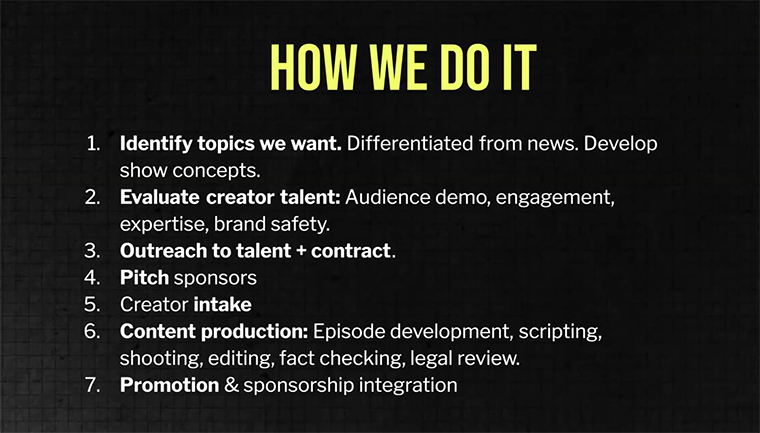
In addition to having a framework of custom factors when working with creators such as audience demographic and brand safety, Washington Post Creator works with a third-party creator agency.
“I would also say there’s a lot of great tools that use AI to scan and evaluate a creator’s content; every piece of content they’ve ever published on any platform very quickly,” Goo said. “AI does a pretty good job of this.”
From concept to deliverable, Goo estimates it takes two to three months to bring a creator onboard, “just because there’s a lot of back and forth, and you are dealing with contracts with individual creators.”
Lessons learned with creator talent
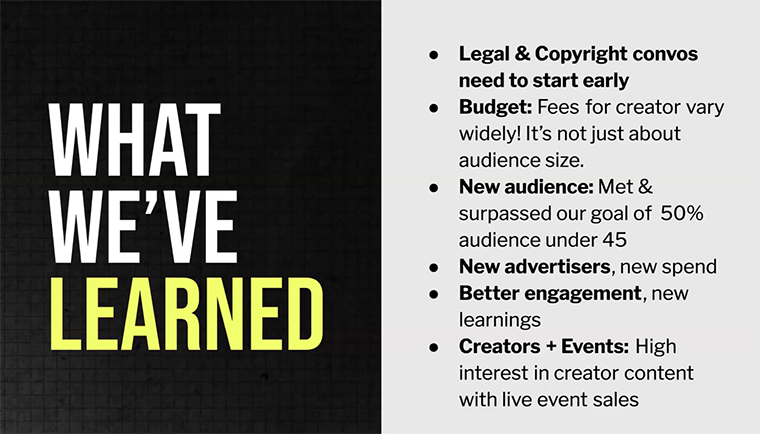
Because the creator economy and, more specifically, creator journalism is still fairly new, there is some education that needs to take place. From a legal standpoint, both parties must protect their brand while addressing the important conversations about copyright, usage, etc.
“Understanding how creators operate, understanding the rules in your own country about disclosure, for example, is really important,” Goo said. She noted there are some gray areas in the United States.
In determining budget, Goo recommends approaching each creator as an editorial partner as fees vary widely. Washington Post Creator does not sponsor creators.
Thanks to the Washington Post Creator, a new audience under the age of 45 is now exposed to The Washington Post, exceeding initial goals. Additionally, new advertisers and sponsors have created more monetization opportunities including through their live events business.
There is plenty of excitement for the future of creator journalism through the Washington Post Creator as it grows. Future plans include more shows, more products with different formats like text and vodcasts, and scaling their talent network.
Banner photo: Adobe stock image By Sodel Vladyslav.
Related Articles
-

AI’s effect on super user math
15 September 2026 -

At Mediacorp’s CNA, loyalty means giving audiences a reason to ...
20 August 2026 -

Tribun Network turns print “dots” into AI-powered insight
20 August 2026 -

Nation Media Group focuses editorial strategy on stories that m...
4 August 2026 -

Brut India earns young audience trust through social-first jour...
23 July 2026 -

Economist launches subscription tier targeting younger audience...
20 July 2026 -

Grupo RBS builds social-first video operation to expand audienc...
20 July 2026 -

Inside Denník N’s successful subscription strategy
15 July 2026
Upcoming Events
-

Subscriber Acquisition Master Class
10-17 November 2026
-

Media Advertising Summit
New York, United States
07-10 December 2026
-

AI-Native News Product Master Class
18-25 February 2027
-

Media Subscriptions Summit
Oslo, Norway
08-12 March 2027
-

World Congress of News Media
New York, United States
25-30 April 2027
-

Branded Content & Partnerships Master Class
20-27 May 2027
-

Subscriber Retention Master Class
17-24 June 2027
-

Conferencia Latinoamericana
15-16 July 2027
-

South Asia News Media Festival
New Delhi, India
19-22 July 2027
-

Asia/Pacific News Media Summit
19-20 August 2027
-

CEO Roundtable at Kilkenny
Kilkenny, Ireland
24-26 August 2027
-

Media Innovation Week
Amsterdam, The Netherlands
27 September - 01 October 2027








