

Lessons from 6 news companies diversifying their advertising portfolios
Advertising Initiative Blog | 04 June 2026

Some of our time at the INMA World Congress in Berlin focused on the diagnosis and the strategic framing of the industry. We then unpacked that through six presentations from practitioners building the next generation of publisher advertising in their organisations right now.
Our Diversifying the advertising portfolio: Building what brands actually want to buy seminar offered key takeaways from news companies throughout the world.
Kitty Brouwer (Mediahuis): From reach to value in a decentralised world
Kitty opened the seminar with the framing the rest of the afternoon would expand on: News publishers are no longer the centre of the content universe, audience attention has fragmented across creators and aggregators and platforms, ad budgets have followed, and our inventory has been commoditised in the process.
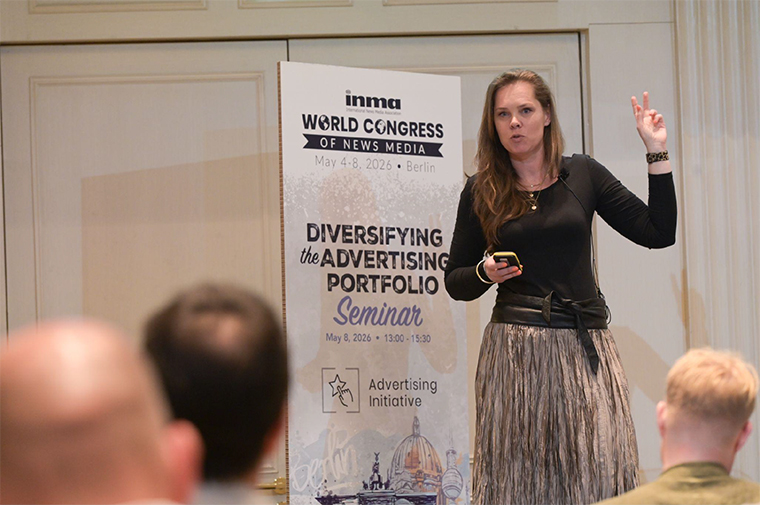
We can’t win the scale war anymore. So Mediahuis is pivoting away from selling scale, toward proving and delivering value, through three defensible pillars:
Impact: moving beyond reach and impressions to prove tangible business outcomes (leads, sales, in-market intent).
Trust: evolving from passive brand safety to a conscious, active choice by advertisers to partner with the publisher for the quality of the environment.
Service: acting as a strategic guide, helping advertisers navigate a fragmented media landscape.
What I appreciated about Kitty’s framing is that the three pillars apply differently depending on whether the audience is on-platform (where the publisher has more control) or off-platform (where control diminishes and service becomes the differentiator).
The proof points were specific:
Impact: Mediahuis Ireland’s “In-Market” product identifies B2B audiences actively shopping for specific products and delivers performance well above benchmark.
Trust: They launched “Spill,” a brand designed to meet Gen Z on the platforms they actually use, co-creating content and establishing new benchmarks for impact off-platform.
Service: An internal AI agent built on first-party data and performance metrics, helps salespeople prepare for meetings and craft data-driven proposals.
The throughline: We may lose the battle for eyeballs, but we can win by becoming indispensable partners who help advertisers navigate the chaos.
Shailley Singh (IAB Tech Lab): moving the entire stack to the edge
Shailley made the most technically ambitious case of the seminar. Two existential pressures are eating publisher monetisation: privacy-driven data loss (Apple’s ITP has been the steady tightening, but it’s spreading) and AI-driven content disintermediation (zero-click search and LLMs scraping content). Client-side, browser-based fixes are a losing battle.
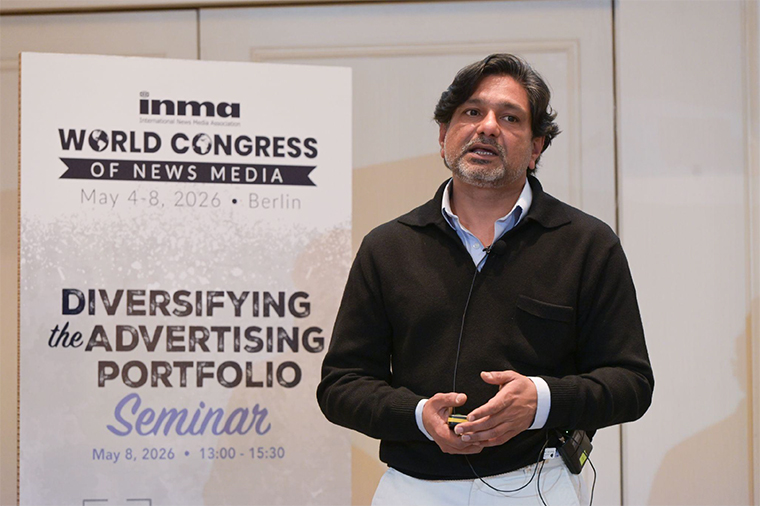
His proposed answer: Move the entire ad monetisation stack out of the browser and onto the CDN edge. IAB’s “Trusted Server” architecture turns all third-party requests into first-party context.
The benefits Shailley walked through:
Revenue recovery: recapturing the 30%-35% CPM loss from Safari and similar browsers. Initial tests show up to 20%-40% gains on Google Ad Manager revenue.
Performance: up to 75% latency reduction.
Ad-blocker bypass: recovering an additional 15%-30% of inventory.
Control and security: full observability over who’s operating on your site.
To accelerate adoption, the IAB Tech Lab has released three open-source projects with dedicated engineering support this year:
Trusted Server: the foundational edge software with integrations for Prebid, Amazon APS, GTM and others; the focus now is on a one-click install).
Content on Television Protocol (COTP): an API standard for managing LLM content access, blocking unauthorised crawlers, redirecting to licensing terms, and creating a structured exchange once an agreement is in place — designed to work with emerging content marketplaces from Microsoft and Amazon.
An Agentic AI framework for ad sales: buyer and seller agents that automate the workflow from brief to booking.
Shailley’s framing was about restoring publisher sovereignty at the network layer, not as a vendor relationship.
Maresa Wolkenstein (COPE/Styria Media Group): a first-party data alliance to fight back
Maresa walked us through the Austrian publisher’s counter-offensive. The market context is brutal: 86% of Austrian digital ad spend goes to large tech platforms. Only 14% is left for the entire local ecosystem.
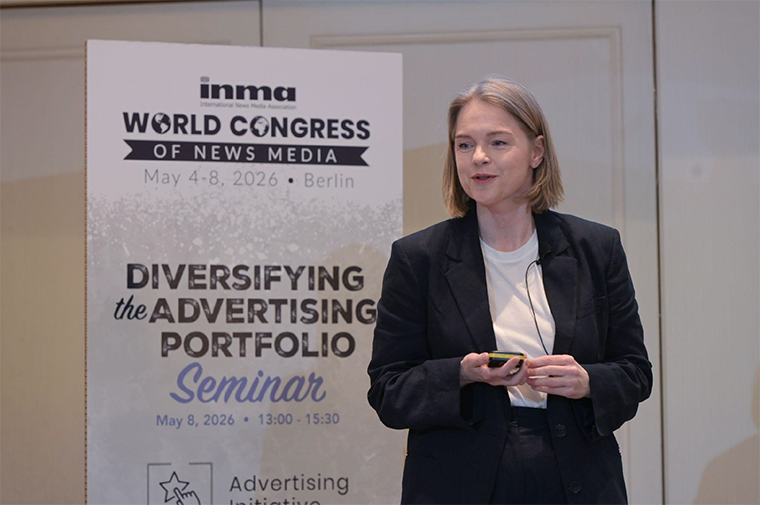
COPE’s response is architectural and cooperative. They’ve built the largest addressable first-party data pool in Austria on four pillars:
A GDPR/TCF-compliant legal framework.
A European tech stack (a French ad server, a graph-based CDP) to avoid reliance on U.S. platforms.
A cooperation model that treats the platform monopoly — not other local publishers — as the real enemy.
A first-party ID generated upon user consent that feeds the central CDP.
The results are real: CTR uplifts ranging from 11.5% to over 200% across clients in health, auto, and FMCG. A campaign for a gold investment firm targeting users reading negative economic news and matching them to a specific “gold investor” audience achieved high dwell times and click-out rates, and the client shifted a portion of their performance budget to COPE as a result.
The honest part of Maresa’s talk was the friction. The sales team struggles to articulate the value of premium first-party targeting versus the legacy options. The market is still fixated on low-value CPM. Pricing power requires shifting from selling impressions to selling integrated communication concepts. None of this happens automatically. It’s an uphill fight against deeply entrenched buying habits and a fight worth having.
Paul Brandenfeldt (Bonnier News): the retail media pivot, with Visual Art
Paul followed Alexander to tell a very specific story about how Bonnier has diversified beyond the news media market and into in-store retail media — and what it has done for the business.
The setup: Retail media is projected at €30 billion and growing fast. Unlike the e-commerce focus of Amazon, the in-store category is a less contested frontier, and budgets in it operate on a completely different scale than traditional digital news advertising.
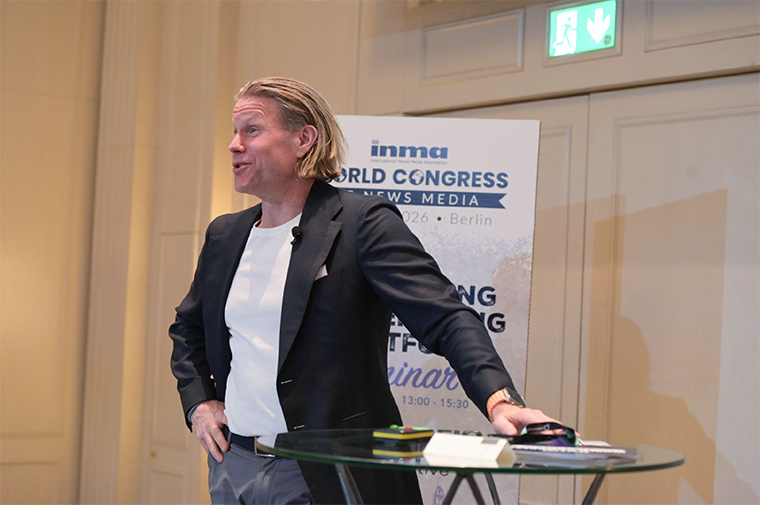
Bonnier partnered with Visual Art, the tech provider controlling 85%-90% of all in-store digital screens across Swedish grocery stores, pharmacies, and healthcare centers. The value proposition is clean: Bonnier brings 60% national daily reach (top of funnel), Visual Art brings point-of-purchase (bottom of funnel), and together they sell an integrated campaign no competitor can replicate.
The result Paul shared has stuck with me. For the first time in 25 years, clients are calling Bonnier’s sales team to buy rather than the other way around. Procter & Gamble, previously an unaddressable category for a news media business, is now a major client running campaigns for products like diapers and razors directly in the stores where they’re sold.
And the next chapter is already in motion: AI-powered cameras on the screens measuring audience demographics, dwell time, and position — combined with Bonnier’s first-party data — to bring TV-comparable measurement to in-store. This is exactly the partnership-business model I argued for on the mainstage, executed at scale.
Georg Burtscher (Russmedia): when the ad becomes the app
Georg’s was the most operationally creative session of the afternoon, and I think the one most publishers in the room could start doing today.
The core idea: Stop selling ad space. Sell ad function. Russmedia has spent three years building what they call Utility Inventory — micro-apps embedded in editorial content, sponsored by brands, that enable a real utility instead of broadcasting a message. Outcomes get measured by uses, not impressions or clicks. Pricing is per outcome. Modules are always-on, not flighted.
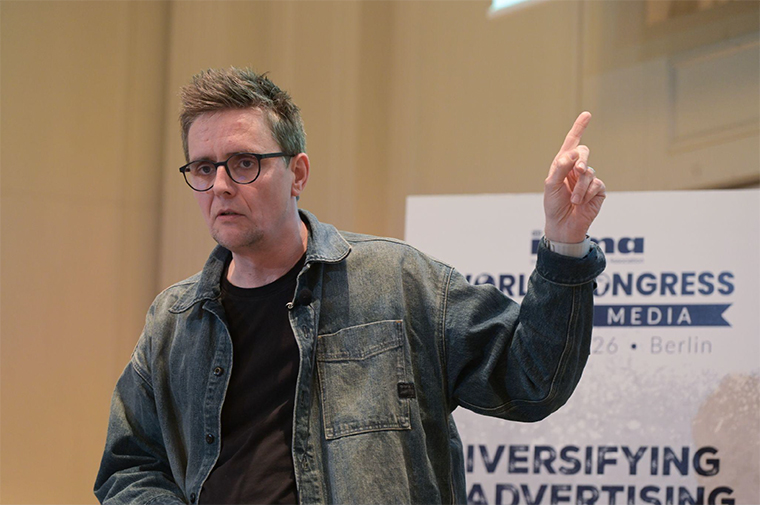
The examples Georg walked through are concrete:
Real-time regional energy consumption display with relatable equivalence (e.g., 360 MW = roughly 180,000 hair dryers running concurrently), sponsored by an energy provider. Concept to live in ~14 hours.
A dynamic ski-pass price tracker with a seven-day outlook highlighting the cheapest day to buy.
A fridge-photo-to-recipes utility — upload a picture of your fridge, get a three-day meal plan and shopping list, respecting dietary preferences.
A kid-friendly weather micro-app using location services with sponsor guidance below.
A live swipeable product sidebar — built in-meeting after a client mentioned a TikTok-style swipe ad — users swipe to like products, the basket auto-populates, they submit an e-mail, and pick up in-store within an hour.
The production method is what makes the model scalable. Russmedia uses “vibe coding” — prompt, prototype, publish — with tools like Claude and Lovable. Sales advisors and designers (not engineers) ship product. The commercial team has decoupled from the dev road map. Production time is down to 1%-10% of conventional cycles. Campaigns can go live the same day or the next morning.
The philosophical point Georg landed on: Agencies are structurally misaligned to deliver this — their revenue is tied to production. Publishers have the audience trust and the contextual placement to make utility ads defensible and effective. Only publishers can do this well.
And, as Georg pointed out, utility ads also let us counterbalance the relentlessness of bad news — when you read about energy prices going up, an embedded module can show you when to buy cheaper ski passes. Useful, contextually relevant, and additive to the reading experience.
As Georg said: “People will pay for emotion not for CPM.”
Pippa Leary (News Corp Australia): diversifying beyond the banner
Pippa closed the seminar with an immensely valuable practical playbook that built on her mainstage talk: two pillars.
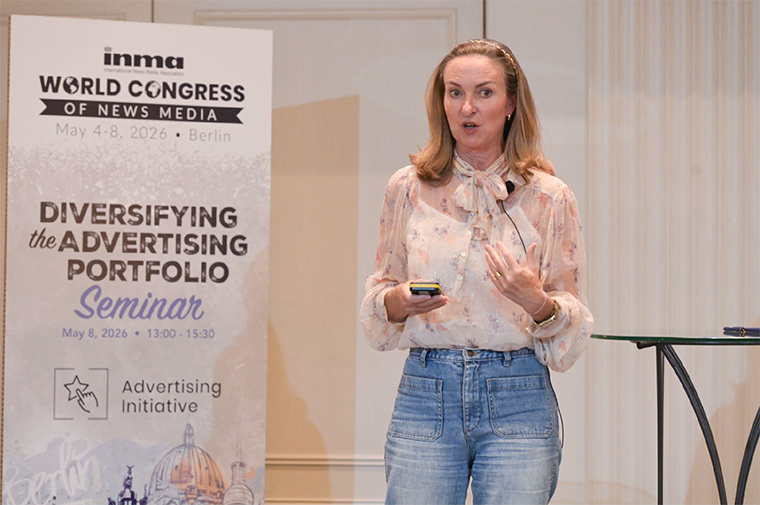
Pillar 1: Weaponising first-party data.
News Corp Australia’s CDP has been built over a decade. It aggregates 2.5 billion monthly data signals. An internally developed identity graph recognises 80%-90% of the Australian population without logins. The team has built a front-end called Intent Connect that uses an AI model to simplify audience segmentation — sales can quickly build pitches for “SUV intenders” and deliver unique customer insights.
The immediate priority now is to plug this directly into agency holding company buying platforms, moving the business from a relationship-based sales model to being programmatically available where buyers transact — preparing for an agentic future where AI agents handle media buying.
A note Pippa wanted publishers to hear: The cost of entry for CDPs has collapsed. Newer, composable CDPs are lightweight, cheaper, and AI-powered. This kind of data strategy is now accessible to smaller publishers who previously couldn’t afford it.
Pillar 2: The march to visual storytelling.
Display CPMs are US$2-US$7. Video CPMs are around US$28. The five-to-one revenue ratio between video and display makes text-based content creation an unsustainable model. The new mandate: Produce vertical video as the story, not as an embed in a text article.
Three pieces of the pivot to pay attention to:
The Adaptive Video Player (AVP): Senses the user’s device and serves the correct format (horizontal on desktop, vertical on mobile) — delivered an immediate 30% increase in video supply through faster load times and better performance.
A new app is launching with dual navigation: Older users default to a traditional scroll experience, younger users (identified via social media referrals) default to a swipe experience modeled on social platforms. Only possible because the editorial workflow has already been retooled around vertical video.
A structured, risk-mitigated framework for off-platform distribution: Brand awareness, referrals/app downloads (using first-comment links), engagement share (professional content outperforms UGC by 5x-8x), affiliate revenue via UTM links in social videos, and direct sponsorship packages that bundle on- and off-platform inventory.
The frame I took away from Pippa’s session: News Corp Australia is no longer in the business of just writing stories. They are in the business of publishing monetisable, visual journalism at scale — and it’s working.
If you’d like to subscribe to my bi-weekly newsletter, INMA members can do so here.
Related Articles
-

Spain is moving from inventory to brand partnerships
11 October 2026 -

Research: 15% of sales directly tied to news brands’ cultural r...
11 October 2026 -

6 ways news publishers are turning trust into advertising reven...
30 September 2026 -

Are events the hero product for publishers?
27 September 2026 -

A look at 30+ revenue streams publishers are actually building
31 August 2026 -

The week the news business got graded on direction, not results
6 August 2026 -

South Asia’s publishers have the trust but not yet the revenue ...
26 July 2026 -

Editora Globo shifts from selling ads to selling media solution...
21 July 2026
Upcoming Events
-

Subscriber Acquisition Master Class
10-17 November 2026
-

Media Advertising Summit
New York, United States
07-10 December 2026
-

AI-Native News Product Master Class
18-25 February 2027
-

Media Subscriptions Summit
Oslo, Norway
08-12 March 2027
-

World Congress of News Media
New York, United States
25-30 April 2027
-

Branded Content & Partnerships Master Class
20-27 May 2027
-

Subscriber Retention Master Class
17-24 June 2027
-

Conferencia Latinoamericana
15-16 July 2027
-

South Asia News Media Festival
New Delhi, India
19-22 July 2027
-

Asia/Pacific News Media Summit
19-20 August 2027
-

CEO Roundtable at Kilkenny
Kilkenny, Ireland
24-26 August 2027
-

Media Innovation Week
Amsterdam, The Netherlands
27 September - 01 October 2027








