

South Asian publishers learn which branded content work to refuse
Conference Blog | 29 July 2026

Five years ago, when a brand approached The Quint about a content partnership, the conversation opened with a format. “It was very format-heavy thinking,” said Rituraj Das, editor of creative solutions at The Quint, on the branded content panel at INMA’s South Asia News Media Festival in Delhi.
Article, video, or social post — the client had usually decided before the meeting.
That has gone.
“It’s not about that,” Das said. “It’s: What’s the problem? Let’s talk about it, and then figure out what’s the content format.”
Das was speaking on a panel titled “Branded content studios that last,” moderated by Gaurav Arora, COO of Jagran New Media, alongside Mona Jain, president of revenue growth and business development at ABP Network, and Vinit Karnik, managing director at GroupM.
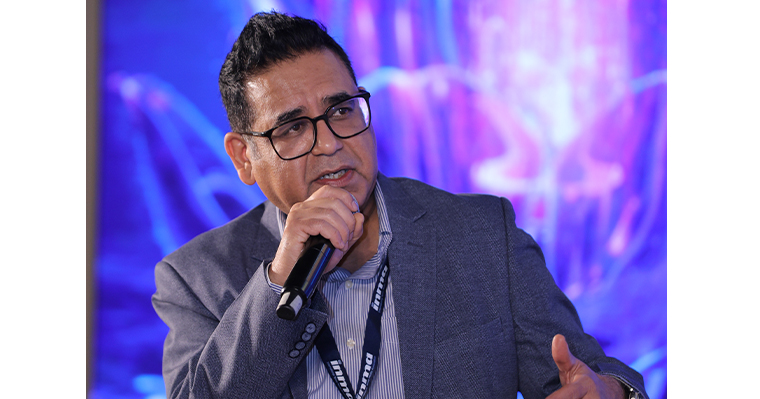
Its brief was renewal: what makes clients come back.
The commercial case for getting this right has strengthened sharply. Branded content isn’t tracked in global advertising forecasts, but a Native Advertising Institute study published weeks before the festival found an average 19% year-over-year revenue increase worldwide.
Events — the channel branded content most often attaches to — grew 45% year over year in India in INMA’s own study. Up to a quarter of publisher commercial revenue now sits outside both subscriptions and conventional advertising.
The discipline is refusal
If branded content is becoming a core capability rather than a creative add-on, the panel’s most useful material concerned what it costs to protect. Most of that involves saying no.
Das described the standardised brief circulated to 10 publications at once.
“Other publications might do this because of their editorial tone, but we cannot,” he said. “We would be doing a disservice to our brand and yours if we just copy-paste that brief.”
Where a request would breach Advertising Standards Council of India (ASCI) guidelines or the publication’s own ethics, the answer is simply no. And where a client wants a guerrilla hype campaign, the counter-offer is the same idea approached through a credible news or educational angle.
The principle underneath is portable: Audiences don’t mind publishers having brand partnerships; they mind being misled. Hold the publisher’s natural editorial tonality across an article, microsite, video, or social post, and readers accept the work.
Asked whether that produced fights with the newsroom, Das said the fights had almost always been with the agency or the brand instead. When Koo, an Indian-language microblogging platform that closed in 2024, approached The Quint about a public-interest campaign on misinformation, the studio brought its own editorial research team into the client meeting; the client asked to build on the framework already running rather than commission something new.
Someone has to own execution
INMA’s two-day study tour in New Delhi supplied the operating model behind the principles the branded content set out.
At NDTV, special projects runs three legs — cause-led IPs, content-led IPs (such as the network’s summits and awards), and branded content — with the branded solutions revenue team sitting under a unit called Colab and a single execution editorial team serving all three, government projects included.
The team’s job is narrow and explicit: Make sure every piece that comes in is executed. What makes the model work is that editorial power is the product in each leg. The network’s longest-running cause campaign enters its 13th season this year, and it succeeds because the whole newsroom gets behind it rather than the projects team alone.
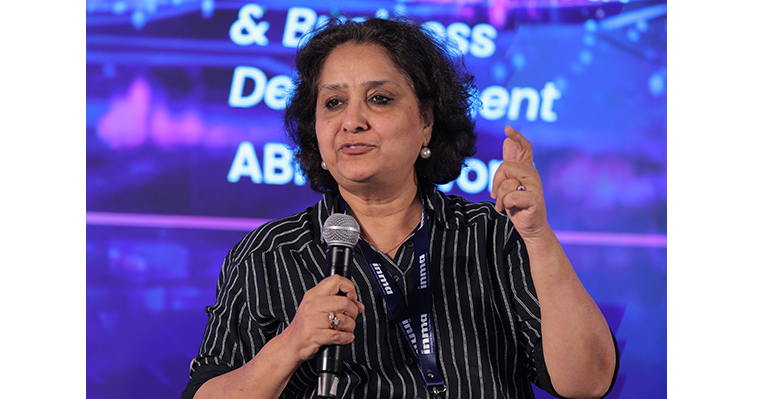
Mona Jain, president of revenue growth and business development at ABP Network, described the equivalent discipline at group scale. The approach is platform-agnostic: Start from a core idea, then map it across digital, on-ground events, print and creator integrations to find the combination that delivers the client’s outcome.
In regional markets where mapping isn’t optional, brands come precisely because they want to reach regional consumers more deeply than an ad allows.
Sudeep Kumar, vice president of media solutions at Mathrubhumi, described the same architecture from a regional publisher’s side: customised events and exhibitions, publisher-owned IPs that brands can join, and co-branded content amplified back across print, digital and social.
Advertisers now want real touchpoints, he said, not only virtual ones.
Publishers plus creators — and the verification problem
Back on the branded content panel, Arora asked what edge a publisher has against an individual creator. Karnik rejected the premise — “Publishers plus creators” — and captured what brands now want to three words: authenticity, moments, engagement.
Arora said Jagran New Media had worked with creators for four years without treating them as competition — what goes to market is the masthead’s accumulated credibility alongside the creator’s audience.
That combination creates a quality-control problem nobody on the branded content panel raised, but which Bharat Gupta, founder of ToBe Online and former CEO of Jagran New Media, put squarely to the trust panel a day earlier.
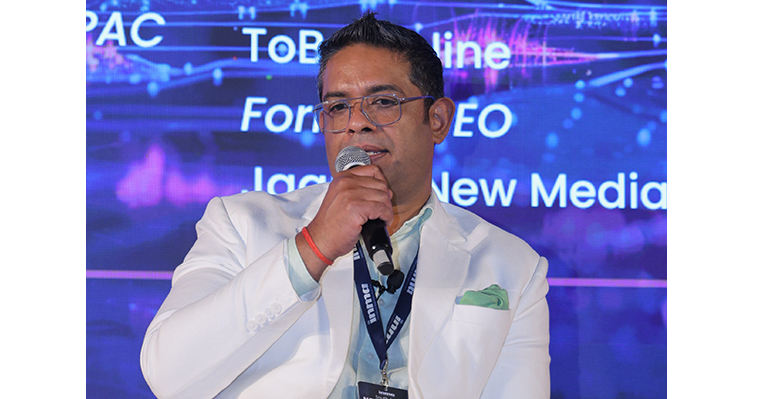
Hand a brand brief to a network of 100 creators and no one can physically check 300 videos for drift from the brief within 24 hours. India has more than four million creators; large agencies run networks of 10,000.
Gupta’s business screens 500 videos in 100 minutes, flagging where a script deviates and where a brand integration does — and separates two things publishers tend to conflate, verifying claims against sources and mapping content against regulatory frameworks such as CCPA, SEBI and RBI rules, because journalists rarely know those guidelines.
His commercial argument matters more than the technology. Once drift is measurable, a brand isn’t paying 10,000 creators for work only a fraction delivered properly, which is an argument for higher yields. It moves the conversation, as he put it, from reach to responsibility and conversion.
Repeat business is the real test
The session was convened around renewal.
Mona Jain’s answer was IP. Clients increasingly come asking to build scalable, long-term properties they can participate in year after year, and repeat participation in a high-quality publisher IP is itself proof that marketers recognise the value.
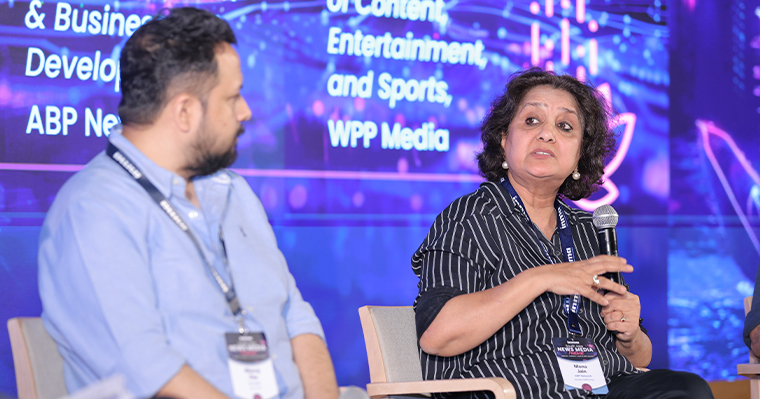
On measurement she described the move past vanity metrics into what she calls content commerce: dwell time, shareability, and pre- and post-campaign brand lift studies quantifying recall, consideration and purchase intent.
Karnik, from the agency side, started further back — with the client’s business objective — and then conceded the point directly.
Have we perfected content measurement as an industry? “No. There is a lot of headroom left.” A consumer might discover a product in digital content, research it elsewhere and buy it in a shop; isolating one campaign’s contribution while other activity runs alongside remains genuinely hard, which is why agencies judge the whole campaign rather than a single asset in a vacuum.
Shubhranshu Singh, a global board member of the Effie Lions Foundation and former Tata Motors CMO, supplied the sceptic’s version from the buy side. Over time, he said, editorial has become marketing and vice versa — and no media plan he ever signed off cared about aesthetics or point of view.
What remains scarce is not the content but the byline: what is being said is easy to replicate, while who is saying it — the provenance, the stamp — is rare. Branded content is one of the few products that sells exactly that, which is also why it collapses the moment the tonality slips.
The panel’s closing advice was consistent with all of it:
-
Know what space you credibly own, Das said, so you know which briefs to pursue and, more importantly, which to decline; saying no to revenue is hard and essential.
-
Zero compromise on execution, said Mona Jain — take complete ownership, and the results speak for themselves.
-
Evolve the model, said Karnik: publisher plus creative, plus on-ground activation.
-
Arora, who had asked the question, answered it last himself — create great content, don’t cut corners on production, and deliver on the promise.
The formats have stopped being the question. What a studio is willing to refuse has become the answer.
Related Articles
-

The next business is brand partnerships, not ad inventory
25 October 2026 -

Why European news media leaders are betting on brand again
29 September 2026 -

Spilnews reinvents its newsroom to tap into the creator economy
27 September 2026 -

Readers understand content partnerships, younger readers want m...
1 September 2026 -

Newsday’s Together Long Island initiative unites companies and ...
13 August 2026 -

South Asia publishers are growing, transforming, and leading in...
3 August 2026 -

In Latin America, the diversified ad business has already arriv...
2 August 2026 -

Editora Globo shifts from selling ads to selling media solution...
21 July 2026
Upcoming Events
-

Subscriber Acquisition Master Class
10-17 November 2026
-

Media Advertising Summit
New York, United States
07-10 December 2026
-

AI-Native News Product Master Class
18-25 February 2027
-

Media Subscriptions Summit
Oslo, Norway
08-12 March 2027
-

World Congress of News Media
New York, United States
25-30 April 2027
-

Branded Content & Partnerships Master Class
20-27 May 2027
-

Subscriber Retention Master Class
17-24 June 2027
-

Conferencia Latinoamericana
15-16 July 2027
-

South Asia News Media Festival
New Delhi, India
19-22 July 2027
-

Asia/Pacific News Media Summit
19-20 August 2027
-

CEO Roundtable at Kilkenny
Kilkenny, Ireland
24-26 August 2027
-

Media Innovation Week
Amsterdam, The Netherlands
27 September - 01 October 2027








