

Every loyal reader was a stranger first
The Distillation Blog | 09 October 2026

Ask a room of publishers what their strategy is for 2026 and you will hear one word: loyalty.
In Madrid last month at INMA Media Innovation Week, Alejandro Laso, chief operating officer of El Confidencial, put the creed on one slide: “We are not in the traffic business. We are in the returning-reader business.” He has the numbers: Of 14 million monthly unique users, 1 million come back month after month, and that million produces 70% of a €27 million business.
I believe every word of that. I also believe the news industry is reading it the wrong way. We have taken “loyalty pays” and heard “reach doesn’t matter.”
This week, from Greg Piechota’s modelling to a 37-day blackout in Uganda to INMA’s Newsroom & AI Master Class, the INMA conversation said the opposite. The loyal reader is not the alternative to the stranger. The loyal reader is the stranger, three years on.
The ceiling is the Web site, not the subscription
Greg asked the question nobody wanted answered: Can a news brand grow a loyal audience while its total audience shrinks?
Across 185 news brands in 30 countries, the bigger the site, the more heavy users it has, and those users are slightly more loyal, not less. Growing loyalty while reach falls is not impossible. It is rare, and in strategy “rare” means “hard.”
Then he modelled a typical publisher. Lift retention and pricing to the top quartile, and subscription revenue is 19% higher in year three. Lift acquisition to the top quartile instead, discounts and churn penalty included, and it is 42% higher. Let the audience fall 5% a year, the median rate, and every strategy peaks within eight years. Let it fall 10%, the bottom-quartile rate, and every strategy sits below today’s revenue within seven.
His verdict: “Superior funnel performance buys time. It does not solve a shrinking funnel.”
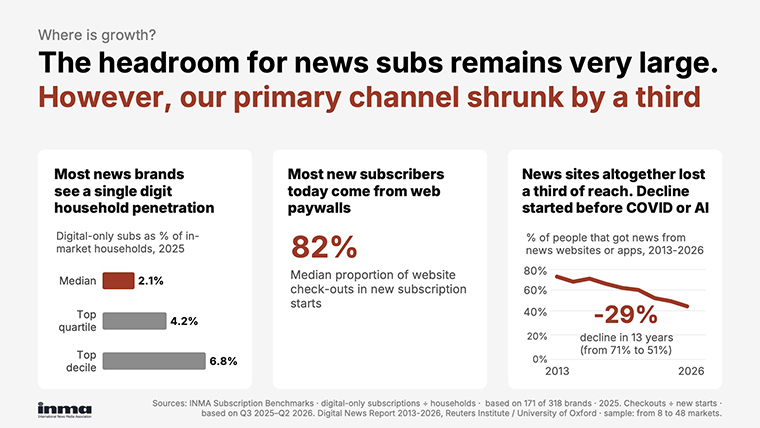
There is no subscription ceiling, either. The median publisher sells digital subscriptions to just 2% of the households in its market; Estonia’s Delfi reaches 25%. Demand is not the problem.
The ceiling is in the channel. Four in five subscriptions are still completed at the checkout on the publisher’s own Web site, behind a paywall that fewer than 30% of visitors ever see. The industry, in Greg’s words, “built a single door, placed its entire sales operation behind it, and is now watching the street outside empty.”
The insight: Retention and pricing are real levers. They are not a growth strategy for a brand whose audience is shrinking.
The street outside, measured
Chartbeat’s 2026 Publisher Playbook, dissected this week by Spain’s Laboratorio de Periodismo, shows what the emptying looks like. Google Search delivered about 9% of publisher pageviews in July 2024; two years later, 5%. AI assistants have multiplied their referrals eight-fold and still account for 0.01% of traffic.
What is growing is what publishers own: direct traffic, internal navigation, and dark social, up from 7.1% to 11.3% of pageviews.
Now look at who is doing the reading. Pageviews from loyal readers are flat. From returning readers, down 8%. From new readers, down 14%. A loyal reader produces 93 pageviews a month; a new visitor, 1.5. That is the strongest case for loyalty you will ever see, until you read the sentence Laboratorio places beneath it: Every loyal user was once a new visitor.
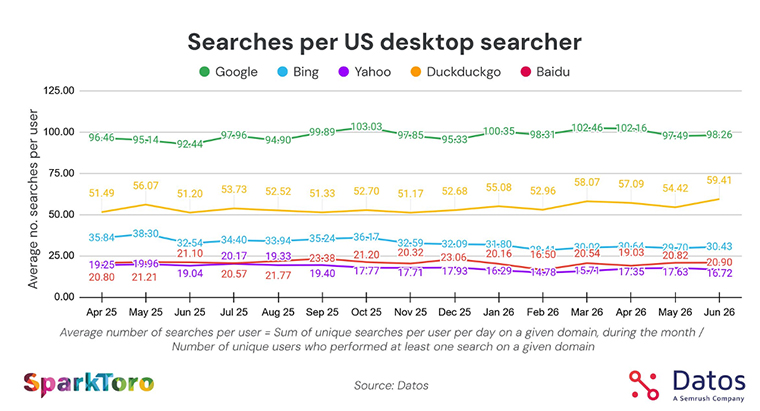
Kyle Sutton of The Washington Post adds the operational point in his INMA blog: Search is still the second-largest source of publisher traffic, and 95% of ChatGPT users also use Google. SEO is not dead; it is no longer enough.
The insight: The loyal core is holding. The pipeline that creates the next loyal core is what is shrinking, and it shrinks quietly, because loyal readers mask it in the totals.
Nobody is bringing the traffic back
If you were hoping a court would restore the traffic, this was the week to stop hoping.
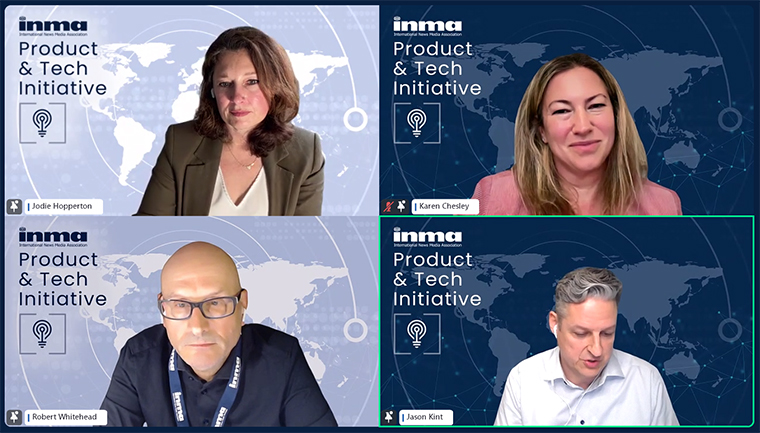
Judge Amit Mehta dismissed Penske Media’s and Chegg’s anti-trust cases against Google’s AI Overviews. Robert Whitehead’s reading for INMA: The judge was “not unsympathetic” to publishers whose work is repurposed without payment, but found no deal to enforce. Publishers supplied content, Google supplied traffic, and nobody ever signed anything. “An expectation is not an agreement.”
So the U.S. fight moves to copyright and to what Robert calls “the Super Bowl”: The New York Times v. Microsoft and OpenAI. On INMA’s “Referees Are Ruling” Webinar with Jodie Hopperton and Robert, Karen Chesley, The Times’ assistant general counsel, described the most extensive discovery of her career: more than 100 depositions, about a million documents, roughly US$20 million.
Publishers are building instruments of their own. SPUR, the coalition led by the Guardian and the FT, published a standard that tracks how content is used inside AI systems. Nine Publishing’s Aimie Rigas describes licensing as audience strategy rather than a cheque: a Microsoft Copilot deal with attribution non-negotiable, campus agreements that build reading habits.
The depth stays behind the paywall; the awareness goes out into the world.
The insight: The old distribution deal, content for traffic, was never a deal, and the courts have now said so. Every replacement is something you will have to build, buy, or borrow yourself.
What acquisition looks like now
Greg’s second blog this week is the practical one. Monocle has spent 19 years adding shops, cafés, a hotel, and a radio station to a magazine. “The first encounter may not be the magazine,” Anders Braso, Monocle’s chief marketing officer, told Media Innovation Week.
Few publishers can build every door themselves, so Greg borrows the classic triad — build, buy, or borrow — and asks what each door hands back: awareness, a visit, an identity, or a payment.
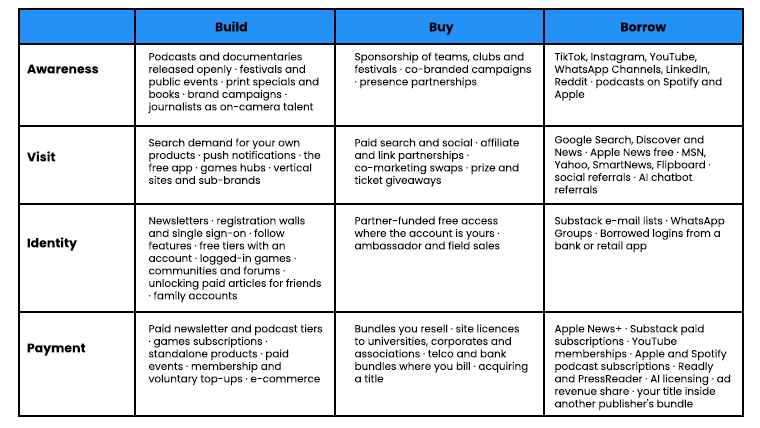
Fill the grid with Madrid and a pattern appears:
- elDiario.es: 123,000 members, one-third through the paywall, one-third through e-mail, one-third through the podcast, festivals, and word of mouth. Every entry door is paired with one that captures identity.
- Clarín: 750,000 digital-only subscribers, plus 100,000 River Plate fans who claimed news access through their football club.
- HLN: Belgium’s most-followed news account on TikTok, run by two people, paired with a free subscription for students under 26. Fifty thousand sign-ups in a day.
Sonali Verma flagged The Guardian’s Liz Wynn on Media Voices: 1.4 million recurring supporters and a marketable direct audience grown from under 1 million to more than 8 million in two years. The Guardian’s three North Stars are daily audience on and off platform, direct community, and supporters. Reach is on the list.
From Piano Academy Live in Amsterdam, Greg reported BBC News’ subscription build in the U.S. and Canada: Once it surrounded its live blogs with explainers that trigger the paywall, traffic and subscriptions doubled together at the next news spike, and 42% of active subscribers now convert inside the apps.
The app is not a retention product. It is a point of sale.
The insight: Every one of these is an acquisition story told as a product story. The money is not in the loyalty programme. It is in the entry.
Journalists as the acquisition channel
Three INMA blogs this week make the same argument from three countries: the person, not the masthead, is now the way in.
From Kerstin Hasse’s Young Audiences Summit, Axel Springer Academy trainees Lisa Reck and Vinzenz Mayer described six months building creator formats. Reck, now a social host at the sports streamer Dyn, records 90% of her material on a phone; what she needed was not kit but protected time. Mayer, at Bild, wants an hour or two a day to make reels for his own articles: “We have to bring the content to them.”
Rebecca Hutson of The News Movement, a three-year-old social-first newsroom, went further: “The traditional newsroom is dead.” Her creators front formats and are paid, because exposure “doesn’t really cut it anymore.”
Her warning: “If we aren’t involved in how they evolve, they’re going to happen to us.”
Jens Pettersson of NTM, which runs 16 local news brands in Sweden, turns the argument inward: “We already have creators. We call them reporters.”
Putting journalists rather than logos in front of the audience grew NTM’s Instagram following 43% and its reach 180% in 2025. Next he will organise around people rather than beats: not “Anna covers city hall” but “Anna helps people understand how decisions at city hall affect their everyday lives.”
And if the star leaves? Pay may have to follow the value the reporter creates.
The insight: Trust has moved to the person, and distribution is following it. A newsroom that keeps its reporters invisible is hiding its best acquisition channel.
Automate the commodity, then go and find people
Thursday brought Module 1 of INMA’s Newsroom & AI Master Class, curated by Sonali Verma, with 123 participants and two modules to come on Tuesday and Thursday next week. Billed as “workflows that work,” it answered this edition’s question: What will a stranger come for, and who pays for it?
Gard Steiro, editor-in-chief and CEO of VG, which reaches 2 million Norwegians a day in a country of 5 million, said the easiest thing a leader can do right now is use AI: “Anyone can do it.”
The hard question is what will still be ours.
Schibsted mapped every newsroom workflow to find the capacity AI could free, then set a target for the share of VG’s journalism that cannot be copied. That graph, not churn or traffic, is the first thing he looks at each morning. To any newspaper living on rewritten press releases: “Just stop before it’s too late.”
His reason is reach: “If people stop coming to us directly, it becomes very difficult to fund journalism.” So VG runs speedboats ahead of the mothership: VGX, an app for young Norwegians who struggle to read news, has no CMS; agents cluster Schibsted’s human-verified stories into storylines.
When the whole VGX team went on holiday this summer, the app kept updating and beat VG’s human desk to push alerts on the biggest stories. Its retention is better than VG’s.
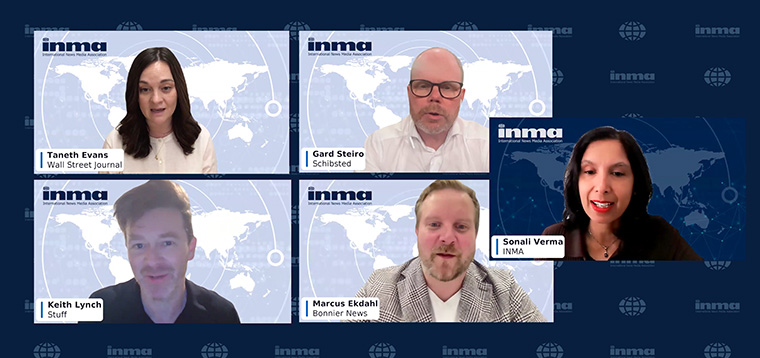
Keith Lynch, editor-in-chief of Stuff Digital, which reaches 2.2 million unique visitors a month in a country of 5 million, free and overwhelmingly direct, uses nine agents to turn a legal decision into a draft for human review in about 90 seconds and has cut “the flabby middle” so reporters can get out and meet people.
And he builds doors that invite readers in: The Stuff Needle, a daily homepage poll built in two days, has drawn more than a million votes since July and been cited in Parliament. His formula became the module’s takeaway: automate the commodity, amplify the distinctive.
Taneth Evans, head of digital at The Wall Street Journal, “an audience-first publication for people who mean business,” measures subscriber reach and engagement first, then purposeful reach: “We don’t want indiscriminate traffic.”
Mapping the life moments when a younger reader might first meet The Journal, “places we have permission to play,” produced the Price of Parenting and cost-of-divorce series, which worked with core readers, too.
Marcus Ekdahl, editor-in-chief of Sweden’s Helsingborgs Dagblad, gave the module its line, “Journalism begins and ends with people. AI changes what is possible in between,” and its proof: a shadow-fleet investigation that tracked 330 sanctioned vessels through the Öresund and became one of HD’s most-read stories in six months.
His warning to those of us who sign the budgets: “The people expected to lead the transformation may be the ones who understand the tools least.”
The insight: The newsroom’s share of the reach problem is to make the journalism nobody else can, automate the rest, and build its own doors. Efficiency is the by-product.
Africa is where the north is heading
At last week’s INMA Africa Audience Development Summit, Greg offered a line that reorders the map: “The north is becoming more like the south.”
African audiences never had a direct-to-Web-site habit. They found news through side doors — radio, WhatsApp, YouTube, creators — and publishers learned to earn loyalty rather than assume it. That is now everyone’s world.
Maggie Ireri, chief executive of TIFA Research, brought the data: Across 38 countries, 59% of people get news from radio at least a few times a week, and 74% of Africans aged 56 and older use the Internet regularly.
“Digital is no longer a youth channel,” she said. “Audiences do not need more content. They need content that is worth their attention.”
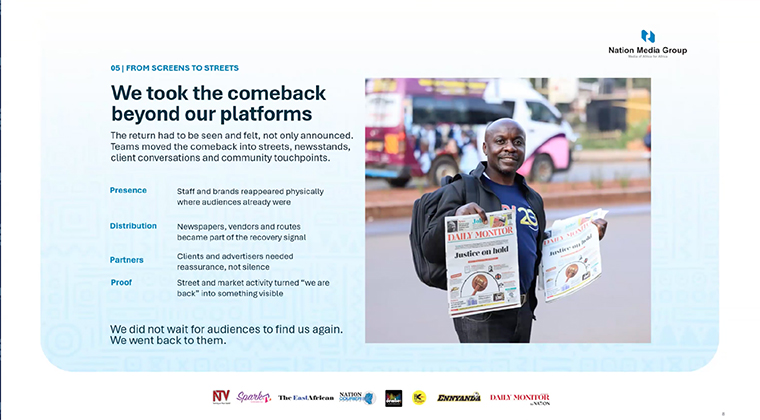
Then the test case. In June, Nation Media Group Uganda was shut down for 37 days: print, television, radio. Hajara Batuuka, head of marketing, described what came next: messages from viewers who missed NTV, an e-paper back before the presses, and staff selling newspapers by hand on the streets as proof that the group was “honestly back.”
Then it rebuilt the habit, programme by programme, with on-air talent inviting audiences back through their own social accounts.
The insight: Loyalty is built before it is tested. Uganda’s audiences came back because, for years, Nation had gone to them.
What this means for your company
Two more notes before the budget. Gabe Dorosz flagged Rajeev Goel, PubMatic’s chief executive, predicting that agents buying from agents will strip out 20 years of ad tech middlemen, leaving “the publisher and the advertiser” as the durable entities: reach is about to be worth more per impression, provided you still have it.
And from Greg: Three in 10 digital news subscribers do not visit even once a month, the global median in INMA’s Subscription Benchmarks. A subscriber who never visits is a stranger with a credit card.
So, four things I would take into the 2027 budget.
- Stop scoring acquisition as a legacy cost. Greg’s model says the top-quartile acquirer out-grows the top-quartile retainer by more than two to one.
- Count your doors. Which do you own, which do you rent, and what does each hand back: awareness, a visit, an identity, or a payment? A door that stops at a visit is the one that is emptying.
- Put people in front of the brand. Reporters, hosts, creators. Trust has moved to the person, so let the person carry the brand to the places the brand cannot reach on its own.
- Put Gard Steiro’s graph on the wall: What share of what you publish could nobody else make? Automate the rest.
Every loyal reader you have was a stranger first. Where are next year’s strangers going to meet you?
Related Articles
-

Bundling is a pricing decision, rebundling is an organisational...
18 October 2026 -

7 themes from Madrid show publishers trading traffic for relati...
28 September 2026 -

AI’s effect on super user math
15 September 2026 -

INMA unveils 2026 “30 Under 30” Award recipients
7 September 2026 -

What I told 40 CEOs (and won’t gatekeep from you)
30 August 2026 -

Economist launches subscription tier targeting younger audience...
20 July 2026 -

Hamburger Abendblatt unlocked a 20% subscription uplift with we...
14 June 2026 -

Rheinische Post programme turns print loyalty into digital conf...
11 June 2026
Upcoming Events
-

Subscriber Acquisition Master Class
10-17 November 2026
-

Media Advertising Summit
New York, United States
07-10 December 2026
-

AI-Native News Product Master Class
18-25 February 2027
-

Media Subscriptions Summit
Oslo, Norway
08-12 March 2027
-

World Congress of News Media
New York, United States
25-30 April 2027
-

Branded Content & Partnerships Master Class
20-27 May 2027
-

Subscriber Retention Master Class
17-24 June 2027
-

Conferencia Latinoamericana
15-16 July 2027
-

South Asia News Media Festival
New Delhi, India
19-22 July 2027
-

Asia/Pacific News Media Summit
19-20 August 2027
-

CEO Roundtable at Kilkenny
Kilkenny, Ireland
24-26 August 2027
-

Media Innovation Week
Amsterdam, The Netherlands
27 September - 01 October 2027








